
Livraison le jour même ou le lendemain

Qualité garantie

Débloquez vos offres de bienvenue: Livraison GRATUITE | Jusqu'à -80 % | 30 jours d'essai gratuits à JoyPlus
Téléchargez l'application
Second homes, construction sites, farms... How do you secure a remote location with no Wi-Fi or nearby power outlet?? This is the challenge that 4G security cameras solve. Completely standalone, they let you keep an eye on your property from anywhere.
This guide breaks down the essential criteria for making the right choice and presents a selection of models that deliver on their promises—all without the marketing fluff.
Before you dive in, let's review the features that truly make a difference in a 4G camera. Here are the selection criteria you shouldn't overlook.
Their key strength is, of course, operating without Wi-Fi. Like a smartphone, they use a SIM card (usually a nano-SIM) to connect to the 4G LTE mobile network.
For uninterrupted surveillance, battery life is crucial. Most models integrate a battery, often paired with a solar panel for complete independence.
Above all, a security camera must provide clear images and relevant alerts.
To give a concrete example of what a great 4G camera offers, here is a model that checks all the boxes.
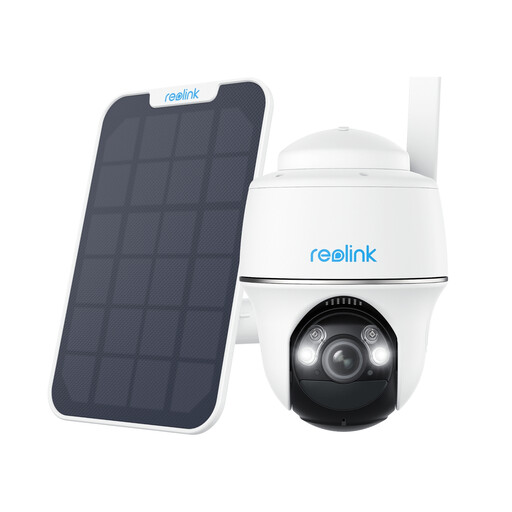
This Reolink 4G camera was designed specifically for sites without internet or electricity access. It combines mobile connectivity, solar power, and advanced surveillance features.
Highlights?:
The G430 stands out with its motorised head. Capable of rotating 355° horizontally (Pan) and tilting 140° vertically (Tilt), it covers a very wide field of view and minimises blind spots. A single camera is all you need! In terms of battery life, it includes a 6000 mAh battery, supported by the included solar panel for near-continuous operation.
Benefits?:
Who is it for??
This model is ideal for second home owners, farmers wanting to keep an eye on a remote plot of land or building, or construction site managers looking for a temporary and easy-to-install security solution.
See details for the REOLINK G430
If you need a more compact solution for an area that already has Wi-Fi coverage but where an electrical connection is still an issue, a battery-powered camera is an excellent alternative.
Take a look at our selection of battery-powered dome cameras to find the right model for you.
Most 4G cameras use a nano-SIM card. You will need to sign up for a mobile plan that includes data. The most important thing is to choose a carrier that has good reception where the camera will be installed. For typical use, small, no-contract plans with a few gigabytes are ideal.
It all depends on your usage. Live video streaming consumes the most data. If you configure the camera to only send alerts upon motion detection, data consumption will be very reasonable. For typical use, a plan with 2 to 5 GB per month is more than enough.
In winter, with shorter days and less intense sunlight, the solar panel is naturally less effective. This is where the rechargeable battery comes in: it takes over. Once fully charged, it can power the camera for several days or even weeks, even without sun. Pro tip?: to optimise charging, install the panel in a south-facing position and remember to clean it from time to time.