
Livraison le jour même ou le lendemain

Qualité garantie

Débloquez vos offres de bienvenue: Livraison GRATUITE | Jusqu'à -80 % | 30 jours d'essai gratuits à JoyPlus
Téléchargez l'application
USB-C has established itself as the standard, promising one universal charger for all our devices. Yet, navigating the jungle of power adapters remains a headache. Between disappointing charging speeds and chargers that hog power strips, it's easy to make the wrong purchase. A 45W USB-C charger strikes the perfect balance, capable of quickly powering up a smartphone, a tablet, and even an ultra-portable laptop like the MacBook Air.
Before you buy, it's best to know the common pitfalls to avoid disappointment and unnecessary expense.
To ensure you make the right choice, there are a few technical points to check. This guarantees you'll get not only the speed but also the safety and longevity you expect from your investment.
These acronyms hold the secret to fast charging.
If you see "GaN" on the label, it's an excellent mark of quality. This next-generation semiconductor material allows for chargers that are smaller, lighter, and generate less heat than traditional silicon-based models. For a compact travel charger, GaN technology is a major advantage, as it combines a small footprint with high power.
The charger's power isn't enough; the cable has to keep up! To take full advantage of a 45W charger, you'll need a USB-C to USB-C cable rated to handle that wattage. Opting for a USB-C wall charger with an included cable is often the smart choice for peace of mind (and your wallet), ensuring the pair will work in perfect harmony.
No endless lists here. We've handpicked a few gems that cater to specific needs, all while checking every box for performance and safety.
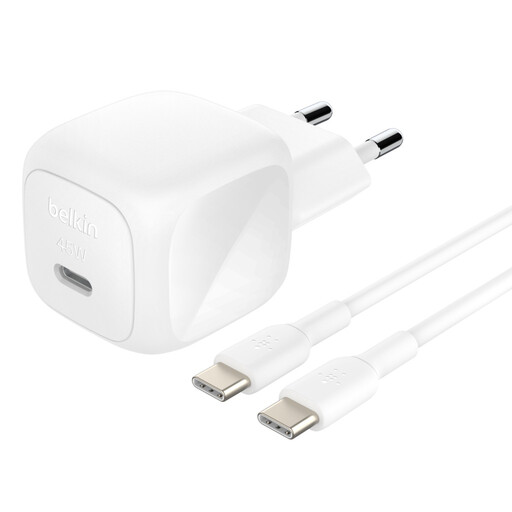
Why it's the right fit: The ideal companion for travellers who pack light. Feather-light at 58 grams and with an ultra-compact design, it slips into any bag. Its 45W output is enough to quickly charge a MacBook Air, tablet, or smartphone, making it the one charger you need for all your getaways.
Certified for USB-C PD 3.1 and PPS-compatible, it ensures fast, universal charging. Its tall, vertical design is engineered to avoid blocking adjacent outlets on a power strip.
It comes with a one-metre USB-C to USB-C cable, so it's ready to use right out of the box. Belkin's reputation speaks for itself, guaranteeing safety and reliability.
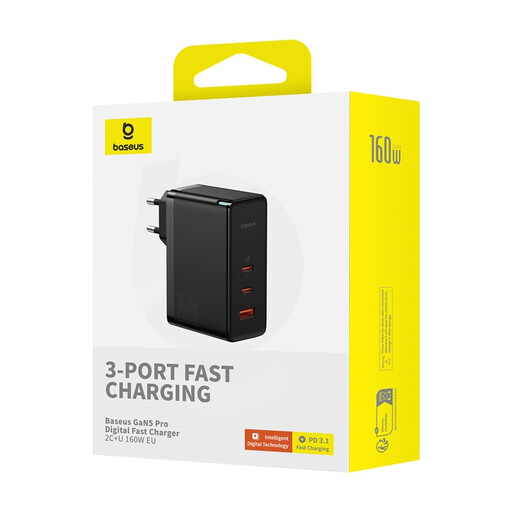
Why it's the right fit: For the user who's constantly juggling a laptop, smartphone, tablet, and headphones. This charging hub single-handedly replaces an army of adapters. Its 160W total output can power a laptop at full speed while simultaneously charging two other devices.
GaN technology allows it to remain surprisingly compact for its firepower. Intelligent power distribution ensures each device gets a tailored charge, with no risk of overvoltage.
Its two USB-C ports and one USB-A port provide unbeatable versatility. The icing on the cake: it comes with a 240W Type-C cable, ready for even the most power-hungry devices.
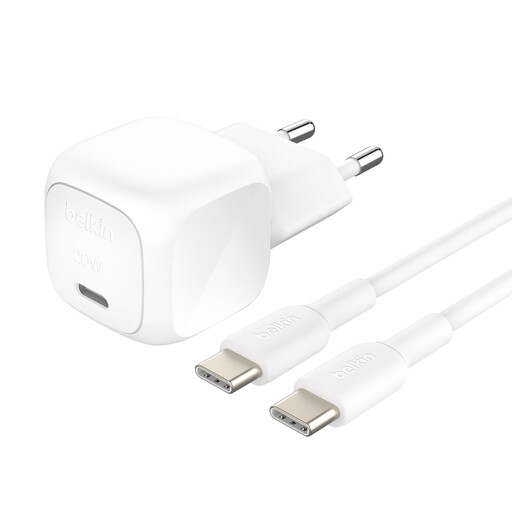
Why it's the right fit: There's no need to aim for 45W if you don't have a use for it. For fast and safe daily smartphone charging, 30W is more than enough. This Belkin fast charger is the sensible choice: reliable, high-performing, and without the extra cost of unnecessary power.
Opting for a trusted brand like Belkin saves you from the nasty surprises of "no-name" chargers. Certified for PD 3.1, it guarantees a fast and completely safe charge for compatible devices.
The perfect balance of compact design, power, and reliability. The fact that it comes with a USB-C cable makes it a turnkey, ready-to-use solution.
We've curated a complete, up-to-date selection of chargers that meet our demanding specifications and current safety standards.
Absolutely no risk. Thanks to the Power Delivery protocol, the charger and your device "communicate" to determine the maximum power the phone can safely receive. The charger then automatically adjusts to deliver only what's needed (25W in this example), never risking an overcharge to the battery.
It all depends on your devices. For most smartphones, a 20W to 30W charger is more than enough for fast charging. Investing in a 45W model is justified if:
Yes, and this is a crucial point. For a 45W charger to deliver its full power, it must be paired with a USB-C to USB-C cable that is certified to handle that wattage. A basic cable will throttle the charging speed and, in the worst-case scenario, could overheat. Most high-quality cables support at least 60W, but it's always worth double-checking.