Start by considering how much washing-up you produce each day and the space you actually have available, including with the door open. A 45 cm model may suit a small household, while a compact countertop dishwasher is designed for smaller loads. A 60 cm model is also an option if its size and capacity suit your kitchen and household. In an open-plan kitchen, compare the decibel rating and noise class of specific models too, rather than relying on their marketing labels alone.
Which size suits which household?
Small household with a narrow under-counter space
If you don't have 60 cm of width available, consider 45 cm models after checking the depth, height and connections. UFC-Que Choisir says that 9-place-setting models may suit a small family, potentially with daily cycles.
One person or a couple with a small load
A compact countertop dishwasher may suit a small amount of washing-up if you have enough worktop space for it. A model with a water tank can save you from needing a fixed water supply, but you will still need a power socket and somewhere to drain the waste water.
Household with an open-plan kitchen
If the dishwasher will be running during meals, work or downtime, compare the decibel rating and noise class of the model you are considering. UFC-Que Choisir highlights how important noise levels are when an appliance is in the same room as your living space.
What should you check before choosing?
Choose a size that suits your daily load and available space, then compare the installation requirements, noise levels and energy and water use of the models that meet your needs.
Slimline 45 cm
Consider this if: you want an under-counter appliance but don't have 60 cm of width available.
The compromise: UFC-Que Choisir says a 9-place-setting model may suit a small family, though it may need to run every day.
Compact countertop model
Consider this if: you have a small load and a suitable surface available; some models with a water tank don't need a fixed water supply.
The compromise: capacity varies by model, and a water tank doesn't remove the need for a power socket or a way to drain the waste water.
Standard 60 cm
Consider this if: your space can accommodate this size and your usual amount of washing-up makes the extra capacity worthwhile.
The compromise: you will need to allow for the width and depth of the appliance, as well as space to open the door.
| What to consider |
What to check |
What matters to me |
| Space and capacity |
Measure the width, height and depth, then check the space in front with the door open. Compare the place settings with a typical day's washing-up, including saucepans. |
I want to load the appliance without blocking the way or having to run it too often. |
| Noise |
Compare the stated decibel rating and noise class on the energy label for the exact model. Check separately which programme any quiet setting applies to. |
The cycle may run while I eat, work or relax in the same room. |
| Installation |
For a plumbed-in model, locate the water supply, waste outlet and power socket, and check the route for the hoses. For a model with a water tank, check how the waste water will be drained. |
If there isn't a fixed water supply nearby, I need to know whether the model has a tank and where to place the appliance and its drain hose. |
| Energy and water use |
The ADEME says the energy label shows electricity use in kWh per 100 standard cycles and water use in litres per cycle. Consider these figures alongside the model's capacity. |
I want to compare appliances suited to my load, without assuming that a smaller model always uses less. |
Which mistakes should you avoid?
-
Looking only at the stated width
An appliance may be the right width but still need more depth, height or door clearance than you have. For example, Bosch's product information for the SPS2HKI58E gives dimensions of 845 × 450 × 600 mm: its 450 mm width doesn't tell you everything about the space it takes up.
Measure the space in all three dimensions, check the route for the hoses and make sure the door can open fully. For a built-in model, also check the cabinet dimensions and the door panel required.
-
Assuming “quiet” is a comparable measurement
This label doesn't replace the noise data for the specific model. Noise deserves particular consideration in an open-plan kitchen, as UFC-Que Choisir points out.
Compare the decibel ratings and noise classes on the energy labels. If a quiet programme is advertised, check which programme each figure applies to.
-
Thinking a water tank means no installation is needed
A water tank can remove the need for a fixed water supply, but the appliance still needs electricity and somewhere to drain the waste water. Daan Tech's guide, for example, describes a drain hose for its Bob model.
Before choosing a compact model with a tank, make room for it on a suitable surface, allow for a power socket and plan the drain hose route according to the model's instructions.
-
Choosing a small capacity without considering your daily washing-up
A compact model and a 45 cm model aren't necessarily suited to the same load. UFC-Que Choisir notes that a 45 cm model with 9 place settings may suit a small family, sometimes with a daily cycle; Daan Tech says its compact Bob model holds two place settings.
Include the saucepans and containers you use on a typical day, then check the capacity and basket layout of the specific model.
Brands to help you compare sizes
Bosch
Bosch France product information for the SPS2HKI58E and SMS4ECI28F gives examples of freestanding models measuring 45 cm and 60 cm wide respectively.
- The product information gives the full dimensions, water use per cycle and noise class for these specific models.
- Check the specifications and advertised features for each model number; they don't represent the entire range.
Whirlpool
Whirlpool France product information for the WFC3C34APX gives an example of a 60 cm freestanding model with 14 place settings.
- It also lists a stated noise level of 44 dB and stated water consumption of 9,5 L for this model.
- These figures apply to the WFC3C34APX and don't tell you how all the brand's models perform.
Daan Tech
Daan Tech describes Bob as a compact countertop dishwasher available, depending on the configuration, with either an integrated water tank or a water connection.
- The manufacturer states that Bob holds two place settings under the European standard and explains the model's water supply options.
- Its guide still requires drainage through a hose; Bob's specifications don't apply to other compact models.
Joybuy models for different spaces
This selection includes compact countertop models for smaller loads and standard 60 cm models where space and the amount of washing-up allow. Check the dimensions and connections for each model before choosing.
 Image unavailable
Hotpoint H4FD641A freestanding dishwasher, 60 cm, 14 place settings
Worth considering if your kitchen can fit a 60 cm freestanding model and 14 place settings suit your household's needs. The product name states 41 dB; compare this figure and the model's noise class on its energy label, then check how much space you'll need to open the door.
View on Joybuy
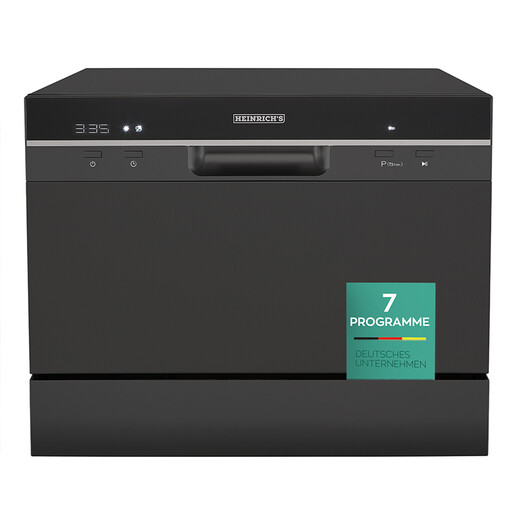 Image unavailable
Heinrich's HTG 8840 tabletop dishwasher, 6 place settings
This countertop model is worth comparing with your usual smaller loads and the space available on your worktop. The product name states 47 dB and 7 programmes; measure the space, then check the model's full dimensions and connections.
View on Joybuy
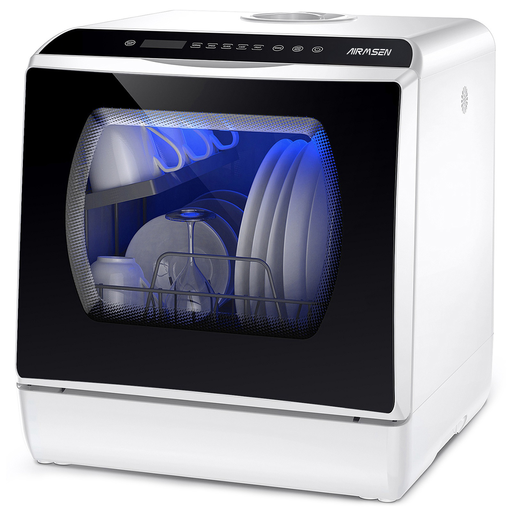 Image unavailable
AIRMSEN compact countertop dishwasher, 5 L water tank
The stated integrated water tank may be useful if you don't have access to a fixed water supply. Check that you have room on your worktop, plan how to drain the waste water and, for an open-plan kitchen, check the model's noise information before deciding.
View on Joybuy
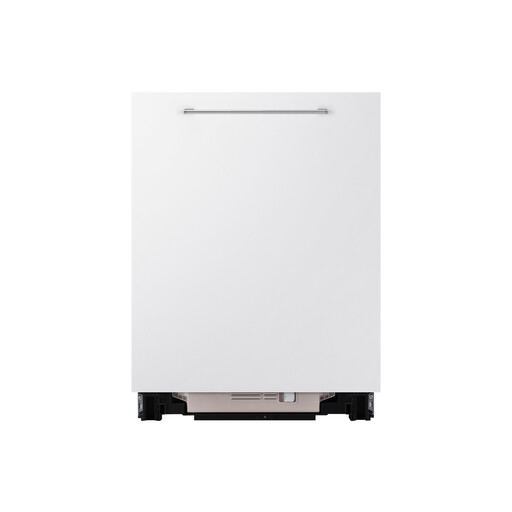 Image unavailable
Samsung DW80H72YBB0U1 integrated dishwasher, 60 cm, 13 place settings
Consider this integrated model if you have a suitable 60 cm cabinet space and 13 place settings meet your household's needs. Check the cabinet dimensions, door and connections; in an open-plan kitchen, compare the noise information on the energy label too.
View on Joybuy
 Image unavailable
Comfee' CDWMTO201D(W) countertop dishwasher, 5 L water tank
This countertop model with a stated water tank may be worth considering for a small kitchen if your worktop space and daily load are suitable. Plan how to drain the waste water, and check the model's dimensions and noise levels if your kitchen opens onto your living space.
View on Joybuy
Frequently asked questions
What should I check when installing a plumbed-in dishwasher?
Make sure there is a nearby water supply, waste outlet and power socket, then check that there's room for the hoses and for the door to open. Whirlpool France's installation guide describes these three connections; follow the instructions for the model you choose.
Can a compact dishwasher with a water tank work without a fixed water supply?
Some models can, but they still need electricity and a way to drain the water. Daan Tech says its Bob model can use an integrated water tank, but still requires a drain hose; check the requirements for the compact model you're considering.
How can I compare noise levels in an open-plan kitchen?
Check the stated decibel rating and noise class on each model's energy label. The ADEME says the noise class appears on the label, while UFC-Que Choisir highlights how important noise is when the dishwasher shares your living space.
Does a 45 cm dishwasher always use less than a 60 cm model?
Don't judge energy and water use by width alone. To compare specific models, check the figures on the energy label: according to the ADEME, it shows electricity use in kWh per 100 standard cycles and water use in litres per cycle. Also consider the capacity your household needs.


