Homes without a dedicated cabinet space
If you want to keep your existing cabinets, consider a slimline freestanding model. Check all three dimensions and access to the connections: a suitable width alone doesn’t guarantee it will fit.


First, choose the type of installation your kitchen allows. A slimline freestanding dishwasher doesn’t need a cabinet space, whereas a fully or semi-integrated model needs a suitable space and matching door panel. Check the height and depth too, then compare the capacity with how often you wash up. If your kitchen opens onto your living space, add noise levels to your checklist. The energy label also lets you compare water use per cycle and energy use per 100 cycles, as the ADEME points out.
If you want to keep your existing cabinets, consider a slimline freestanding model. Check all three dimensions and access to the connections: a suitable width alone doesn’t guarantee it will fit.
Compare the stated capacity with the dishes you get through between cycles. Que Choisir says a 9-place-setting model may suit a small family, but could still need to run every day.
If the dishwasher will run close to your living area, check its noise level in dB and the noise class on the energy label rather than relying on the word ‘quiet’.
First work out where the appliance can go. Then compare the capacity and noise levels of the models that fit the space.
Consider this if: you’re short on space but don’t have a cabinet space for a dishwasher.
Bear in mind: the appliance will be visible, and its full dimensions must suit the space.
Consider this if: you have a suitable cabinet space and want the door panel to blend in with your kitchen.
Check: the cabinet space, door-panel fixings and installation requirements must all be compatible with your chosen model.
Consider this if: you have a suitable cabinet space and want the controls to remain visible on the front.
Check: this format also needs a suitable space and matching door panel.
| What to consider | What to check | Who this matters to |
|---|---|---|
| Space and installation | Measure the height, width, depth and door clearance. For an integrated model, check that the cabinet space and planned door panel are suitable too. | When every centimetre counts, I want to be sure the appliance will fit the available space and work with my cabinets. Around 42% of consumers put this compatibility first. |
| Capacity and washing routine | Compare the stated place settings with the dishes you usually wash and how often you’re happy to run a cycle. Que Choisir notes that a 9-place-setting model in a small household may need to run every day. | If dishes pile up quickly, I’d rather check the capacity before choosing a slimline model. This is the top priority for around 33% of consumers. |
| Noise and consumption | On the energy label, compare the dB rating and noise class, then check the kWh per 100 cycles and litres per reference cycle listed by the ADEME. | In an open-plan kitchen, hearing the dishwasher from the living area and keeping an eye on consumption both influence my choice. Around 25% of consumers prioritise these everyday-use factors. |
The height and depth can also prevent installation. For example, Bosch lists dimensions of 845 × 450 × 600 mm for its SPS2HMI02E; these measurements don’t apply to every 45 cm model.
Measure the space, door clearance and access to connections, then check them against the specifications and manual for the exact model.
A narrower width can help preserve your layout without offering the capacity you need. Que Choisir notes that a 9-place-setting model suited to a small family may still need to run every day.
Estimate how many dishes you’ll have between cycles before choosing a capacity in place settings.
An integrated appliance is designed for a cabinet or built-in space; a freestanding model isn’t designed to be treated as an integrated one. A semi-integrated model also needs a suitable space.
Check the installation type, cabinet-space dimensions, door panel and connections in the manual for the model you’re considering.
A single figure tells you less than the comparable information on the energy label. The ADEME notes that this includes energy use per 100 reference cycles and water use per cycle.
Check the label for the exact models and consider these figures alongside capacity and noise level.
The French range includes 45 cm freestanding dishwashers, worth considering if you don’t have a cabinet space for an integrated model.
The 45 cm freestanding range gives you options to consider when comparing capacity in a narrow space.
The French range includes 45 cm fully integrated and freestanding models to suit different kitchen layouts.
These countertop models are another option if you’re considering making room on your worktop instead of installing a 45 cm appliance on the floor or in a cabinet. For each one, check the available space, water supply and drainage.
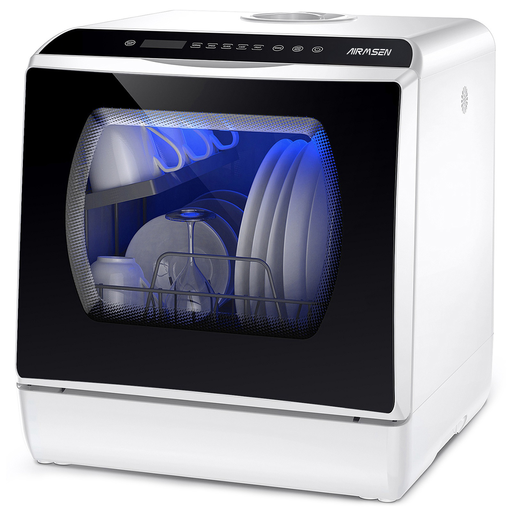 Image unavailable
Worth considering if you want a worktop appliance without a permanent water supply. The product name lists a built-in 5 L tank and 5+1 wash cycles. Even with the tank, you’ll need to arrange water drainage. Check the dimensions, noise levels and consumption figures for this model too.
 Image unavailable
Its stated capacity of 6 place settings may appeal if you’re considering a tabletop model but want to avoid running it too often. The product name lists 47 dB and energy class D: check these figures against the label for the exact model. Measure the space too, and check the water connections and drainage options.
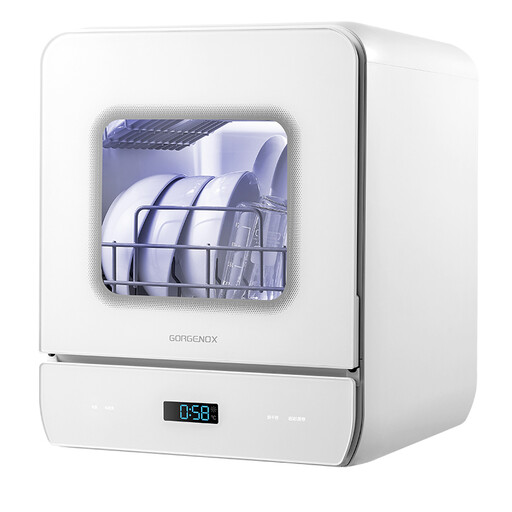 Image unavailable
This countertop model has a stated capacity of 3 place settings. Compare it with the amount of washing up you generate between cycles, as smaller loads may mean running it more often. The product name mentions washing, drying and storage. Check the model’s dimensions, installation requirements and any care instructions in its documentation.
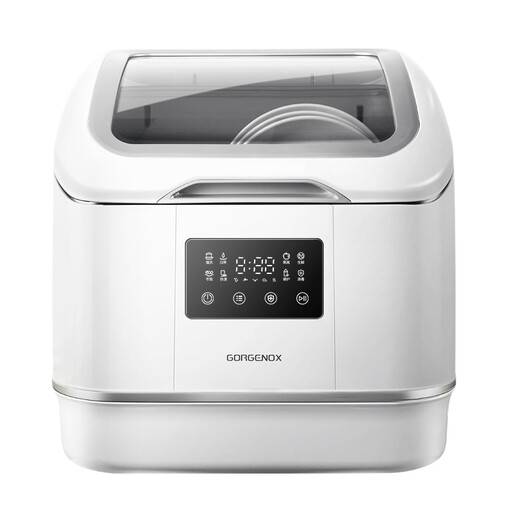 Image unavailable
With a stated capacity of 3 place settings, this countertop model is designed for smaller loads. The product name mentions washing, drying and storage. Before making space for it, check its dimensions and water-supply requirements: the title and description give conflicting information about whether it needs a tap connection.
Compare the capacity in place settings, energy use in kWh per 100 cycles, water use in litres per cycle, and noise in dB alongside the noise class. The ADEME recommends using these figures as a guide for comparison. Consider them together rather than focusing only on the energy class.
It may be, as long as its capacity suits the dishes you get through between cycles. Que Choisir says a 9-place-setting model may suit a small family, although it may need to run every day. So consider how often you’ll use it before choosing.
Only if you have a suitable space and the cabinet space, door panel and connections are compatible with your chosen integrated model. Check the installation instructions before buying: a 45 cm width alone doesn’t guarantee it will fit.
Compare the dB rating and noise class on the labels of the models you’re considering. Que Choisir highlights noise as a particularly relevant factor for open-plan kitchens. Consider it alongside capacity and the other features you need.