Households with lots of washing up
If plates, glasses and serving dishes regularly fill a large dishwasher, look at 60 cm models. Make sure the space and connections are suitable, then compare the Eco-cycle figures for the capacity you need.


If your dishes regularly fill a large dishwasher, consider a 60 cm model. If space is tight and you have a moderate load, look at 45 cm models. Washing up by hand is still an option if you have few dishes or can’t install an appliance. Before choosing a dishwasher, check its dimensions, connections and Eco-cycle figures: no size guarantees lower consumption for the way you use it.
If plates, glasses and serving dishes regularly fill a large dishwasher, look at 60 cm models. Make sure the space and connections are suitable, then compare the Eco-cycle figures for the capacity you need.
A 45 cm model is worth considering when width is limited. Check that its stated place-setting capacity suits your meals and larger dishes, so you don’t have to run multiple cycles.
If there’s no water supply, drainage, power supply or suitable space, start by checking whether installation is possible. You can then decide whether a dishwasher is an option or whether washing up by hand is better suited to your situation.
Start with how much washing up you produce between cycles, then check the installation requirements. To compare appliances, ADEME recommends checking the label for capacity, reference-cycle consumption, cycle duration and noise level.
Consider it : if your meals regularly fill a large dishwasher and your kitchen can accommodate this size.
The trade-off : if the dishwasher is often only partly full, its capacity may not suit your household’s routine.
Consider it : if width is limited and your dishes will fit in a narrower dishwasher.
The trade-off : a large load may need more cycles; size alone doesn’t tell you the total consumption.
Stick with it : if you have few dishes or can’t install an appliance in your current home.
The trade-off : you’ll still need to wash up after meals. Standardised dishwasher figures aren’t enough to compare every way of washing up by hand.
| Criteria | What to check | Think about your needs |
|---|---|---|
| Capacity | Compare the stated number of place settings, then check there’s room for your dishes and pans. Estimate how many cycles your usual load would need. | I’d like to avoid running a small dishwasher again for dishes from the same meal, but I don’t want to regularly run a large one when it’s only partly full. |
| Water and electricity | Check the litres per cycle and kWh per 100 cycles on the exact model’s label. According to ADEME, these figures relate to the reference cycle, so consider them alongside the capacity and how often you expect to run it. | Consumption per cycle matters to me, but I also want to know how often I’ll run the appliance. |
| Cycle duration | Check how long the Eco programme takes, as well as the programmes you expect to use. The label figures won’t necessarily describe a different programme. | If I need to use the dishes again soon, I should factor in how long it will take before I can unload or run the dishwasher again. |
| Noise | Compare the noise emissions in dB and the noise class on each model’s label, as ADEME recommends. | Noise levels matter when I’m choosing a dishwasher for an open-plan kitchen or to run in the evening. |
| Repairability | Check the model’s repairability index, scored out of 10 by the Ministry of the Economy. Treat it as an indication of how repairable the appliance is, not as an overall quality rating. | As well as capacity and features, I want to consider whether the appliance can be repaired. |
| Installation | Measure the width, height and depth; confirm the installation type, water supply, drainage and power supply. For an integrated model, check the housing space and door too. | Before choosing a model, I need to know whether it will fit in my kitchen and can be connected. |
A 45 cm model may need to run more often if dishes pile up quickly; a 60 cm model, on the other hand, may often be only partly full.
Keep an eye on your loads and larger dishes for a typical week, then compare the stated capacities of models that will fit in your kitchen.
The figures on the label relate to the reference cycle. A quicker or more intensive programme won’t necessarily have the same characteristics.
First compare labels on a like-for-like basis, then check the Eco-cycle duration and the programmes you’ll use.
Having enough space isn’t the only consideration: the appliance also needs to connect to the water supply, drainage and electricity. A housing space or cabinet door may need additional checks.
Measure the space and confirm the connections, as well as any work needed for installation.
Plumbing, electrical or carpentry alterations may require a separate tradesperson; Electrolux France states that its installers do not carry out this work.
The index indicates how repairable an appliance is; it doesn’t sum up a dishwasher’s capacity, noise level or consumption.
Consider it alongside the energy label, dimensions and features that matter for the way you use it.
The details below relate to specific models listed by the manufacturers; they don’t describe every appliance from each brand.
Bosch offers, among other options, 45 cm built-in dishwashers.
Beko France offers 45 cm and 60 cm freestanding models, with capacities that vary by model.
Miele France offers, among other options, 60 cm integrated dishwashers.
These dishwashers match the large-capacity option discussed above: some are freestanding, while others are integrated. Compare their capacity and installation type with your washing-up load and kitchen; this list doesn’t compare 45 cm models with washing up by hand.
 Image unavailable
Worth considering if your household’s dishes call for a stated capacity of 14 place settings. The product details list 7 programmes; check the dimensions, connections, Eco-cycle duration and repairability index before making your choice.
 Image unavailable
This C-rated model is listed as 60 cm wide and is designed for a large load. However, the dimensions provided don’t match the stated width, so confirm the actual measurements before deciding whether it will fit in your kitchen.
 Image unavailable
With a stated width of 60 cm and capacity of 14 place settings, this model is worth considering if a large dishwasher is regularly filled. It has an E energy class; check the dimensions, connections and Eco-cycle figures before comparing it with other appliances.
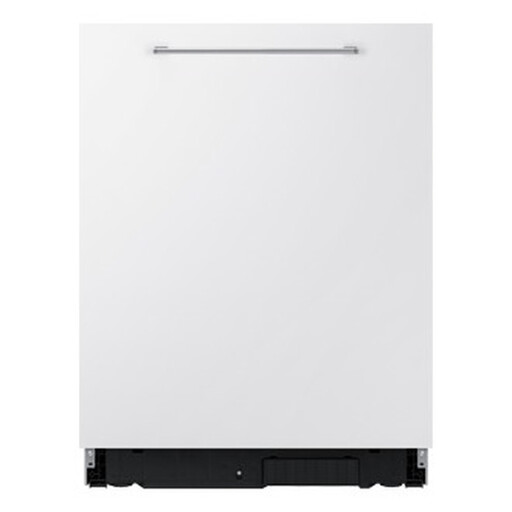 Image unavailable
This 60 cm C-rated model is listed for 13 place settings and is designed for a kitchen set up for a built-in dishwasher. Check the housing dimensions, door compatibility and connections before choosing this installation type.
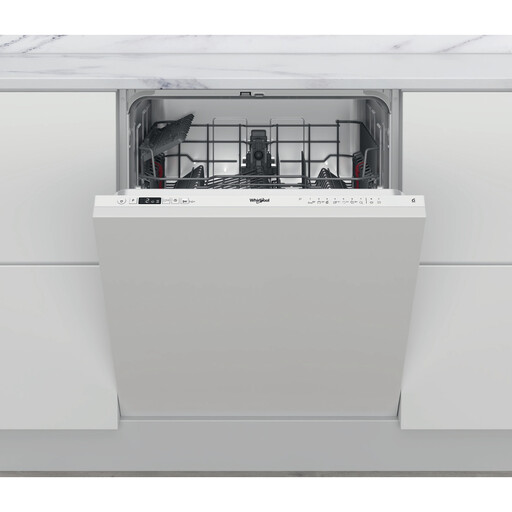 Image unavailable
The stated capacity of 14 place settings may suit a large, regular load, provided you have a 60 cm space for an integrated model. It has an E energy class; check the housing space, compatible cabinet door, connections and Eco-cycle figures.
Choose based on the space available and how many dishes build up between cycles. As specific examples, Beko lists 10 place settings for its 45 cm DVS05030W and 14 for its 60 cm BDFN26450XP. Check the capacity of the model you’re considering and how much room your dishes take up, rather than judging capacity by width alone.
Measure the available width, height and depth, then confirm the water supply, drainage and power supply. For a built-in model, check the housing space and door too; Electrolux France states that its installers don’t carry out plumbing, electrical or carpentry work.
Compare the figures for the same reference programme, taking capacity into account. ADEME says the label includes details such as kWh per 100 cycles, litres per cycle and the Eco-programme duration. Also estimate how many cycles each capacity would need for your washing up.
It’s a score out of 10 indicating how repairable a dishwasher is, according to the Ministry of the Economy. It’s one factor to consider when buying, but doesn’t replace checking the capacity, noise level, consumption or installation requirements.