
Livraison le jour même ou le lendemain

Qualité garantie

Débloquez vos offres de bienvenue: Livraison GRATUITE | Jusqu'à -80 % | 30 jours d'essai gratuits à JoyPlus
Téléchargez l'application
By the Joybuy team, our product experts. Published on August 27, 2026.
Dreaming of capturing a rare bird in mid-flight or your child's smile from across the sports field, but put off by the complexity and cost of a DSLR?? That's precisely the mission of the bridge camera: a versatile and powerful body that brings distant subjects closer, without the hassle of juggling lenses.
The problem is, the market is flooded with misleading marketing claims. To avoid buyer's remorse, it's crucial to know the most common pitfalls.
To make an informed choice, forget the marketing jargon and focus on what truly matters for your photo quality. Here are the three points to scrutinise.
Zoom is the DNA of a bridge camera. Rely only on the optical zoom value, which corresponds to the physical magnification of the lens. A 40x bridge camera allows you to magnify your subject by 40 times without any loss of quality. Digital zoom, on the other hand, is just a software gimmick to be used only as a last resort.
With a powerful zoom, the slightest hand shake is magnified and will ruin your photo. The optical image stabiliser (OIS) is a mechanical system that physically compensates for these micro-movements. It's a non-negotiable feature for harnessing your zoom's potential, whether for wildlife photography, a football match, or simply for handheld shots.
A good bridge camera doesn't just zoom in; it must also see the bigger picture. Check its minimum focal length: a wide-angle lens (around 24?mm in 35?mm equivalent) is essential for landscapes, architecture, or group photos. It's this versatility that makes it the perfect travel camera, ready to adapt to any scene.
Rather than an endless list, we've selected models that tick all the boxes for performance and reliability, matching them with typical user profiles.
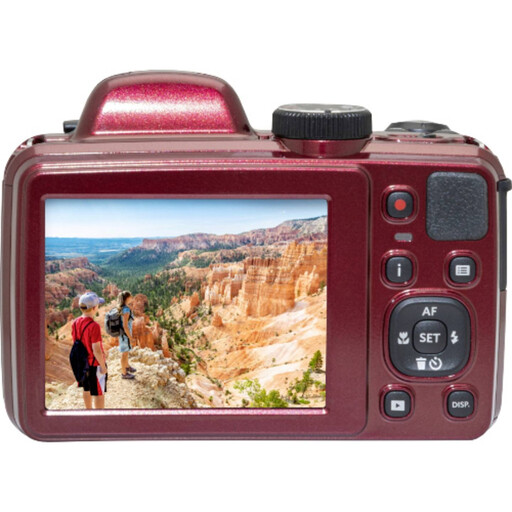
Why it's for you : It's the ideal Swiss Army knife for those who want one camera to do it all. Its powerful zoom lets you photograph wildlife without disturbing it, while its 24 mm wide-angle is perfect for holiday landscapes. A reliable and ultra-versatile travel companion.
This model focuses on the essentials : a true 40x optical zoom and an optical image stabiliser (OIS) for sharp shots, even at full zoom. No misleading marketing figures, just useful performance.
Its 20 MP sensor ensures detailed images, it records in 1080p Full HD, and—a key advantage for adventurers—it runs on AA batteries, which you can find absolutely anywhere.
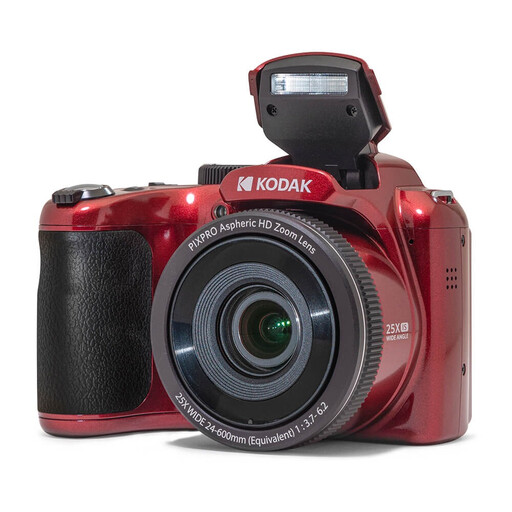
Why it's for you : Ideal for those who want much better photos than their smartphone can offer, without breaking the bank. Its 25x zoom is more than enough for school fairs, birthdays, and family holidays. It's ultra-simple to use thanks to its automatic scene modes.
This model doesn't get caught up in a specs war. It sticks to the essentials : a quality 25x optical zoom, a well-balanced 16 MP sensor, and optical image stabilisation. The priority is real image quality, not marketing claims.
Excellent value for money for getting started with a bridge camera. It's ready to use out of the box with its 22 scene modes and a dedicated button to start recording 720p HD video.
Discover our full selection of products that meet our quality criteria and current standards.
Optical zoom uses the lens elements to physically magnify the image, with no loss of quality. It's a true zoom. Digital zoom, in contrast, simply crops into the image captured by the sensor, which severely degrades resolution and sharpness. For quality photos, only consider the optical zoom.
No, quite the opposite?! Most bridge cameras are designed to be very accessible. They offer automatic or "scene" modes (portrait, landscape, sport, etc.) that handle all the settings for you. They provide a comfortable grip, similar to a DSLR, but without the complexity (and cost) of interchangeable lenses.
For a bridge camera that takes 20?MP photos and Full HD video, an SDHC or SDXC card with a Class 10 or UHS-I (U1) rating is the minimum requirement. In terms of capacity, 32?GB or 64?GB is a good compromise for storing thousands of photos and several hours of video without worry. Just remember to check the maximum capacity supported by your camera before buying.