
Livraison le jour même ou le lendemain

Qualité garantie

Débloquez vos offres de bienvenue: Livraison GRATUITE | Jusqu'à -80 % | 30 jours d'essai gratuits à JoyPlus
Téléchargez l'application
Choosing a 40L hiking backpack might seem simple, but it's a technical purchase that determines the comfort and success of your 2-to-3-day trips. The wrong choice often comes at a high price: back pain, poorly organised gear, or a pack that wears out prematurely. The goal isn't just to find a backpack, but to find the perfect companion for your adventures.
As the Head of Product Recommendations at Joybuy, my mission is to help you navigate the multitude of options and marketing claims. Let's analyse the criteria that truly matter and the pitfalls to avoid so you can make an informed choice.
The market is flooded with models making tempting promises. However, certain overrated features or design flaws can turn your hike into a nightmare. Here are the most common mistakes.
Many backpacks are labelled "travel" or "outdoor" but are actually disguised urban bags. They might boast a 40L capacity, but they lack the necessary structure to carry a load of 8 to 12 kg for several hours. The absence of a proper hip belt and a rigid frame transfers all the weight onto your shoulders. The result: guaranteed fatigue and pain.
For trekking, a backpack with a frame isn't an option—it's a necessity. This internal structure, often made of aluminium, is designed to transfer the majority of the pack's weight from your shoulders to your hips, which are much better equipped to bear the load. A frameless pack, even if marketed as a comfortable 40L backpack, will collapse under its own weight and create painful pressure points on your back.
A simple foam panel with a few ridges doesn't make for a ventilated backpack. An effective ventilation system relies on a specific design: a suspended mesh back panel (the famous "trampoline back") that creates a gap between your back and the pack, or deep ventilation channels combined with technical materials. Without this, sweat builds up quickly, leading to discomfort and a chilling sensation during breaks.
For a 2-3 day hiking pack, three technical elements demand your full attention. They are the key to your comfort and the durability of your investment.
As we've seen, the frame is the backbone of your pack. It must be paired with a wide, padded hip belt that wraps securely around your hips. This combination is what ensures proper load transfer. When trying on the pack, you should feel the weight resting on your pelvis, not your shoulders. The shoulder straps are only there to stabilise the pack against your back.
A good back system must serve a dual purpose: ensuring effective ventilation and allowing for a precise fit.
A 40-litre capacity is an excellent compromise, but its internal and external organisation is just as crucial. Check for the presence of:
Finally, a waterproof hiking backpack is a real asset. Most packs are made from water-resistant fabric (which can handle a light shower), but for complete protection, make sure it comes with an integrated rain cover.
Based on performance and technical design criteria, certain models stand out. Here is an option that perfectly illustrates what to look for in a multi-day trekking pack.
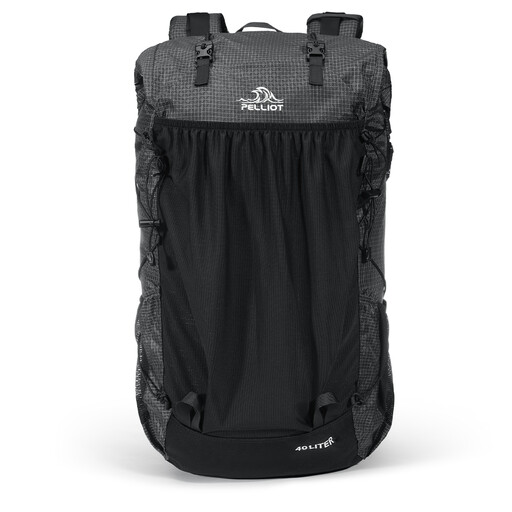
Why this model stands out: This pack is designed specifically for trekking, with technical features engineered for carrying loads over long distances. It makes no compromises on the essential elements of comfort and functionality in the great outdoors.
It incorporates an alloy support frame that ensures optimised load transfer to the hips. Its 3D breathable carrying system with an ergonomic EVA back panel and ventilated mesh prevents sweat build-up, thus avoiding the pitfalls of the fake all-purpose bag and the non-ventilated back.
The dynamic carrying harness technology allows the shoulder straps to adjust automatically to your movements, reducing fatigue. The organisation is optimised with multiple pockets and external attachment points for gear.
We have curated a full range of backpacks that meet our strict selection criteria and current safety standards.
A proper fit is essential. Loosen all the straps. Put the pack on your back, then tighten the hip belt first, positioning it securely on your hips (over your iliac crest). Next, adjust the shoulder straps so they conform to your shoulders without carrying all the weight. Finally, tighten the load lifter straps (located at the top of the shoulder straps) and the sternum strap.
Yes, a 40-litre capacity is generally considered a good balance for 2-to-3-day hikes, especially if you're staying in huts or hiking in mild weather. However, this requires you to optimise your gear to avoid overpacking. For winter trips or fully self-sufficient treks, a larger capacity (50L and up) will be more comfortable.
Be careful not to confuse two terms: water-resistant and waterproof. A water-resistant fabric has been treated to make water bead off, but it will eventually become saturated in continuous rain. A waterproof fabric, often thanks to a coating (PU, TPU) and sealed seams, offers far superior protection. For maximum security, the most reliable solution is still a rain cover, which covers the entire pack. Check if one is included or if you need to purchase it separately.