
Livraison le jour même ou le lendemain

Qualité garantie

Débloquez vos offres de bienvenue: Livraison GRATUITE | Jusqu'à -80 % | 30 jours d'essai gratuits à JoyPlus
Téléchargez l'application
Designing a new kitchen or renovating an old one is a significant project. As the centrepiece of this space, the hob is a crucial choice. The 4-zone induction hob has established itself as the gold standard thanks to its speed, safety, and ease of cleaning. But be warned: faced with a jungle of marketing promises, it's easy to be swayed by arguments that, in practice, prove costly. As a Product Recommendation Manager at Joybuy, my mission is to equip you to decode technical specifications and make a choice you won't regret.
Before you even start comparing models, let's review the common mistakes that turn a promising purchase into a disappointment.
To ensure you're making a sound investment, three technical parameters must be carefully scrutinised.
The total power of a 4-zone induction hob, expressed in watts (W), determines its ability to run several zones at full power simultaneously. A high-performance model should have a nominal power rating of at least 7,200?W. Be aware that this power comes with a requirement: a built-in induction hob of this capacity requires a specific electrical connection on a dedicated circuit, protected by a 32?A circuit breaker. Remember to check that your electrical installation is compliant before any purchase to avoid any unpleasant surprises.
The standard size for a 4-zone hob is 60?cm wide. This is the most common format, compatible with the majority of built-in cutouts. A 60 cm induction hob will therefore fit into most kitchens with ease. For avid home cooks or those lucky enough to have a large worktop, 80 or 90?cm models offer unparalleled ease of use, allowing you to juggle large pots without them jostling for space.
Beyond raw power, certain features are real game-changers in daily use and justify a higher budget:
Rather than an exhaustive list, we've selected models that cater to specific user profiles. The goal: to help you find the hob that truly matches your habits.
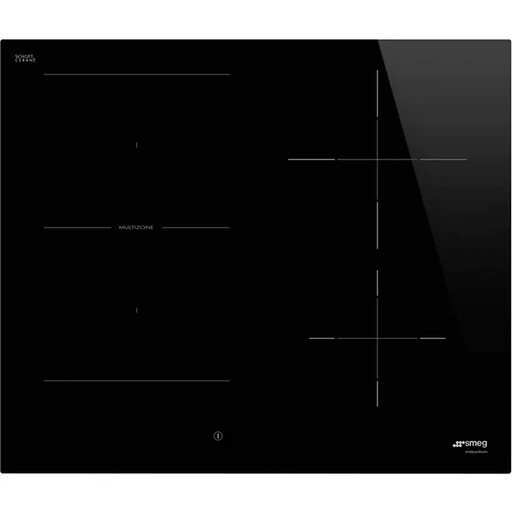
Why we love it: For those who see appliances as a central element of their kitchen design. SMEG's reputation is well-established, and this model combines a sleek aesthetic with high-end features, meeting the expectations of discerning cooks who refuse to sacrifice either style or performance.
This model includes a true MultiZone function that allows you to bridge two zones to create one large, uniform cooking area. Its total power of 7.2 kW ensures that the Booster function (up to 3.0 kW per zone) doesn't sap power from the other active zones.
The blend of iconic Italian design and effective MultiZone technology, delivering maximum versatility without compromising on style.
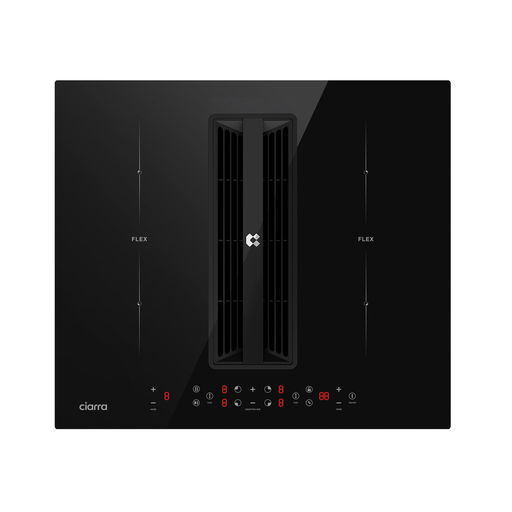
Why we love it: Perfect for kitchens with a central island or minimalist layouts where a wall-mounted hood would break the visual harmony. This 2-in-1 concept integrates the extractor directly into the hob, preserving visual space and offering an advanced technological solution for air purification.
Far from being a gimmick, the integrated hood and its Plasma? filtration technology prove incredibly effective against smoke and odours. The large flexible zone (FlexiZone) offers flawless modularity for large cookware, light-years ahead of imitation flexible zones.
A 2-in-1 concept that frees up counter space and clears your line of sight. The ideal solution for modern, social kitchens.
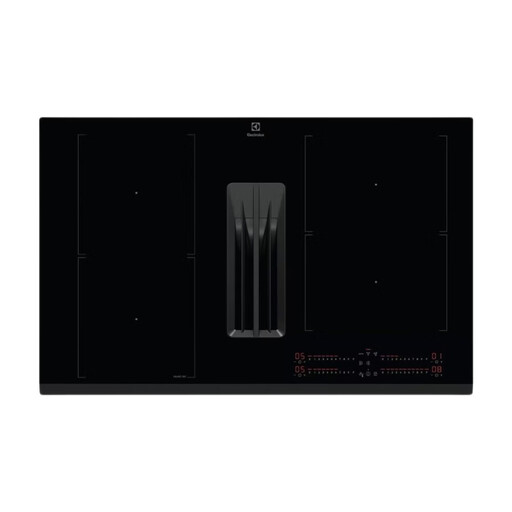
Why we love it: With its generous 80 cm width, this hob offers luxurious comfort for cooking with several large pans simultaneously. Assisted functions like the PerfectFry sensor, which adjusts the temperature to prevent food from burning, are true co-pilots in the kitchen, invaluable for busy family and intensive use.
Here, the functions aren't just for show. They are genuine cooking aids. The extraction system deploys automatically, and the frying sensor provides tangible value, far from marketing claims that have no effect on your dishes.
The retractable downdraft system, which appears and disappears on demand, combined with the XXL 80 cm surface for absolute cooking comfort.
We've curated a full selection of hobs that meet our criteria for quality and performance, all perfectly suited for the UK market.
A quality induction hob has an estimated lifespan of 10 to 15 years. This depends on the durability of its electronic components (the power board is the weakest link) and its maintenance. Careful cleaning with appropriate products and good ventilation underneath the hob are the keys to its longevity.
This is a common misconception. Despite being very powerful, induction is the most energy-efficient cooking technology. Its efficiency is exceptional: nearly 90% of the energy is transferred to the pan, compared to only 60% for ceramic and 50% for gas. Since it heats up very quickly, you use it for less time, which helps keep your electricity bill in check.
Yes, and this is non-negotiable. To work, induction requires cookware with a ferromagnetic base (one that contains iron). The good news is that most modern pots and pans are compatible. The simple trick to check your old cookware is to hold a magnet to its base. If it sticks firmly, it's compatible, and you're good to go.