
Livraison le jour même ou le lendemain

Qualité garantie

Débloquez vos offres de bienvenue: Livraison GRATUITE | Jusqu'à -80 % | 30 jours d'essai gratuits à JoyPlus
Téléchargez l'application
A 4-season duvet can replace several duvets in your cupboard: a lightweight layer for warm nights, a warmer version for autumn, then both combined when temperatures fall. However, behind the term ‘all-season’, designs can vary considerably.
Before placing your order, it is best to avoid three common mistakes: choosing a size that is too small, opting for a tog or filling weight that is excessive for your bedroom temperature, or selecting a composition that is complicated to care for. Here are the criteria to consider when comparing the models available in France and finding a duvet suited to your sleeping habits.
A duvet that looks very thick is not necessarily the warmest. The filling weight, expressed in g/m², provides a better indication of the amount of filling. For a summer duvet, generally allow 200 to 250 g/m² in a temperate bedroom or if you prefer to sleep lightly. Winter models usually have a higher filling weight.
The room temperature, your sensitivity to the cold and how often you heat the bedroom ultimately have more influence than the duvet’s apparent volume.
For a double bed, the 240 x 220 cm and 220 x 240 cm sizes cover the same area. Only the orientation changes, depending on the bed configuration and the amount of overhang you want. A wider duvet hangs further down the sides and helps to limit draughts, which is particularly useful when two people are sharing a bed.
For a single bed, the 140 x 200 cm and 135 x 200 cm sizes are very common. Remember to check the size of the duvet cover you already own before confirming your purchase.
This indication does not mean you can ignore the composition, care recommendations and any certifications. Some products mention STANDARD 100 by OEKO-TEX, CertiPUR, Sanitized or ISO 9001, for example. These references should be accompanied by a sufficiently detailed product sheet and do not in any way constitute a medical guarantee.
If you are sensitive to dust, a machine-washable model that can be dried properly may prove more practical for everyday use than a duvet that always requires professional cleaning.
A genuine 4-season duvet generally consists of two removable layers with different filling weights, which can be joined using buttons or fasteners. You can use the lightweight duvet on its own, the warm version on its own or both together.
This system is particularly suitable for couples whose temperature preferences differ. However, make sure the manufacturer clearly explains the fastening system and that both layers stay securely in place throughout the night.
If the duvet is machine washable, make sure your washing machine has sufficient capacity. Some 140 x 200 cm models require a machine with a capacity of at least 12 kg. Follow the recommended washing temperature, do not use bleach if it is not advised, and make sure the filling is completely dry to prevent moisture from settling inside.
Air the duvet regularly, protect it with a suitable cover and follow the manufacturer’s recommendations. Regular care helps to preserve its structure, although its lifespan also depends on the type of filling, how often it is washed and the drying conditions.
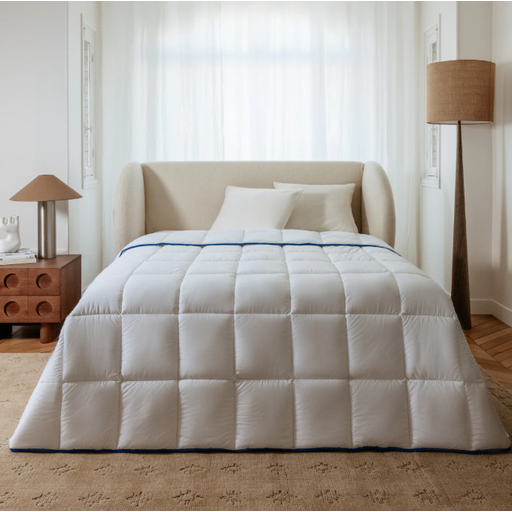
Why this choice suits this profile : This single-bed size is a good way to start with a lightweight duvet, suitable for bedrooms from 20 °C, without immediately investing in a bulky set.
The size, stated filling weight of 250 g/m² and recommended use are clearly specified, reducing the risk of choosing a duvet that is too warm.
A cotton percale cover, hollow polyester fibre filling and a stated wash temperature of 40 °C.

Why this choice suits this profile : Its generous size is ideal for a couple looking for a warm duvet for a minimally heated bedroom and who appreciate the qualities of natural filling.
The composition clearly distinguishes feathers from down, while the 220 x 240 cm size makes it easy to check compatibility with your duvet cover.
A filling stated to contain 90% duck feathers and 10% down, an organic cotton sateen cover and a 40 °C wash according to the product sheet.
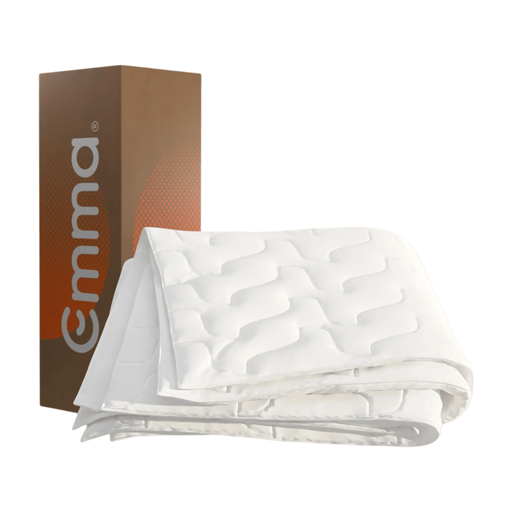
Why this choice suits this profile : Its two removable layers let you adjust the warmth throughout the year, which is a real advantage in a household where everyone has different comfort preferences.
Its 3-in-1 design means you do not have to rely on a single warm duvet all year round. Simply remove one layer when the bedroom gets warmer.
A 240 x 220 cm size, two stated thicknesses, natural and recycled materials according to the product sheet, and machine-washable care.
We have put together a complete, real-time selection of products that meet these demanding criteria and European safety standards.
It all depends on the filling weight of each layer and how sensitive you are to heat. In a room at 20 °C or above, a lightweight summer duvet may be perfectly sufficient. The advantage of an adjustable model is that you can remove one layer without having to change all your bedding.
For a double bed, take into account the amount of overhang you want and the dimensions of your duvet cover. The 220 x 240 cm and 240 x 220 cm sizes cover the same area, but their orientation must match that of the cover. Also remember to measure the thickness of the mattress and the height of the bed base.
There is no universal lifespan. Regularly check its loft, any flattened areas, persistent odours and the condition of the stitching. Washing it according to the recommendations, airing it properly and using a protective cover will help your duvet remain comfortable for longer.