
Livraison le jour même ou le lendemain

Qualité garantie

Débloquez vos offres de bienvenue: Livraison GRATUITE | Jusqu'à -80 % | 30 jours d'essai gratuits à JoyPlus
Téléchargez l'application
Choosing a new duvet seems simple, but the market is a jungle of sometimes misleading marketing terms. A 4-season duvet is often sold as the silver bullet for perfect year-round comfort. But does it really live up to the hype? Before you decide, it's best to know the few pitfalls that can turn your purchase into a disappointment.
As a product expert at Joybuy, my role is to help you see things more clearly. Let's break down the key points to check to find the duvet made for your nights, not for advertising slogans.
The 3 pitfalls to avoid when buying a duvet:
To make an informed choice, focus on three key criteria: the filling, the appropriate fill weight for the use, and the dimensions.
The type of filling is decisive: it determines the comfort, lifespan, and ease of maintenance of your duvet.
The fill weight, expressed in grams per square meter (g/m? or GSM), indicates the weight of the filling. But be careful, this number means nothing on its own: it must be analysed in relation to the type of filling and the season.
The true4-season duvet is therefore a modular model: it consists of a light duvet (around 200 GSM) and a mid-season duvet (around 300 GSM) that are attached together to create an ultra-warm winter duvet.
The right size is the foundation of comfort. Rule of thumb: the duvet should hang over by at least 20 to 30 cm on each side of the bed. This ensures you won't be left uncovered in the middle of the night, especially if you sleep with a partner.
Finally, never overlook the labels. The Oeko-Tex Standard 100 label is an essential. It certifies that every component of the product, from the thread to the casing and the filling, has been tested and is free of harmful chemicals. It's your best health guarantee.
To put theory into practice, here is our selection of models that cater to specific sleeper profiles.
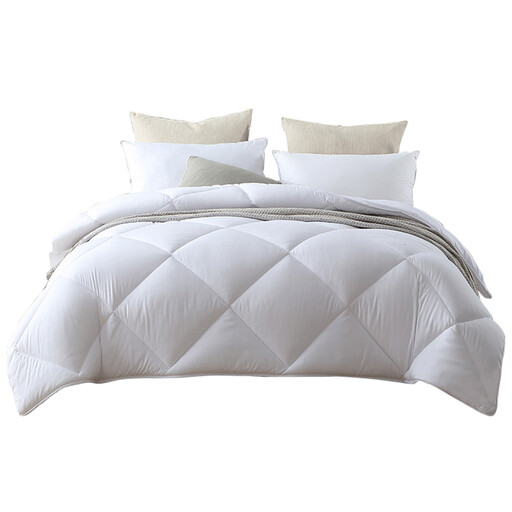
Why it's a match: For those who want to get straight to the point: a simple, effective, and easy-to-live-with solution. Its synthetic filling makes it machine washable and hypoallergenic, all at an accessible price point.
Rather than relying on an XXL fill weight, this model focuses on a breathable fibre that ensures balanced comfort, without turning your bed into a furnace in the summer.
Ultra-practical: it's machine washable and its hypoallergenic design ensures peaceful nights, every night.
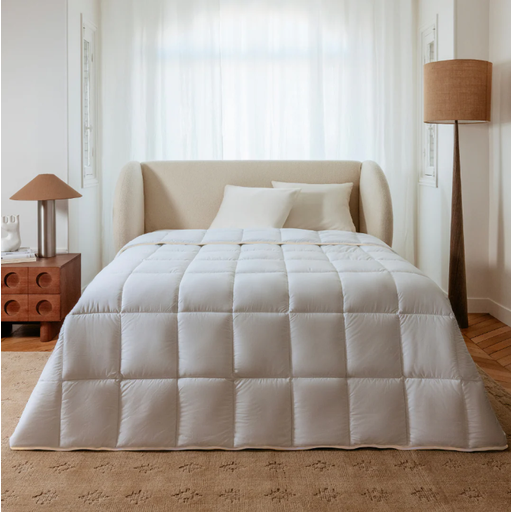
Why it's a match: For lovers of authentic comfort who swear by the loft and breathability of a down and feather duvet. It regulates temperature perfectly for restorative sleep, whatever the season.
Here, the "natural" claim isn't just a slogan. The composition is transparent (90% feathers, 10% down) and the meticulous design (cotton sateen cover, box-stitching) ensures perfect heat distribution, without a single cold spot.
Exceptional temperature and moisture management, validated by multiple certifications, including the prized Oeko-Tex Standard 100 label.
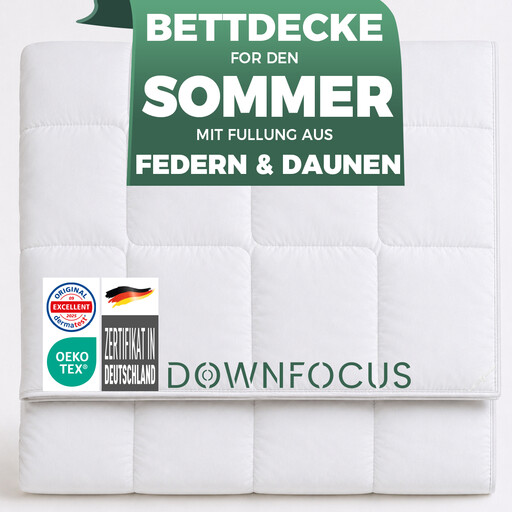
Why it's a match: The solution for sensitive skin and allergy sufferers. Its secret? An ultra-tightly woven cotton cover that naturally blocks dust mites, without sacrificing the luxurious comfort of a natural filling.
The "hypoallergenic" claim isn't just wishful thinking; it's backed by proof. The Oeko-Tex certification attests to the complete absence of undesirable substances, a guarantee of safety that many brands forget to provide.
Dual certified by both Oeko-Tex and RDS (respect for animal welfare), it combines an anti-dust mite cover with impeccable ethics. True peace of mind.
We have selected a complete range of products for you that meet our demanding specifications and the strictest safety standards.
It all depends on the filling. A synthetic duvet can usually be machine washed at 30 or 40°C. For a natural duvet, we recommend professional dry cleaning once a year to avoid damaging the precious down. The daily life-saver tip? Air it out every morning and shake it vigorously to restore the filling's loft.
This is a persistent misconception! The allergy is very rarely caused by the feathers themselves, but by the dust mites that can live in them. Today, most quality natural duvets are treated to be anti-dust mite, and their tightly woven cover acts as a real shield. The smart move if you opt for a natural duvet: look for labels like Oeko-Tex and mentions of specific treatments.
For a Queen Size bed (160x200 cm), the go-to dimension is 220x240 cm. It provides a nice 30 cm drape on each side, perfect for avoiding the nightly fight over the duvet. If you like to be particularly bundled up or if your mattress is very thick, you could even go for a 240x260 cm size for royal comfort.