
Same-day & Next-day Delivery

Quality Guaranteed

Unlock Your Welcome Offers: FREE Delivery | Up to 80% OFF | Free 30-day JoyPlus trial
Download the APP
A 4-season duvet can save you from buying several different models, provided you check what it really offers. Some products sold as ‘all-season’ duvets are actually just medium-weight duvets: sometimes too warm in summer, sometimes too light in a poorly heated bedroom.
Before comparing the options, keep these three pitfalls in mind:
A 4-season duvet usually consists of two detachable parts: a light summer duvet and a warmer winter duvet, which can be fastened together when temperatures fall. This system allows you to adjust the warmth according to the room temperature, the season and how sensitive you are to the cold.
Check that buttons, ties or another clearly described fastening system are included. A simply thick duvet does not offer the same flexibility as a modular set.
In a bedroom at 20 °C or above, a lightweight filling will often be more comfortable. Conversely, a warm duvet is better suited to a poorly heated room or if you feel the cold easily. There is no universal warmth rating: the right bedding is above all the bedding that suits your habits.
Hollow polyester fibres, often silicone-treated, make it possible to produce a lightweight duvet that is easy to care for and generally affordable. Used for the outer cover, cotton is valued for its feel and its ability to provide a more breathable sensation. A cotton polyester combination can therefore offer an appealing balance between comfort, price and ease of care.
Down and feathers have different characteristics. Loft, weight and perceived warmth vary according to the proportion of each. A composition of 90% feathers and 10% down cannot therefore be compared directly with one made up of 90% down and 10% feathers.
People with sensitivities should also distinguish between a marketing claim such as ‘hypoallergenic’ and a certification or verifiable information. Any labels mentioned on a product listing should be assessed according to their exact scope: they do not constitute a medical guarantee.
The most common sizes include:
A machine-washable duvet makes care easier, but check the required drum capacity. Thicker models may need a large-capacity washing machine, sometimes 12 kg or more. Also follow the stated temperature, any advice against using bleach and the drying instructions.
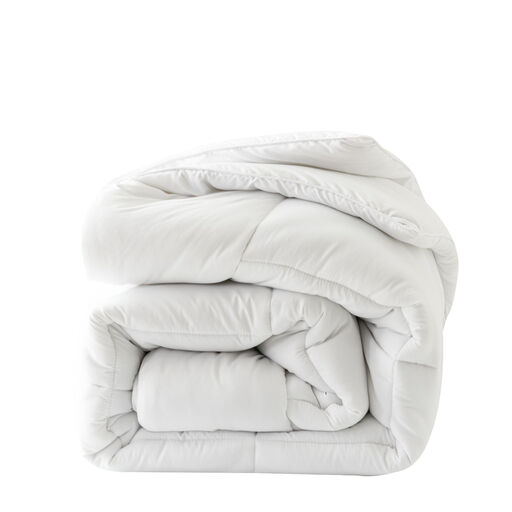
Why it suits this type of sleeper : its 200 x 200 cm size and microfibre filling make it suitable for anyone looking for a straightforward winter duvet for a compact double bed.
The 15 Tog rating indicates a precise level of warmth, unlike listings that remain vague about thickness.
Microfibre filling, double-bed 200 x 200 cm size and a design clearly intended for winter.
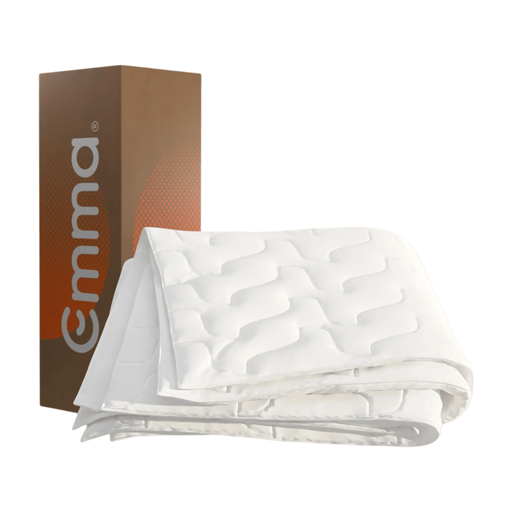
Why it suits this type of sleeper : this 3-in-1 model is designed for couples who want to adjust the warmth without having to store several duvets throughout the year.
Its two detachable parts let you choose a summer, winter or combined configuration, rather than relying on a single thickness.
240 x 220 cm size, two layers with different thicknesses, stated natural and recycled materials, machine washable.
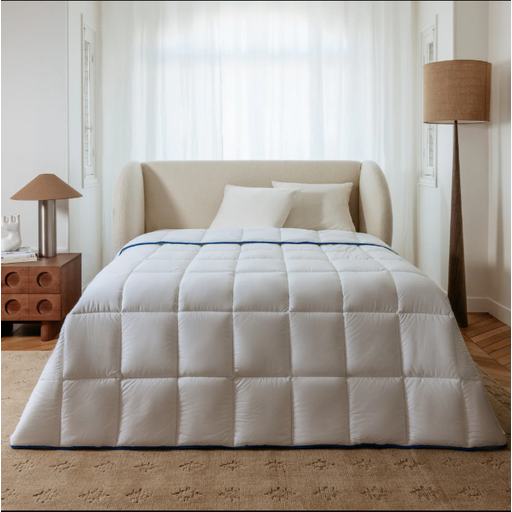
Why it suits this type of sleeper : its 40 °C care instructions and detailed specifications make it suitable for anyone who washes their bedding regularly.
The product listing specifies the washing temperature, recommended machine capacity and products to avoid.
Percale cotton cover, hollow polyester fibres stated at 400 g/m² and the following certifications: OEKO-TEX Standard 100, CertiPUR, Sanitized and ISO 9001.

Why it suits this type of sleeper : its generous size and stated natural filling make it suitable for anyone looking for a cosy, enveloping winter duvet.
The detailed composition distinguishes feathers from down and avoids presenting the natural filling as a single uniform material.
Stated composition of 90% duck feathers and 10% down, organic cotton sateen cover and washing at 40 °C according to the listing.
For summer, a lightweight summer duvet, such as a hollow polyester fibre model weighing 250 g/m², may be suitable in a bedroom from around 20 °C, depending on individual preferences. In spring and autumn, an all-season duvet with a medium fill weight offers greater versatility. In winter, a warm duvet or two layers used together will be better suited to cooler rooms.
A cotton cover can feel pleasant against the skin. Microfibre, meanwhile, is often chosen for its lightness and easy care. If you have an allergy, check the composition, washing instructions and certifications provided, without automatically assuming that the term ‘hypoallergenic’ offers medical protection.
We have put together a complete, real-time updated list of products that fully meet these strict selection criteria and European safety regulations.
Yes, provided it combines a lightweight layer with a warm layer that can be used together on cold nights. However, check the fill weight and dimensions: a simple medium-weight duvet may not provide enough warmth in an unheated room.
Read the care label before every wash. A large-capacity washing machine may be essential for thicker models. Follow the stated temperature, avoid bleach when advised against it and make sure the duvet dries completely to reduce residual moisture.
This depends on the quality of the filling, how often it is washed, how it is dried and whether a duvet cover is used. Air the duvet regularly and shake it to distribute the filling evenly. Replace it when it becomes uneven, loses its loft or no longer meets your thermal comfort needs.