
Livraison le jour même ou le lendemain

Qualité garantie

Débloquez vos offres de bienvenue: Livraison GRATUITE | Jusqu'à -80 % | 30 jours d'essai gratuits à JoyPlus
Téléchargez l'application
Snuggling up in a good duvet is a simple pleasure, but choosing one is often a real headache. Between marketing promises and opaque technical jargon, it's easy to end up with buyer's remorse. The 4-season duvet is often presented as the miracle solution, but be warned: not all are created equal. This guide is here to help you decode the labels and identify the criteria that truly matter for optimal, year-round comfort.
Before we dive into the details, let's review the most common traps that could ruin your nights.
To make the right choice, three criteria must be examined closely. These will determine the comfort, practicality, and lifespan of your duvet.
This is THE criterion that defines the warmth, weight, and loft of your duvet.
feathers and down): Renowned for its exceptional insulating power and lightness, down (airy clusters) is far more effective than feathers (which provide springiness). The higher the percentage of down, the warmer, lighter, and fluffier the duvet will be. For a responsible purchase, look for certifications like RDS (Responsible Down Standard), which guarantees animal welfare.The fill weight (in g/m?) measures the density of the filling. It should be chosen based on your bedroom's temperature and how sensitive you are to the cold.
True 4-season models combine a summer duvet and a mid-season duvet. Once joined together (via ties or press studs), they form an ultra-warm winter duvet.
The right size is crucial to avoid ending up uncovered in the middle of the night. The golden rule: allow for an overhang of at least 20 to 40 cm on each side of the bed to be comfortable, especially for two people.
Rather than searching for THE perfect duvet, it's better to find the one that matches your profile and habits.
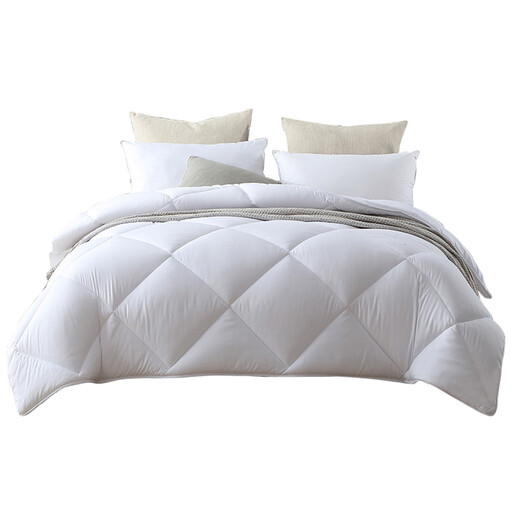
Why this model is a match: This profile seeks simplicity and peace of mind. A single synthetic duvet, designed for year-round use in a moderately heated room, is the ideal answer. Its hypoallergenic and machine-washable qualities make it a practical and reassuring choice.
This model avoids the trap of false versatility: it's a simple and effective temperate duvet, without the complexity of a 2-in-1 system. Its hypoallergenic design is a strong selling point for sensitive individuals.
Easy care (machine washable) and a breathable design for multi-season comfort, all at an accessible price point.
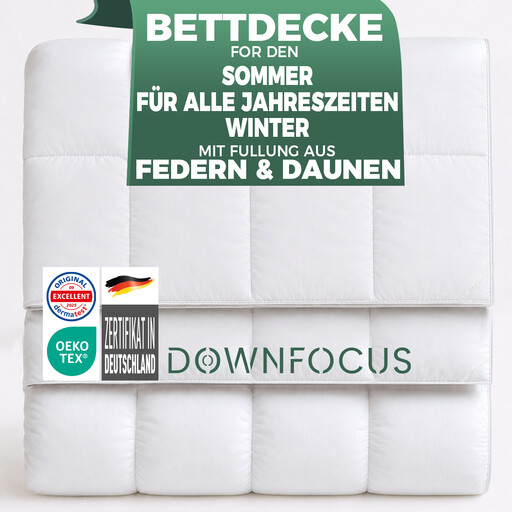
Why this model is a match: This profile loves flexibility and swears by the quality of natural filling. This 2-in-1 system (a 200 g/m? summer duvet + a 450 g/m? mid-season duvet) offers a tailor-made solution for every season, with the breathable comfort and unparalleled warmth of feathers and down.
This is the very definition of a 4-season duvet, with its two distinct and combinable elements. The Oeko-Tex and RDS certifications are solid guarantees of material quality and respect for animal welfare.
True modularity for tailor-made thermal comfort all year round, with the quality of a certified natural filling.
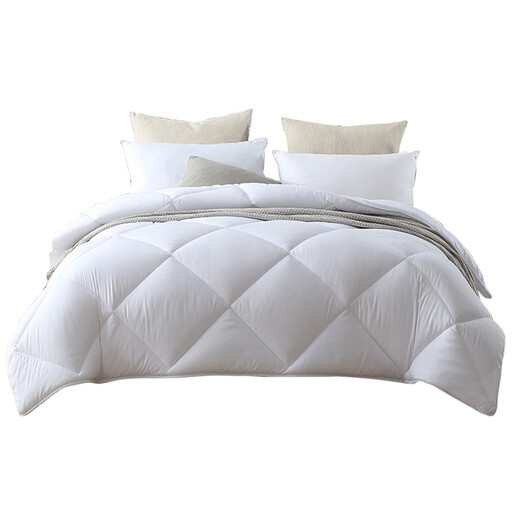
Why this model is a match: For two people, space is non-negotiable. A large 220x260 cm duvet ends the nightly war for a share of the covers. Its "all-year" and breathable design is an excellent compromise when heat sensitivities differ.
It ends the "duvet battle" thanks to its XXL size. Its breathable design helps regulate temperature, avoiding the classic scenario where one person gets too hot—a typical flaw of overly dense duvets.
XXL dimensions for maximum comfort for two, and thermoregulation that will satisfy everyone.
We have selected a full range of products that meet our criteria for quality and comfort.
It all depends on its quality and how you care for it. On average, a good synthetic duvet has a lifespan of 5 years, while a natural duvet made of feathers and down can last up to 10 years. The secret? Shake it out regularly to redistribute the filling and air it out often to release moisture.
The first step: read the label! Most synthetic duvets can be machine washed at 30 or 40°C, provided you have a large-capacity washing machine to avoid compressing the filling. For a natural duvet, dry cleaning is strongly recommended. And if your model is a 2-in-1, be sure to wash the two parts separately.
Yes, if it's well-designed. Its effectiveness relies on two pillars: an extremely tightly woven cover that physically blocks dust mites, and/or a specific treatment of the filling. Note that the Oeko-Tex Standard 100 label is not an anti-dust mite certification. It simply guarantees that the textile is free of harmful chemicals, which is an undeniable asset for sensitive skin. Ultimately, regular washing remains your best ally.