
Livraison le jour même ou le lendemain

Qualité garantie

Débloquez vos offres de bienvenue: Livraison GRATUITE | Jusqu'à -80 % | 30 jours d'essai gratuits à JoyPlus
Téléchargez l'application
Buying a four-person camping tent can often feel like navigating a minefield. Between promises of "instant" setup and obscure waterproof ratings, there's a high risk of turning a dream holiday into a damp, cramped trip. To avoid a nasty (and literal) surprise, let's review the common pitfalls and the criteria that really matter.
First pitfall: deceptive capacity. A "4-person" tent often means that four adults can sleep packed in like sardines, with no room for luggage or personal space. For a family or a group of friends, this guarantees a cramped and ruined holiday.
Second hurdle: marketing-driven waterproof ratings. An impressive number on the packaging won't save you from a downpour. Without perfectly sealed seams and a robust groundsheet, the first heavy shower will turn your tent's interior into a paddling pool.
Finally, beware of the 'mission impossible' pack-down. A 4-person pop-up tent unfolds in the blink of an eye, it's true. But folding it back up without bending the poles often requires a feat of strength, especially with instructions that look like hieroglyphics.
To avoid these disappointments, focus on a few objective technical specs. They are what will make the difference between a good and a bad investment.
The waterproof rating of a waterproof camping tent is measured in mm. It indicates the fabric's resistance to a water column.
But the number isn't everything! It is imperative to check that the seams are sealed (heat-taped), as this is the number one weak point. A groundsheet with a rating at least as high as the flysheet's is just as essential to avoid sleeping with wet feet.
For a family tent, living space is key. There's a fundamental difference between a simple sleeping area and a real living space, especially when the weather turns.
A quick-pitch tent is a powerful marketing tool, but beware of false promises.
quick-pitch tent. Unfolding is instantaneous. The real challenge is packing it away, which requires a certain knack. Fortunately, modern automatic systems are much easier to tame than the old "2-second" models.Here are a few models that meet different needs, based on the objective criteria we've just discussed.
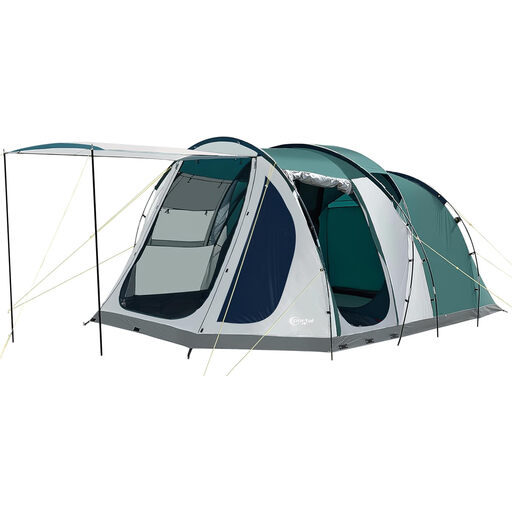
Why we recommend it: With its 7 m? bedroom and a living area of nearly 6 m?, this tunnel tent offers a palatial volume for a family of four and all their gear. The luxury? Its 2-metre ceiling height, which lets you stand up straight.
It shatters the myth of deceptive capacity by offering a real living area in addition to the bedrooms. No more living on top of each other.
Its 3,000 mm waterproof rating and fully sewn-in "bathtub" groundsheet guarantee you'll stay dry, even in a heavy downpour.
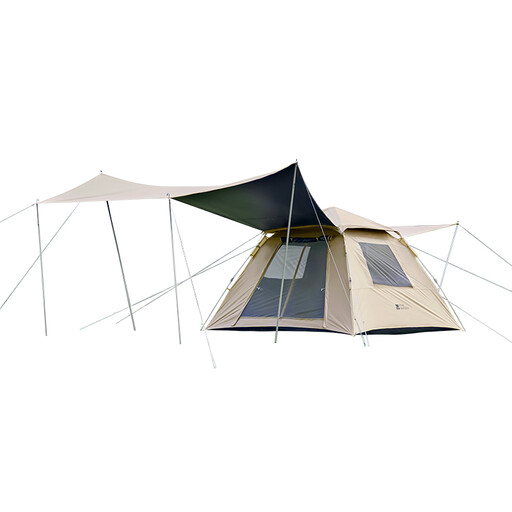
Why we recommend it: For anyone who breaks into a cold sweat at the thought of pitching a tent, this automatic-frame model is a godsend. It can be set up in just a few moves, even by one person. Perfect for spontaneous weekends.
It ends the packing-away nightmare. Unlike old pop-up tents, its automatic mechanism is as simple to fold as it is to unfold. We promise.
Its multi-layer blackout fabric effectively blocks light and heat. Enjoy long lie-ins and shady naps, even in the scorching sun.
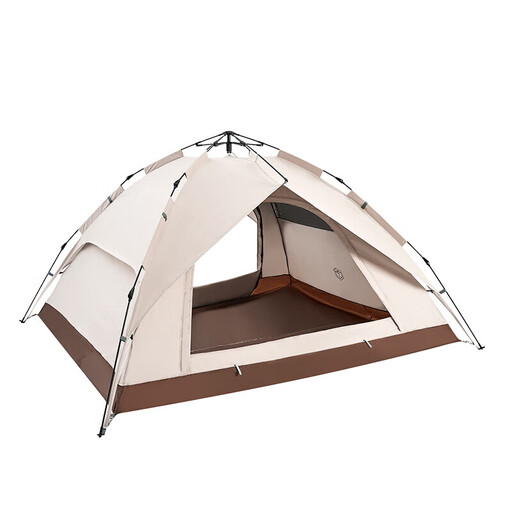
Why we recommend it: This model manages the feat of combining the simplicity of a pop-up tent with the effectiveness of a double-wall structure. It's the ideal compromise for occasional campers who want a reliable product without breaking the bank.
It doesn't sacrifice the essentials. With a 3,000 mm waterproof rating, it offers serious protection—a rarity on entry-level models that often prioritise ease of use over weatherproofing.
Its double-wall design (inner tent + flysheet) ensures much better ventilation and drastically reduces condensation, the curse of cheap, single-wall tents.
Explore our full selection of tents that meet our quality criteria and current safety standards.
It all depends on the quality and care. A good model, well looked after, can easily last 5 to 10 years. The number one secret: always dry it completely before packing it back into its bag. Cleaning with plain water (no detergent!) and storing it in a dry place will preserve its waterproofing.
Honestly, it's a bit of a stretch. If you only camp in dry regions during the height of summer, you might get away with it. But for most places or for the shoulder seasons, a rating of 3,000 mm or more is essential. It's your guarantee that a sudden downpour won't turn into a meltdown.
The golden rule: always aim for one person more than the number of campers. For a family of four, a 5-person tent like the Portal model provides the necessary space for luggage and for living without stepping on each other. If your tent doesn't have a separate living area, this rule is absolutely crucial.