
Livraison le jour même ou le lendemain

Qualité garantie

Débloquez vos offres de bienvenue: Livraison GRATUITE | Jusqu'à -80 % | 30 jours d'essai gratuits à JoyPlus
Téléchargez l'application
A family weekend, a festival with friends, or a romantic getaway... We all love outdoor adventures. What we don't love? Wasting precious time deciphering obscure assembly instructions. Fortunately, the 4-person pop-up tent is a game-changer: designed for near-instant setup, it lets you start enjoying your trip without delay.
To help you navigate the options, our editorial team has broken down the essential buying criteria and selected models that have proven their worth. Our goal: to help you find the perfect gear for your plans, without making a mistake.
Before you commit to a model, let's review the few criteria that will make all the difference in the field. Here are the three key points to check to make the right choice.
A tent's waterproofness is measured in millimetres (mm) using the Hydrostatic Head (HH) rating. The higher this number, the more water pressure the fabric can withstand.
On paper, a 4-person tent can accommodate four standard sleeping mats. In practice, this leaves little room for bags and equipment. For optimal comfort, especially if you're looking for a family camping tent or simply like to have your space, keep this in mind:
Although the two terms are often used interchangeably, they refer to slightly different systems:
Enough theory, let's get practical! Here are the tents that caught our eye for their ease of setup, reliability, and well-thought-out features, from festivals to family camping.
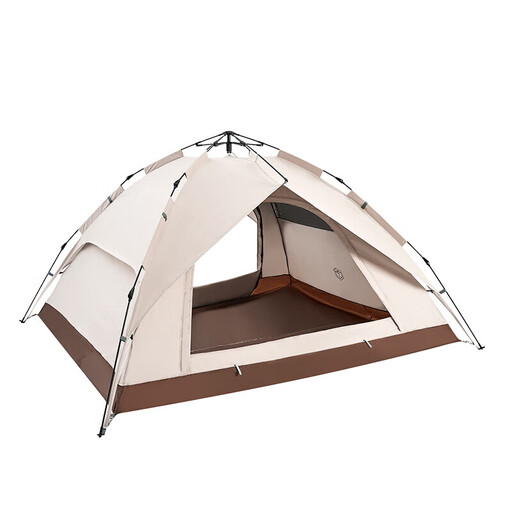
Why It Stands Out: This model is the very definition of simplicity. Its automatic deployment system allows it to be set up in just a few moves, with zero effort. Its double-wall design makes a real difference in reducing condensation and improving thermal insulation.
Pros:
Who is it for? Ideal for couples, small families, or festival-goers looking for a completely hassle-free solution for their getaways. Its rapid setup is its number one selling point.
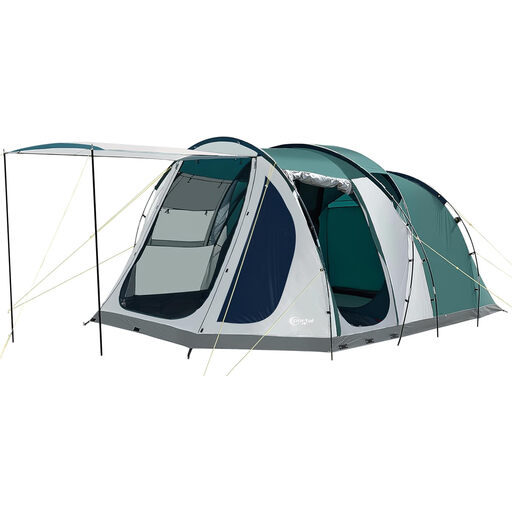
Why It Stands Out: While not a pop-up tent in the strictest sense, this tunnel model remains an excellent quick-pitch 4-person tent option for those who need space. Setup is made much easier by pre-bent, colour-coded poles. Its real strength? A huge living area, well-separated from the bedroom.
Pros:
Who is it for? Families travelling by car for several days who want a proper "base camp" with a lounge area in addition to the sleeping space. It's the perfect compromise between the comfort of a large tent and a setup that remains simple and fast.
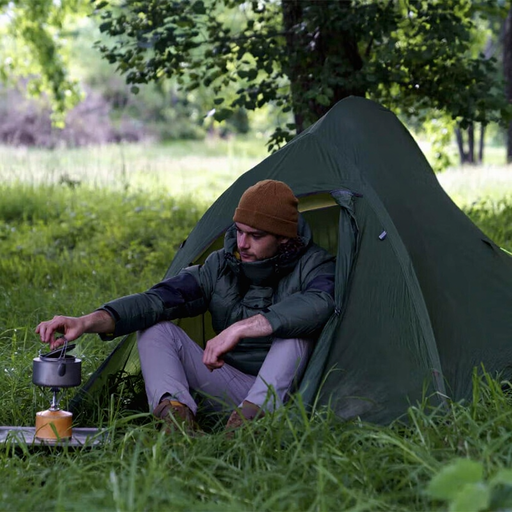
Why It Stands Out: It's in a different category, but it's a smart choice! This solo model is obviously not a 4-person tent, but it can be a clever solution. A teenager demanding their independence? A friend joining the group? This backup tent is an option worth considering.
Pros:
Who is it for? For the solo hiker, or as a high-performance backup solution for a group member who prioritises light weight and self-sufficiency on more nomadic adventures.
Our selection covers the most common needs, but the world of camping is vast! If you're looking for a high-mountain tent, an ultralight model for backpacking, or simply want to explore more options, feel free to browse our complete catalogue.
? Discover our entire collection of camping tents
For one or two nights, it's doable, but you'll be cramped. For more comfort, especially with luggage, our advice is simple: use a 4-person tent for 3 people, or upgrade to a 5 or 6-person model if there are 4 of you. Trust us, those few extra square feet make all the difference.
The pop-up tent (the one that folds into a disc) deploys on its own as soon as it's out of the bag. The instant tent, on the other hand, has a pre-assembled frame built around a central hub. You unfold it on the ground, then activate the mechanism to "lock" it open. The setup is just as fast, but many find it easier and more intuitive to fold down than a pop-up.
A few simple but essential steps will extend the life of your tent. The golden rule: always make sure it is completely dry before packing it away to prevent mould and mildew. For stains, a damp sponge and lukewarm water are sufficient (and absolutely no harsh detergents!). Finally, store it in its bag in a dry place away from direct sunlight.