
Livraison le jour même ou le lendemain

Qualité garantie

Débloquez vos offres de bienvenue: Livraison GRATUITE | Jusqu'à -80 % | 30 jours d'essai gratuits à JoyPlus
Téléchargez l'application
Tempted by a weekend in the great outdoors or a festival with friends, but put off by the thought of pitching a tent? The 4-person pop-up tent seems like the perfect solution: fast, simple, and spacious. But behind this appealing promise lie pitfalls that can quickly turn your dream getaway into a damp, uncomfortable ordeal.
As product experts at Joybuy, our mission is to guide you. Let's cut through the marketing jargon and get straight to the point to help you make the right choice. Here are the 3 mistakes to avoid and the criteria that truly matter.
To avoid these pitfalls, a few technical specifications make all the difference. These are what determine the quality and durability of your future family camping shelter.
A tent's waterproofness is measured in Schmerber (mm). This rating measures the water pressure (expressed as a water column height) that the fabric can withstand before moisture gets through.
Also, remember to check the groundsheet's waterproof rating: it should be higher than the rainfly's to block moisture seeping up from the ground.
Don't just rely on the person-count. Scrutinise the floor dimensions (length x width) and the ceiling height. For a family 4-person camping tent, aim for at least 60 cm of width per person, plus living space for bags and gear.
Ventilation is a detail that changes everything. A single-wall tent is a condensation factory. Always opt for a double-wall model: an inner tent made of breathable fabric and a waterproof rainfly. The gap between these two layers creates airflow that wicks away moisture. This guarantees healthier and much more comfortable nights.
A quick setup is good. A sturdy one is better. Fibreglass poles are common and inexpensive, but aluminium ones are lighter and much more durable. A real bonus for a quick-pitch family tent intended for regular use. Examine the quality of the seams (which should be sealed with heat-taped strips) and the zips, which are often the first points of failure. A 4-person dome tent will generally offer better wind resistance than a tunnel model, thanks to its freestanding structure and crossed poles.
To illustrate these criteria in action, here are a few models that cater to different needs.
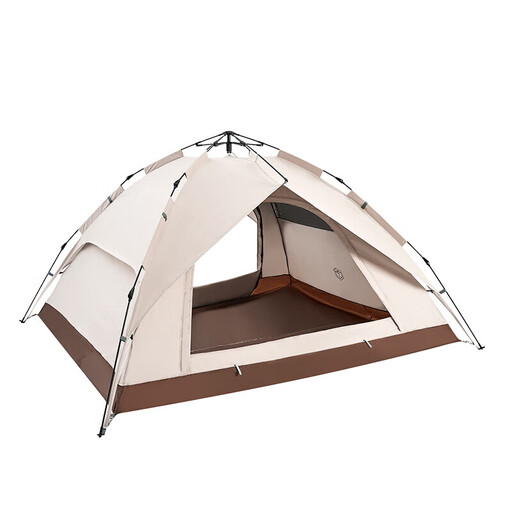
Why it's a great choice: Perfect for occasional campers who prioritise simplicity. Its automatic setup and 3- to 4-person capacity make it a smart pick for short family trips or festivals.
With a rainfly boasting a 3000 mm waterproof rating, it avoids the trap of illusory protection. Its double-wall design limits condensation, a common plague in many instant tents.
Its automatic deployment mechanism allows for setup in a flash. The double wall ensures much better ventilation and increased comfort.
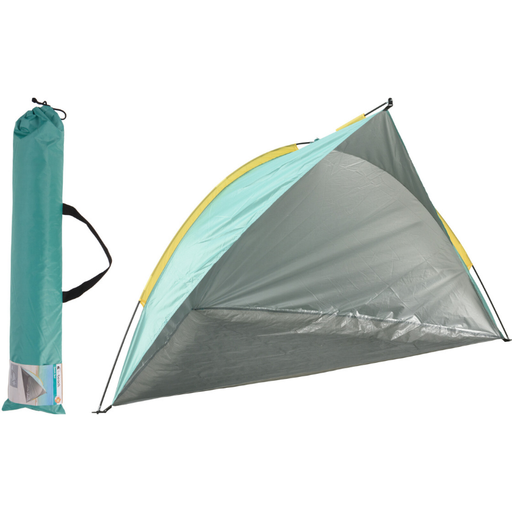
Why it's a great choice: This shelter is designed for daytime use. It's perfect for protecting children from the sun at the beach or for creating a shady spot during a picnic.
It doesn't pretend to be a camping tent. By focusing on one thing—sun protection (UV50+)—it avoids the pitfall of misuse (like spending a rainy night in it), which it is absolutely not designed for.
Ultra-lightweight and compact, it's effortless to carry. Its near-instant setup is a decisive advantage when managing young children.
Explore our full selection of products that meet our quality criteria and current safety standards.
The lifespan of a 3 or 4-person instant tent depends on the quality of its materials and how it's maintained. A model with sturdy poles and a quality canvas, carefully dried after each use and stored away from moisture, can last for many seasons. Entry-level models, on the other hand, often show signs of weakness in the mechanism after just one or two seasons.
As a rule, no. At least, not if you want to keep your bags inside and have a minimum of personal space. For four adults, it's much wiser to aim for a 5 or 6-person model, or to meticulously check the floor dimensions to avoid unpleasant surprises. For a family with two young children, however, the size may be adequate.
Rely on the Schmerber rating. For versatile use, a rating of 2000 mm for the rainfly is a good starting point. If you camp in the spring, autumn, or in rainy regions, aim for 3000 mm for peace of mind. Finally, don't forget to check that the seams are properly sealed with heat-taped strips.