
Livraison le jour même ou le lendemain

Qualité garantie

Débloquez vos offres de bienvenue: Livraison GRATUITE | Jusqu'à -80 % | 30 jours d'essai gratuits à JoyPlus
Téléchargez l'application
Family holidays or a getaway with friends are just around the corner, and with them comes the quest for the perfect gear. At the heart of these preparations: the tent. It's a critical choice, because it's easy to get lost among the technical terms, the jungle of models, and the promises of manufacturers. How can you be sure you'll sleep dry, even during a thunderstorm? Which tent won't turn setup into an ordeal?
I'm a product specialist at Joybuy, and my role is to clear the path for you. This guide gets straight to the point: giving you the keys to understand the essentials and presenting a selection of tents that deliver on their promises. The goal? To help you find the perfect model for your needs, without the unnecessary jargon.
Before diving into our selection, let's review the key points that will make all the difference.
Waking up with your feet in water? It's every camper's nightmare. To avoid this, only one indicator matters: the waterproof rating, measured in millimetres (mm). This rating quantifies the fabric's resistance to the pressure of a water column.
For total protection, don't overlook the details: heat-sealed (taped) seams and a well-integrated groundsheet, ideally in a "bathtub" style (with raised edges), are your guarantees for peace of mind.
Because a holiday shouldn't start with a meltdown, the setup system is crucial. Here are the three main types:
A 4-person camping tent is more than just a bedroom. The living space (or vestibule) is fundamental: it's where you'll store your gear, leave muddy boots, or play cards if the weather acts up. A ceiling height of over 1.80 m, which allows you to stand up, is a complete game-changer for campsite living, especially on multi-day trips.
Ventilation is just as crucial for combating condensation (those infamous morning droplets). Look for models equipped with multiple vents, doors with mesh panels, and, if possible, an inner tent made of breathable fabric.
We've selected models with varied profiles, whether you're heading out with your small family, with friends, or to a festival.
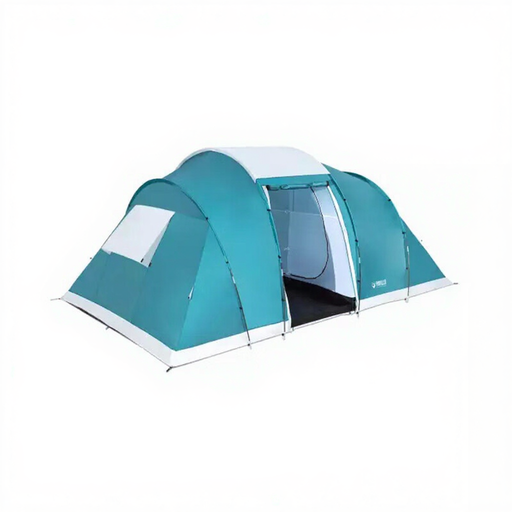
Why it stands out: This is an excellent starter tent for couples or small groups. Although listed as a 3-person tent, it includes a storage vestibule with a groundsheet, a real bonus at this price point. Its dome tent structure is a time-tested classic.
Key features:
Who is it for? Couples or families with one child looking for a simple and effective model for weekend getaways, without worrying about a light shower.
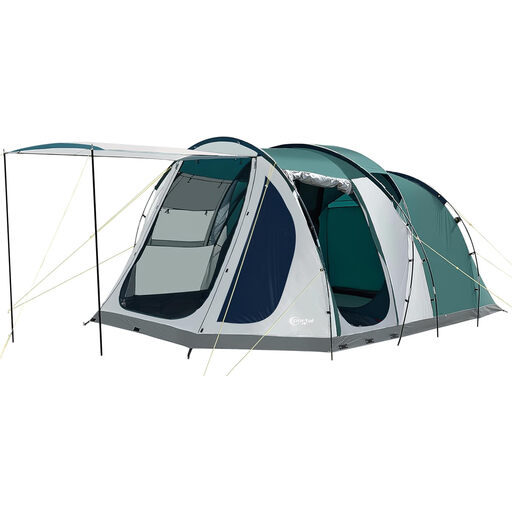
Why it stands out: This tunnel tent takes comfort to another level. With its 200 cm height, you can stand up inside without any trouble. It features a true living room separate from the bedroom, making it ideal for long family stays.
Key features:
Who is it for? Families of 4 or 5 who are going away for a week or more and for whom space and comfort are non-negotiable. It's the choice for peace of mind, even if the weather turns.
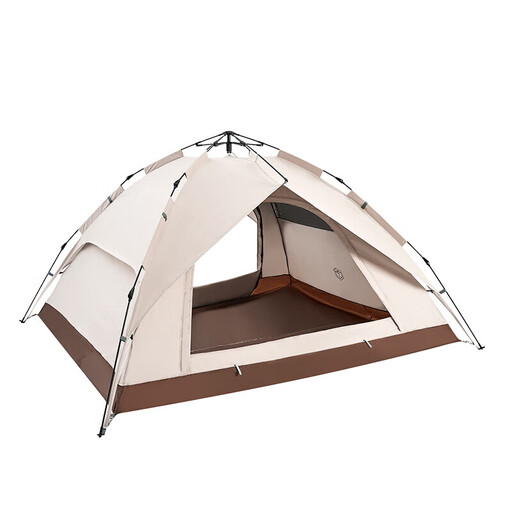
Why it stands out: Its masterstroke: an automatic deployment mechanism. No more fumbling with poles; just pull, and it takes shape. It's the ultimate stress-free solution, the very definition of an easy-to-pitch family tent.
Key features:
Who is it for? Weekend campers, festival-goers, and parents who want to set up camp in the blink of an eye. Simplicity above all, but without compromising on waterproofness.
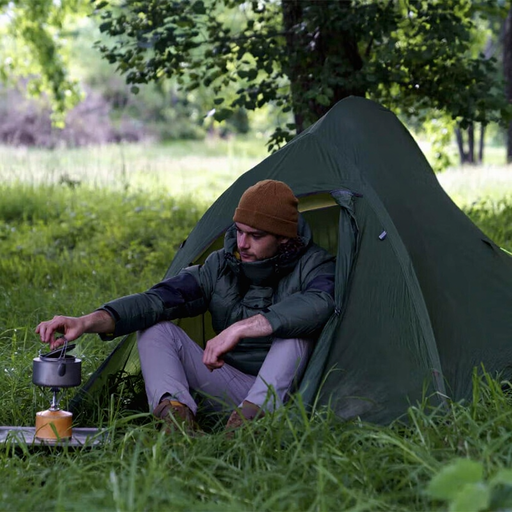
Why it stands out: Although this isn't a 4-person tent, this solo model deserves a special mention. Ultra-lightweight and technical, it's proof that the design brief dictates the product: here, everything is designed for lightness and performance.
Key features:
Who is it for? The solo hiker, trekker, or camper who prefers independence within a group and for whom every gram counts.
Our selection focuses on family and leisure camping. For a mountain trek, a cycling tour, or extreme conditions, the gear becomes more technical.
Discover our more specific, ultra-lightweight, or high-mountain models in our dedicated hiking tents category.
In theory, a 4-person camping tent can accommodate four adults. In practice, to avoid being cramped with luggage, you should aim for a 5-person model or ensure it has a generous vestibule (storage space). Comfort is priceless!
The only number to remember is the waterproof rating (expressed in mm). For summer camping, 2,000 mm is sufficient to handle showers. If you're camping in spring, autumn, or in rainy regions (like Scotland or the Lake District), play it safe with a waterproof tent rated at 3,000 mm or more.
A 4-person dome tent is often freestanding: it stands on its own, even before being pegged to the ground. This is an advantage on hard terrain. It handles wind well, regardless of its direction. A tunnel tent, on the other hand, maximises living space for its weight but is not freestanding. It must be properly guyed out and oriented into the wind to remain stable.