
Livraison le jour même ou le lendemain

Qualité garantie

Débloquez vos offres de bienvenue: Livraison GRATUITE | Jusqu'à -80 % | 30 jours d'essai gratuits à JoyPlus
Téléchargez l'application
A 4-hole punched Rhodia notebook meets a very practical need: take notes comfortably, detach sheets neatly, then file them in a compatible binder. The key is choosing a model that genuinely suits the way you use it.
Before choosing an A4 Rhodia notepad or a similar format, check the ruling, punching style and backboard rigidity. These factors will have a much greater impact on your daily use than the cover colour or general quality claims.
Rhodia N°20 models generally measure 21 × 31.8 cm. They are close to A4, but do not exactly match the dimensions of an A4 sheet, which measures 21 × 29.7 cm. The notebook may therefore extend slightly beyond a standard binder or document wallet.
If you regularly carry your notes in a bag, check the notebook’s outer dimensions as well as those of your filing system.
A 5 × 5 mm squared notebook is suitable for calculations, tables, diagrams, plans and technical notes. By contrast, a punched Seyès notebook uses the large-square ruling traditionally used in France for school handwriting, with its line spacing and vertical margin.
These two rulings serve different purposes. An attractive cover cannot make up for a grid that does not suit the way you write.
Micro-perforation allows you to detach sheets neatly and evenly. The 4-hole punching then lets you file them in a compatible binder or organiser. If either feature is missing, you will need to use a 4-hole punch or accept less tidy edges after detaching the sheets.
For science, technology or preparatory drawing, small squares make it easier to position figures. For primary school or handwriting exercises, Seyès ruling is generally more suitable.
The references presented use Clairefontaine 80 g/m² paper, with a surface described as fine vellum paper. Paper weight indicates how much the paper weighs, but it is not enough on its own to guarantee that ink will not show through or that the paper is compatible with every writing instrument.
For everyday use with a pen or pencil, 80 g/m² is a common choice. If you use felt-tip pens with a heavy ink load, check the paper’s compatibility and consider placing a protective sheet underneath.
Some references display PEFC certification. This refers to the origin of fibres from forests managed according to the stated standard; it is not a general promise covering the entire product.
A notepad with a rigid back is much more comfortable when you need to write without a table: in a lecture theatre, out in the field or while travelling. The models shown contain 80 sheets, with micro-perforation and pre-punched 4-hole punching, depending on the reference.
Before placing your order, also check:
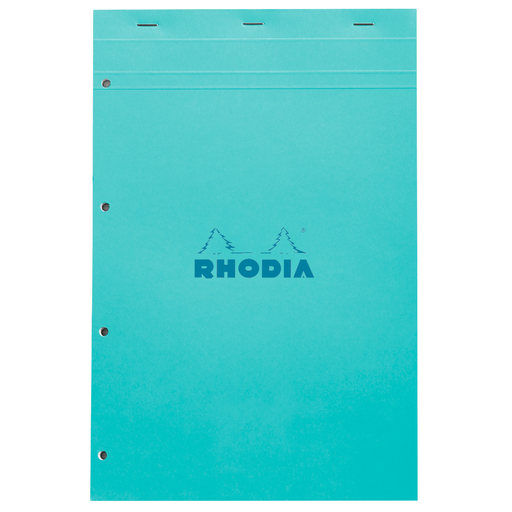
Why this choice suits this user profile : This 80-sheet pad is suitable for students and individuals who want to start filing their notes without accumulating extra accessories. The 5 × 5 mm ruling works equally well for note-taking and diagrams.
The sheets are described as micro-perforated and pre-punched with 4 holes, so there is no need to punch them again one by one.
80 sheets, 5 × 5 mm grid, rigid back and assorted covers depending on the model received.
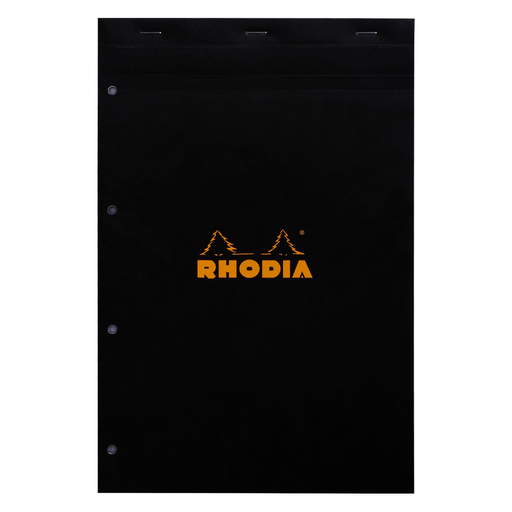
Why this choice suits this user profile : Its black cover and 21 × 31.8 cm format fit naturally into a professional working environment. The dense grid is ideal for structured notes.
The dimensions, 80 g/m² paper weight and total of 80 sheets are clearly stated, making objective comparison easier.
Clairefontaine 80 g/m² paper, 5 × 5 mm grid, rigid board back and four-hole punching.
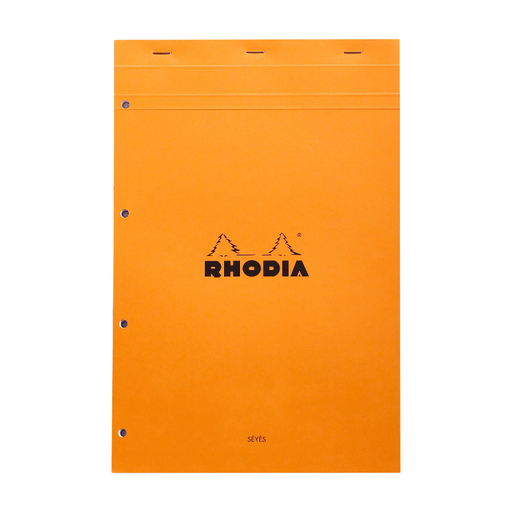
Why this choice suits this user profile : Seyès ruling meets the needs of schoolchildren, students and adults who take handwritten notes on traditional French lines.
The ruling is clearly specified as Seyès, and the sheets are described as micro-perforated and punched with 4 holes.
80 sheets, purple lines, rigid back and a near-A4 format for lessons or documents.
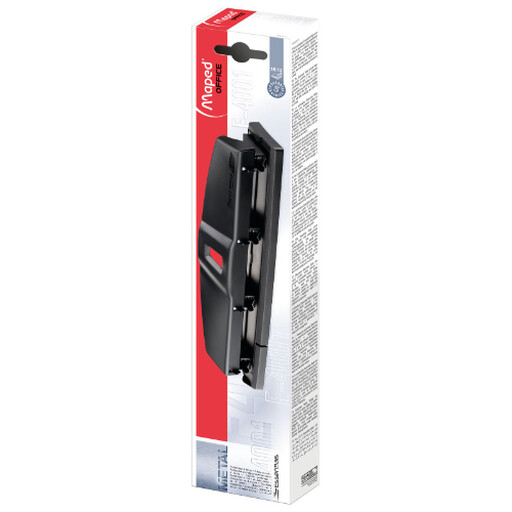
Why this choice suits this user profile : This punch is suitable for offices, classrooms and workshops where unpunched sheets need to be filed in a four-ring binder.
The stated capacity is 10 sheets of 80 g/m² or 12 sheets of 70 g/m², so the operating limit is clearly defined.
Metal construction, 4-hole alignment, confetti container and a stated 5-year manufacturer’s warranty.
We have put together a complete, real-time updated selection of products that meet these demanding criteria and European safety regulations.
To keep your sheets neat, detach them along the micro-perforation rather than pulling from a corner. Store the notepad flat or in a document wallet that is large enough to prevent the punched edges from bending.
When using a 4-hole punch, respect the stated capacity and empty the confetti container regularly. Avoid inserting materials that are too thick if the device is designed for paper. The blades remain sharp, so keep the tool out of reach of young children.
Not necessarily. Check the hole spacing and layout on your binder. The N°20 format is close to A4, but its 21 × 31.8 cm dimensions may extend beyond those of a standard A4 sheet.
Choose 5 × 5 mm squares for calculations, diagrams and technical notes. Opt for Seyès for school handwriting and handwritten exercises with line spacing and a margin.
It is not essential if the sheets are already micro-perforated and pre-punched with 4 holes. It becomes useful for filing additional documents, printouts or sheets without the appropriate punching.