
Livraison le jour même ou le lendemain

Qualité garantie

Débloquez vos offres de bienvenue: Livraison GRATUITE | Jusqu'à -80 % | 30 jours d'essai gratuits à JoyPlus
Téléchargez l'application
A gap beneath a door lets draughts, dust and sometimes moisture into your home. In an older property, office or commercial premises, the problem is often made worse by an uneven floor. However, not every draught-proofing accessory is suitable for this type of surface.
A screw-on 3M door bottom seal for uneven floors can provide a long-lasting solution, provided you check a few points before buying. Here are the most common mistakes and the key criteria to consider when choosing a model that suits your door.
A door bottom seal with a simple rigid flap may be suitable for perfectly flat tiling, but allow air through as soon as the floor has raised areas, joints or a slight slope. On this type of surface, it is better to choose a system fitted with soft brushes, optionally combined with a thin membrane.
A brush door bottom seal follows variations in the surface more effectively. It will not turn a poorly adjusted door into a perfectly airtight one, but it can reduce draughts across a less even floor.
A 93 cm door bottom seal is suitable for many internal doors, but the width of the door leaf must be measured before placing your order. A model that is too short will leave gaps at the sides. A longer profile can generally be trimmed, provided the product description allows this.
The products featured here are designed to be cut with a saw to achieve the required length. Measure the door at the bottom, then make a clean cut without unnecessarily reducing the contact area.
Screw-on door bottom seals are appealing because they are straightforward to install, but their effectiveness depends on both their design and the type of surface underneath. A single row of brushes, a double row or a flexible membrane will not respond in the same way to an uneven floor.
Before choosing, identify your priority: draught-proof door seal, dust reduction, limiting noise from people passing through or protection against water ingress. These accessories can improve comfort, but they do not replace repairing a threshold, a warped door or a significant sealing problem.
Measure the gap between the bottom of the door leaf and the highest point of the floor. The models in this selection claim to cover a gap of up to 15 mm. Compare this indication with your actual measurement: above this size, you may need to consider another solution or adjust the door.
Do not choose a door insulation seal based solely on its appearance. Usable height, brush flexibility and the presence of a membrane are more important when the floor is uneven.
Screw fixing holds the profile firmly against the bottom of the door and is suitable for installations intended to remain in place. However, it requires accurate measuring, alignment and drilling. Check that the door leaf can accept screws and that installation will not interfere with its movement.
The product description for the white 3M Classic model specifically states that you should position the profile, mark the holes and then secure it with screws. It also specifies that the product must not be used on a door that opens outwards. Take this instruction into account before installation.
A white or brown door bottom seal can blend in more discreetly depending on the finish of the door leaf. White works well with a light-coloured door or a contemporary frame, while brown pairs more easily with a dark wooden door.
Brushes gradually collect dust and fibres. Regular cleaning with a slightly damp cloth will help keep the contact area clean. Check their condition too: flattened bristles or a damaged membrane will reduce the effectiveness of the seal.
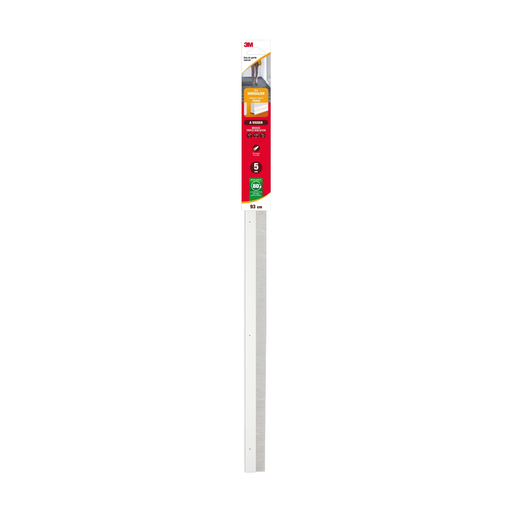
Why this choice suits this profile : its 93 cm length and trimmable design are suitable for most residential installations, particularly on a white door.
It is designed for uneven floors and gaps of up to 15 mm, unlike a profile intended solely for a smooth surface.
Double row of brushes, thin membrane, screw fixing and the option to trim it with a saw, according to the product description.
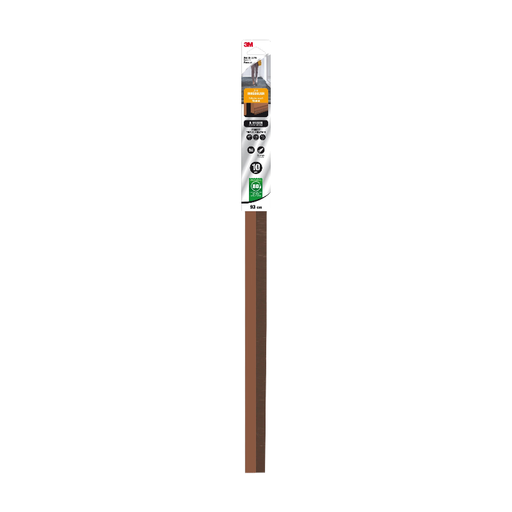
Why this choice suits this profile : its brown finish complements wooden doors, while the combination of brushes and a membrane is designed to last on an uneven floor.
It combines brushes with a thin membrane to follow variations in a floor that is not perfectly level.
Length of 0.93 m, brown finish and stated coverage for gaps of up to 15 mm. The service life of more than 10 years comes from the product description.
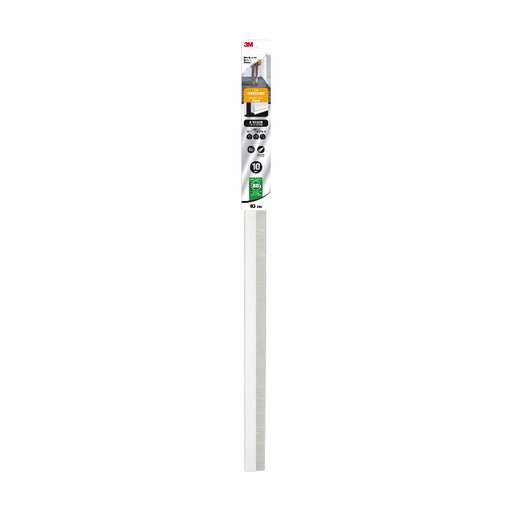
Why this choice suits this profile : it is suitable for doors in homes, offices or commercial premises that are opened frequently and require mechanical fixing.
Its double row of brushes and membrane are designed for uneven floors, unlike a simple flap intended for a smooth surface.
White aluminium profile, discreet screw fixing, saw cutting and stated coverage of up to 15 mm.
We have put together a complete, real-time updated list of products that fully meet these strict selection criteria and European safety regulations.
Excessive contact pressure can create resistance, accelerate brush wear or shift the profile. The seal should follow the unevenness of the floor without obstructing the door leaf.
Choose a model whose product description states coverage of up to 15 mm, and check this measurement across the full width of the door. On an uneven floor, a double row of brushes combined with a membrane will be more suitable than a rigid flap.
Yes, the products featured are stated to be cuttable with a saw. Measure twice before cutting and remove only the necessary length to retain full coverage of the threshold.
It may be suitable if the landlord or property rules allow it. Installation requires drilling into the door leaf, so if you are a tenant, ask for permission beforehand. With intensive use, check the screws, brushes and membrane regularly, then replace the profile when it no longer follows the floor correctly.