
Livraison le jour même ou le lendemain

Qualité garantie

Débloquez vos offres de bienvenue: Livraison GRATUITE | Jusqu'à -80 % | 30 jours d'essai gratuits à JoyPlus
Téléchargez l'application
Who hasn't cursed at a charging cable that's just too short? It's a daily source of frustration. To use your smartphone from the far end of the sofa or plug in your console without having your nose glued to the screen, a long USB-C charging cable has become an essential accessory. The problem: the market is flooded with promises of durability and speed that are rarely kept. A bad choice not only hurts your wallet but also the health of your precious devices.
My role as a product expert at Joybuy is to guide you through this jungle to find that hidden gem. Let's break down the pitfalls to avoid and the criteria that truly matter when choosing your 3m braided USB-C cable.
To make the right choice, forget the marketing speak and focus on objective facts. Here are 3 essential checkpoints.
The primary logo to look for is the USB-IF (USB Implementers Forum) certification. This is your assurance that the cable has passed a battery of strict compliance tests. It guarantees perfect compatibility, safe charging, and reliable data transfer rates. Conversely, an uncertified cable is a gamble: at best, it will perform poorly; at worst, it will damage your device's port.
Not all USB-C cables are created equal. Two specifications must be checked:
A good reinforced USB-C cable can be identified by these tell-tale signs:
Here are a few models that check all the boxes, designed for different user profiles.
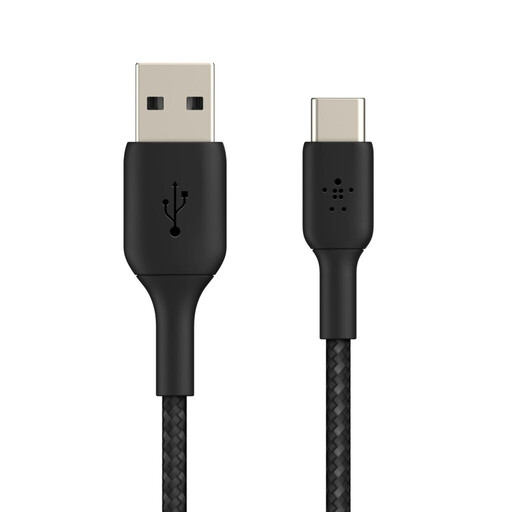
Editor's Take: Perfect for charging your smartphone or tablet (iPhone 15, Samsung S24) from the comfort of your bed or sofa, without ever worrying about the distance to the outlet. Its 3-metre length offers unbeatable freedom of movement.
This 3m Belkin USB-C cable is USB-IF certified, guaranteeing a perfectly safe charge. Its nylon sheath is tested to withstand over 30,000 bends, preventing premature wear at the connectors—the usual weak point.
Its generous 3-metre length provides unparalleled user comfort. Proven durability and safety certification for total peace of mind. Transfer speeds up to 12 Gbit/s.
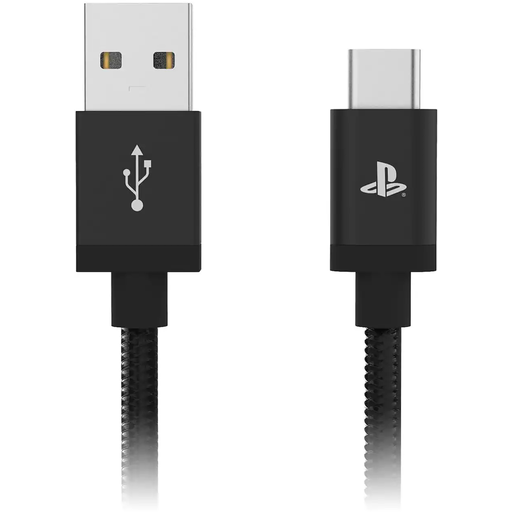
Editor's Take: Specially designed for gamers, this 3-metre cable lets you charge your DualSense controller mid-game without any interruption. Its length is ideal for most living room setups.
As an officially licensed Sony product, it ensures flawless compatibility and safety with the PS5 controller. This eliminates any risk associated with uncertified accessories, which are known to damage ports or batteries.
Official Sony licence for absolute peace of mind. Perfect 3-metre length for gaming. Comes with a cable tie for neat storage.
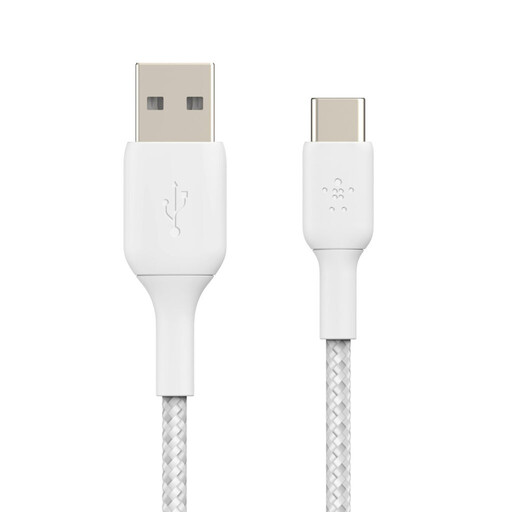
Editor's Take: For those who demand the same reliability and length as the black model but in a white finish that better complements a minimalist interior or white devices. It's performance with an extra touch of style.
It boasts the same technical specifications as its black counterpart: USB-IF certification and an ultra-durable design. Proof that reliability isn't a matter of colour, and that you can have both substance and style.
All the qualities of a Belkin cable (durability, safety, length) in an elegant white finish. Fast charge compatible.
We have curated a complete, up-to-date selection of products that meet our strict selection criteria and European safety standards.
Is a braided cable really more durable? A braided nylon sheath offers excellent protection against abrasion and tangles. However, a cable's longevity primarily depends on the quality of its connectors and the strain relief at its ends. A well-designed cable with a standard sheath can easily outlast a low-quality braided one. Instead, rely on certifications and the bend-cycle tests reported by the manufacturer.
Does the 3-metre length affect charging speed? Yes, a very slight power loss can occur over a long distance, but it's almost negligible on a high-quality cable. Certified cables are specifically designed to minimise this loss and ensure a stable charge, even at 3 metres. For optimal charging, just be sure to pair your cable with a power adapter of sufficient wattage.
Can I use a USB-A to USB-C cable for fast charging? Yes, but with some limitations. Technologies like Quick Charge (QC) work well over USB-A ports. However, the most universal fast-charging standard, Power Delivery (PD), requires a USB-C to USB-C cable from end to end. A good USB-A to USB-C cable can therefore fast-charge many devices, but it will never reach the peak power levels (60?W, 100?W, and higher) reserved for USB-C PD.