
Livraison le jour même ou le lendemain

Qualité garantie

Débloquez vos offres de bienvenue: Livraison GRATUITE | Jusqu'à -80 % | 30 jours d'essai gratuits à JoyPlus
Téléchargez l'application
Renovating a wall in a living room, bedroom, or bathroom does not necessarily mean taking on major building work. 3D PVC wall panels make it easy to create an accent wall, conceal minor imperfections, and give your interior a fresh new look. Their accessible installation appeals to DIY beginners, but a few details can turn a promising idea into a disappointing purchase.
Before placing your order, check the actual coverage, compatibility with the existing wall, and the material’s resistance to moisture. Here are the key criteria to review, along with options suited to different projects.
A 3D wall covering draws the eye and can conceal minor marks. However, it does not eliminate the need to prepare the surface when it is highly uneven, crumbly, or damp. A poorly prepared wall can compromise adhesion and lead to panels lifting around the joints.
Many product listings state that PVC is waterproof or moisture-resistant. This primarily refers to the material itself. Installation quality, joints, adhesive, and any necessary cuts also play a decisive role. In a bathroom, so-called waterproof wall panels do not automatically constitute a code-compliant waterproofing system behind a shower.
For areas regularly exposed to splashes, consult the installation instructions, choose a compatible adhesive, and finish the joints carefully. Also avoid installing the panels directly next to a heat source unless the manufacturer explicitly approves this use.
Panel sizes and coverage details are not always presented consistently. A 30 × 30 cm panel covers approximately 0.09 m². A pack of 33 panels therefore represents nearly 2.97 m², before allowing for cutting waste. Some listings may show a different unit or an inconsistent coverage figure, so always check the number of panels and their dimensions before confirming your order.
As a general rule, allow extra material for cuts, corners, and installation errors. If you are covering an entire wall, order all packs at once whenever possible to minimise potential differences in colour or finish.
Measure the wall’s width and height, then multiply the two figures to calculate its area. Next, divide the result by the coverage stated for the pack. For a 3 m² wall, a pack covering 2.97 m² will be too close for comfort: additional allowance is advisable, particularly if the wall includes sockets, windows, or multiple corners.
The 30 × 30 cm PVC wall tiles are convenient for creating a regular pattern. The 50 × 50 cm models reduce the number of joints, but require greater precision when aligning and cutting the panels.
PVC is lightweight and easy to clean. Product listings may describe the material as rigid, flexible, high-density, recyclable, odour-free, or heat-resistant. These statements should be treated as manufacturer-declared characteristics rather than universal guarantees for every installation.
For everyday use, prioritise:
A highly pronounced pattern, such as diamond-effect wall panels, creates stronger shadows and more texture, but also requires more thorough cleaning.
An adhesive wall panel or a panel designed for glue-down installation should be fitted to a surface that is clean, dry, degreased, and sufficiently smooth. Depending on the model, installation may require PVC-compatible adhesive, silicone, or double-sided tape. The latter is best suited to lightweight panels and smooth, even surfaces. For a long-lasting installation, a suitable adhesive generally provides more reliable fixing.
Before covering the entire wall, test the product on a small area. Check adhesion, pattern alignment, and whether the panel can be removed without damaging the paint or existing wall covering.
The options below are grouped according to different usage profiles. The stated specifications are taken from the product listings available at the time of writing.

Why this option suits this profile: The 30 × 30 cm format and 20-piece pack are well suited to a small accent wall, a headboard wall, or a decorative area in a home office.
The stated coverage of approximately 1.8 m² makes calculations easier for a small area and avoids ordering a large number of panels without a clearly defined project.
The listing specifies high-density, recyclable, odour-free PVC. Installation is described as possible with standard tools and a suitable adhesive.
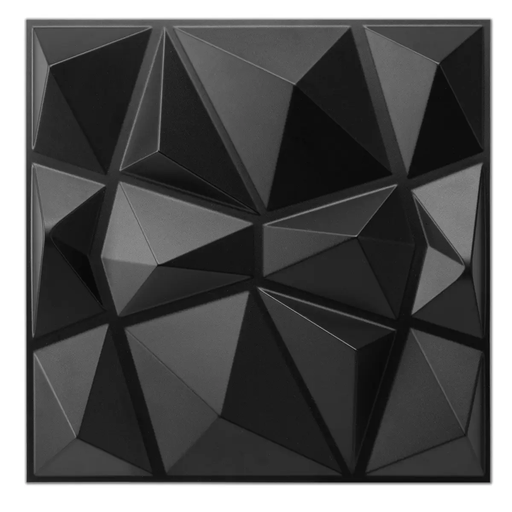
Why this option suits this profile: The black finish and geometric texture make a striking addition to an accent wall in a living room, bedroom, or professional space.
The 33 uniformly sized 30 × 30 cm panels make it easier to create a consistent composition, provided the actual coverage is confirmed.
The listing describes rigid PVC that is resistant to water and heat. Installation is intended to use glue or silicone.
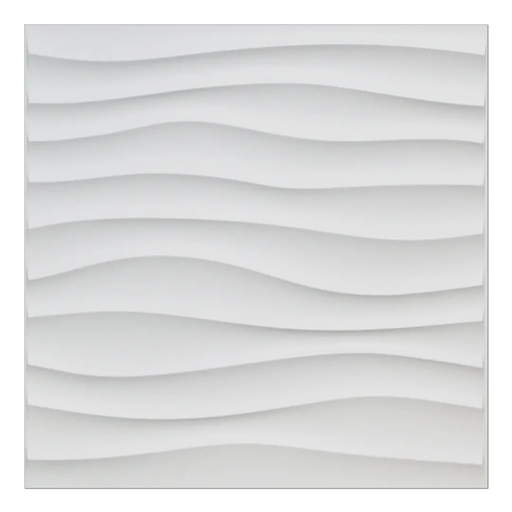
Why this option suits this profile: The large format is ideal for living room walls, TV feature walls, hallways, and selected areas of the kitchen or bathroom.
The stated coverage of approximately 3 m² per pack reduces the number of joints, but requires a well-measured, sufficiently flat wall.
The listing describes flexible, lightweight PVC that is moisture-resistant and washable. Installation can be carried out with glue or double-sided tape on a suitable surface.
In a kitchen, splashback area, or utility room, check the distance from hobs and areas directly exposed to heat. In a bathroom, seal the joints with a compatible product whenever the installation instructions recommend it.
Explore a regularly updated selection of solutions for wall-covering and interior-decoration projects, organised by format, finish, and intended use.
They can be used in a humid room if the product listing specifically permits it. PVC is moisture-resistant, but the joints and adhesive remain critical. These panels do not necessarily replace the membrane or waterproofing system required in a shower area.
This depends on the condition of the substrate, installation quality, exposure to moisture, and temperature fluctuations. Installation on a clean, stable wall with a compatible adhesive reduces the risk of panels coming loose. In humid rooms, inspect the edges and joints regularly.
This cannot be guaranteed. The adhesive may pull away fragile paint or leave residue behind. Test the removal method in an inconspicuous area and use a technique suited to the surface. If you are renting, check the terms of your tenancy agreement before making any alterations.