
Livraison le jour même ou le lendemain

Qualité garantie

Débloquez vos offres de bienvenue: Livraison GRATUITE | Jusqu'à -80 % | 30 jours d'essai gratuits à JoyPlus
Téléchargez l'application
Whether you want to add character to a room, create a stunning accent wall, or simply conceal imperfections on a tired-looking wall, the 3D wall panel has emerged as a trendy solution for modernising your interior. But be warned: behind the promise of a spectacular and easy transformation lie a few pitfalls that can quickly turn a dream project into a real headache.
As the Head of the Home & Decor section at Joybuy, my mission is to guide you through the jungle of options to help you make the right choice. Together, let's break down the mistakes to avoid and the essential criteria for finding the perfect 3D wall covering for your project and budget.
The market is flooded with tempting products, but not all are created equal. To save you from nasty surprises (and unnecessary expenses), here are the three most common traps.
To avoid these setbacks, a few technical details need to be examined closely. They are your guarantee of a durable installation with a high-quality finish.
This is the number-one criterion. Each material has its own advantages and disadvantages, and your choice must be based on the room where it will be installed.
Before you even fall for a design, you must first assess your wall. Is it smooth, clean, and dry?
A good decorative wall panel can hide minor flaws, but it will never replace proper surface preparation. A simple sanding and a coat of primer can be the difference between an amateur job and a professional finish.
Rather than an endless list, our approach is to highlight one product that meets a specific need, explaining why it's a smart choice.
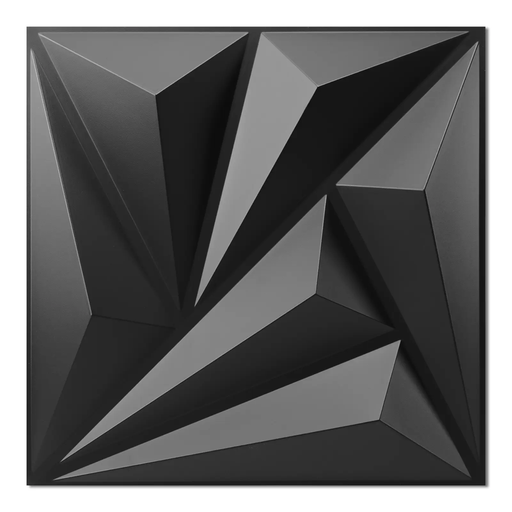
Why it's a smart choice: This profile seeks strong visual impact and a contemporary aesthetic, but without the hassle of complex maintenance or tedious installation. They prioritise durable solutions that integrate effortlessly into a modern lifestyle.
Made from high-density PVC, this panel is naturally waterproof, eliminating any risk of warping or mould. Its light weight and design, intended for simple glue-on application, make it accessible even for novice DIYers, saving on the cost of a professional installer.
Versatility and durability: Perfect for any room, including the bathroom. The PVC resists everyday impacts and can be cleaned with a simple wipe.
Modern aesthetic: The raised geometric pattern creates an interplay of light and shadow that instantly energises the space.
Discover our full selection of products that meet our quality and safety standards.
For a reliable and long-lasting bond with PVC panels, using a polymer mastic adhesive (like an MS Polymer type) or a high-performance construction adhesive is highly recommended. Apply it in beads or dots on the back of each panel, then press firmly against the wall. This type of adhesive provides an immediate grab while allowing a few minutes for perfect alignment.
It all depends on the extent of the irregularities. Rigid panels (PVC, MDF) can cover very minor flaws like micro-cracks or a slight texture in the paint. However, if your wall has dips or bumps larger than 2-3 mm, the final result will be disappointing. In this case, wall preparation is essential: a thorough sanding followed by a skim coat of filler to achieve a perfectly flat surface.
Although a textured wall panel adds a layer to your wall, its impact on thermal or acoustic insulation is very limited, if not negligible. Its function is primarily aesthetic. If insulation is your priority, it is essential to look into dedicated technical solutions (like specific insulation boards) before considering the installation of a purely decorative covering.