
Livraison le jour même ou le lendemain

Qualité garantie

Débloquez vos offres de bienvenue: Livraison GRATUITE | Jusqu'à -80 % | 30 jours d'essai gratuits à JoyPlus
Téléchargez l'application
Renovating a living room, bedroom or bathroom without taking on major building work is now within everyone’s reach thanks to 3D PVC wall panels. Lightweight, decorative and generally easy to cut, they allow you to create a feature wall without necessarily having to remove the existing covering.
However, beware of attractive staged photos: they do not always show the practical challenges of installation. An incorrectly calculated surface area, unsuitable adhesive or excessively uneven wall can quickly turn a budget-friendly DIY project into an unexpected expense. Here are the main criteria to check before choosing your decorative wall panels.
A pack may contain 20 or 33 tiles without covering a large part of the wall. Always check the dimensions of each panel, followed by the total area covered by the pack.
With 30 × 30 cm tiles, 33 pieces theoretically represent around 2.97 m², compared with around 1.80 m² for 20 pieces. If the product description gives the area in square feet, pay particular attention: confusing square feet with square metres can significantly increase your budget.
Also allow an extra 5 to 10 % for cuts around sockets, skirting boards, corners and frames.
PVC absorbs very little water, and some models are marketed as waterproof PVC wall panels. However, this does not necessarily mean they can be installed in a shower or in an area directly exposed to prolonged water splashes.
In a bathroom or kitchen, check in particular:
In a shower room, installing panels away from direct contact with water remains the safest option unless the manufacturer gives precise instructions to the contrary.
3D panels, adhesive wall tiles and self-adhesive 3D wallpaper adhere properly mainly to a clean, dry, smooth and dust-free surface. A powdery, greasy, damp or heavily textured wall can cause the covering to come away quickly.
Before you begin, fill any holes, remove loose material, clean the surface thoroughly and allow it to dry completely. If you are renting, also check that the adhesive will not pull off the paint when it is removed.
The relief directly affects how the room is perceived. Diamond-effect wall panels catch more light and create a highly distinctive geometric look. A more understated pattern will sit easily in a bedroom or home office, while a pronounced relief will naturally draw the eye behind a sofa, television or headboard.
Black creates a strong contrast but can make a small room feel darker. White makes the space appear larger and works well with light wood, beige textiles or painted walls.
30 × 30 cm panels are easy to handle and cut. They allow you to work progressively, but create more joins across a large wall. 50 × 50 cm formats cover an area more quickly and reduce the number of joins, although cutting them around sockets and other obstacles can be less convenient.
Measure the width and height of the wall, then subtract doors, windows and other significant openings. For a 3 m² wall, always compare the actual area covered per pack, rather than looking only at the pack price.
Some panels are installed with mounting adhesive or silicone, while others already have their own adhesive backing. Follow the recommendations in the product description and allow time for the panels to be held in place if necessary.
Claims such as ‘heat-resistant’, ‘fire-retardant’ or ‘recyclable’ should be interpreted in light of the available documentation. If your project involves a shop, a public-access building or a wall located near a heat source, ask for the appropriate technical information and reaction-to-fire classification. A simple marketing claim is not a substitute for a regulatory document.
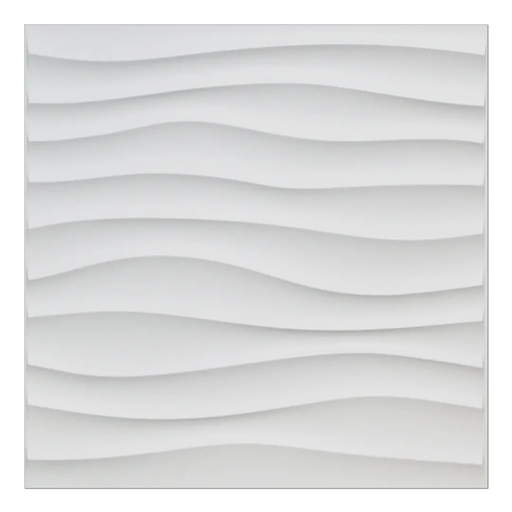
Why this choice suits this profile : The 50 × 50 cm format reduces the number of joins and is well suited to a first wall-decoration project in a living room, bedroom or home office.
The product description states that there are 12 panels covering approximately 3 m², making it easier to calculate how many you need to order.
Flexible PVC, white finish, installation with glue or double-sided tape, and easy maintenance according to the description.
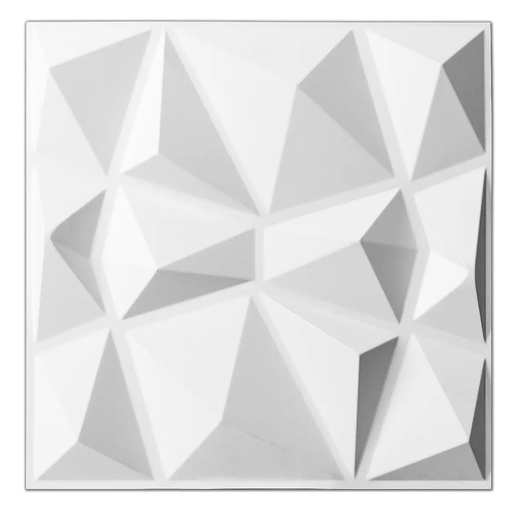
Why this choice suits this profile : The white diamond pattern adds a clearly visible graphic relief behind a sofa, in a hallway or on a bedroom feature wall enhanced by carefully positioned lighting.
The number of pieces and their dimensions are clearly stated, making it easier to calculate cuts and joins.
33 panels measuring 30 × 30 cm, rigid PVC, white finish and installation with glue or silicone according to the product description.
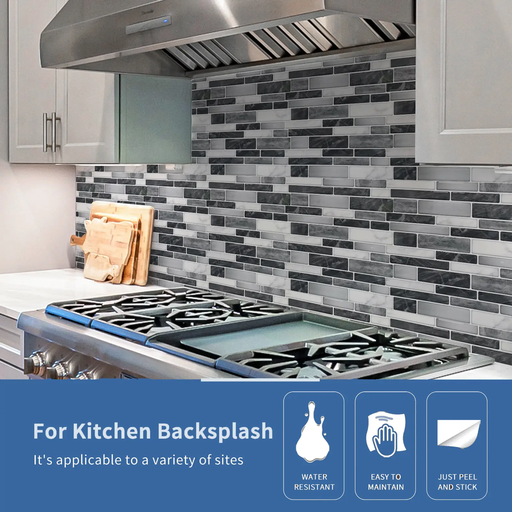
Why this choice suits this profile : These self-adhesive tiles are suitable for a kitchen splashback, bathroom decoration away from direct running water or a commercial space that needs a quick refresh.
The tiles are designed to be installed without mortar or additional glue. However, the product description specifies that the surface must be smooth, clean and free from texture.
30 × 30 cm format, vinyl surface and top layer described as resistant to moisture, stains and scratches.
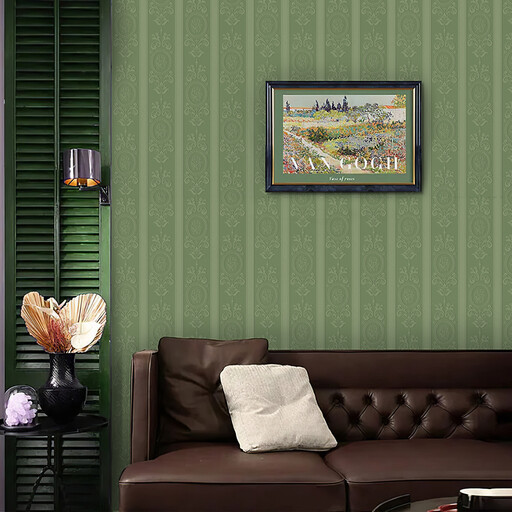
Why this choice suits this profile : This self-adhesive roll lets you refresh a feature wall or interior door with fewer cuts than assembling small tiles.
The product description details the compatible surfaces and recommends unrolling the wallpaper gradually to minimise bubbles and misalignment.
44 × 508 cm roll, self-adhesive PVC vinyl and a surface described as washable with a damp cloth.
We have brought together a complete, real-time-updated selection of products that meet these criteria, as well as European safety requirements.
When installing a self-adhesive mirror mosaic, wear gloves while cutting and avoid locations where reflections could be distracting. These small pieces are best suited to frames, alcoves, furniture or decorative accents rather than quickly covering an entire wall.
They can be used in areas with limited exposure to water, provided the product description permits it and the surface is dry and properly prepared. The joints, corners and choice of adhesive all play a decisive role. For the inside of a shower, always check the manufacturer’s precise recommendations before buying.
It depends on the model and the type of surface. Some products are self-adhesive, while others require mounting adhesive or silicone. Choose a product compatible with PVC, the porosity of the wall and the room’s humidity level. Testing the adhesive on a small area can help prevent widespread detachment.
Their lifespan depends on the quality of the PVC, wall preparation, adhesive used, ventilation and maintenance. Installation on a flat, dry and stable surface helps ensure better long-term adhesion. Avoid harsh solvents and follow the care instructions for each product.