
Livraison le jour même ou le lendemain

Qualité garantie

Débloquez vos offres de bienvenue: Livraison GRATUITE | Jusqu'à -80 % | 30 jours d'essai gratuits à JoyPlus
Téléchargez l'application
Renovating a wall without taking on major work is becoming increasingly popular with homeowners. 3D PVC wall panels let you create a feature wall in your living room, bedroom, home office or bathroom in no time. Lightweight and easy to cut, they are particularly well suited to interior decoration projects.
But be warned: certain details can turn a budget-friendly renovation into an unnecessary expense. Here are the pitfalls to avoid, the criteria to check, and our selection of decorative wall panels to suit your needs.
A panel described as waterproof or moisture-resistant may be suitable for a damp room. That does not mean the wall will be completely watertight, however. The joints, corners, cut edges and the condition of the wall behind the PVC tiles all play a crucial role.
In a bathroom or kitchen, therefore, check:
A self-adhesive or glued wall panel will not hide every imperfection in the surface. A dusty, greasy, crumbly or very damp wall can compromise adhesion. 3D reliefs also tend to make alignment errors more noticeable.
Before installation, clean and thoroughly dry the wall, fill any significant holes and check that it is level. If the wall is covered with old paint, test the adhesion on a small area first. This will save you from ordering several packs for an uncertain result.
The dimensions given usually refer to a single panel. The actual area covered therefore depends on the number of pieces in each pack. Allow extra for cuts, installation errors and the possible replacement of a damaged panel.
To estimate your requirements:
PVC is popular for its light weight, easy maintenance and moisture resistance. However, not all products are equal when it comes to rigidity. Flexible PVC is easy to cut and can slightly follow the contours of some surfaces, while rigid PVC holds its shape and the depth of its relief better.
To create a feature wall in a living room or bedroom, choose a pattern and rigidity that match the effect you want. In a damp room, look for mentions of waterproof PVC panels, moisture-resistant or washable. Bear in mind, though, that these terms do not automatically guarantee the wall is completely watertight.
Claims such as "recyclable", "odourless" or "fire-resistant" correspond to characteristics stated in the product description. If fire performance is a deciding factor, particularly in a commercial setting, ask for the technical documents and the relevant classification, for example under the European standard EN 13501-1, where this is claimed.
30 × 30 cm formats are ideal for modular projects and cutting around sockets or corners. Larger 50 × 50 cm panels reduce the number of joints and can speed up installation on a relatively clear wall.
Also check the number of panels per pack. A pack of 33 panels measuring 30 × 30 cm mathematically covers approximately 2.97 m², before accounting for losses from cutting. Commercial descriptions can sometimes mix up units: always verify the coverage details before adding to your basket.
Diamond-effect panels and geometric patterns cast more pronounced shadows when light comes from the side. Black enhances the relief but shows dust more easily. White reflects light and can make a room feel larger, at the cost of making marks more visible.
Avoid abrasive products. For everyday cleaning, a soft, slightly damp cloth is usually sufficient, following the recommendations on the product description.
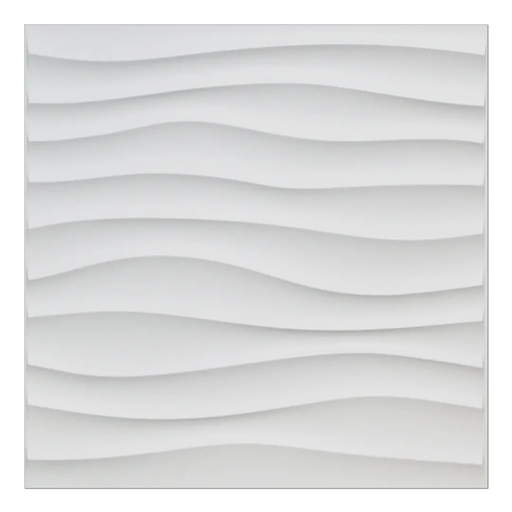
Why this choice suits this profile: The 50 × 50 cm format and pack of 12 panels are perfect for a first feature wall or the back of a TV unit.
The dimensions and covered area are clearly stated, making it easy to calculate your needs. Installation with adhesive or double-sided tape remains accessible for beginner DIYers.
Flexible PVC, 50 × 50 cm format, white finish and stated coverage of approximately 3 m² per pack.
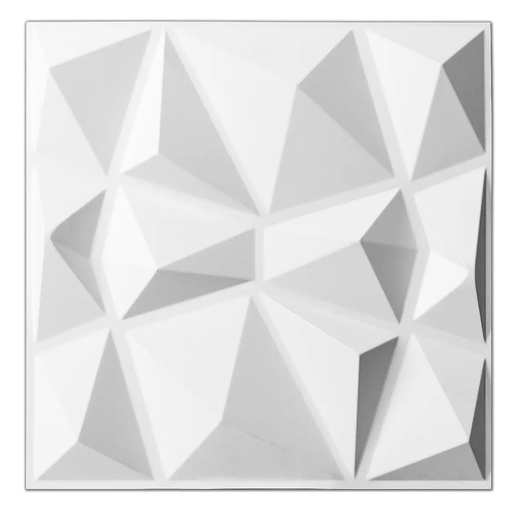
Why this choice suits this profile: The white diamond pattern fits into contemporary decor and offers a clearly visible relief, while reflecting plenty of light.
The standard 30 × 30 cm format makes it easy to replace a single tile and to cut neatly around obstacles.
33 panels per pack, stated rigid PVC, diamond pattern and water and heat resistance indicated in the product description.

Why this choice suits this profile: The matt black finish and geometric pattern are ideal for a home office, a professional space or a feature wall that makes a statement.
The pack of 20 panels measuring 30 × 30 cm makes it easy to replace individual tiles and allows you to plan installation zone by zone.
Stated high-density PVC, matt black surface, declared recyclable and possible use in damp rooms according to the product description.
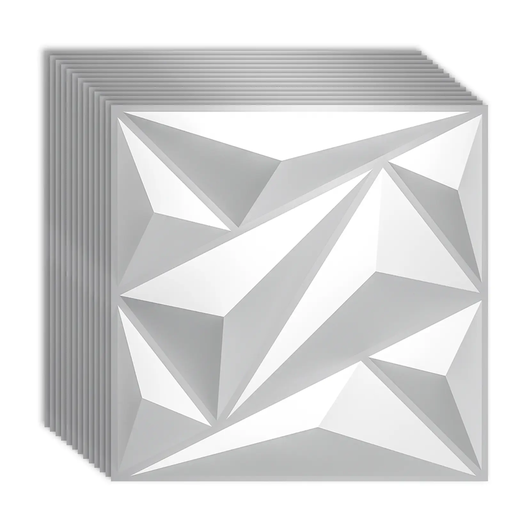
Why this choice suits this profile: The textured white finish adds structure to a living room, bedroom or hallway without making the room feel smaller.
The relief is clearly defined and the tile format minimises waste when the wall has sockets or corners.
33 panels of 30 × 30 cm, white finish, lightweight PVC and stated moisture resistance.
We have compiled a complete and up-to-date selection of products that meet these demanding criteria, in compliance with European safety regulations.
Draw a perfectly horizontal starting line, do a dry run and make sure you respect the direction of the pattern. Use a suitable blade for cutting, then apply an adhesive that is compatible with PVC and the wall material. For a self-adhesive wall panel, remove the protective film at the last moment and apply even pressure over the entire surface.
If temperature differences are significant, let the panels acclimatise in the room before installing them. Once the wall covering is in place, avoid fixing heavy items directly into the panels straight away.
Yes, some products are described as moisture-resistant. They can be suitable for wall decoration in a bathroom, provided the surface is properly prepared and the joints are carefully finished. However, they do not on their own replace a waterproofing system beneath tiles.
Choose an adhesive or silicone that is compatible with PVC, the wall material and the room's humidity level. Follow the setting time and the recommendations on the product description. A test on a small area will let you check adhesion before covering the entire wall.
The lifespan depends on the quality of the PVC, the surface preparation, ventilation and exposure to water or heat. Careful installation, cleaning without abrasive products and properly executed joints all help to preserve the relief and the panels' good condition.