
Livraison le jour même ou le lendemain

Qualité garantie

Débloquez vos offres de bienvenue: Livraison GRATUITE | Jusqu'à -80 % | 30 jours d'essai gratuits à JoyPlus
Téléchargez l'application
By Joybuy, our product expert
The key to a successful 3D print lies not just in your machine, but most importantly, in the quality of your consumables. A part warping off the build plate, blurry details, or a brittle final object? These disappointments are often a sign of moisture-laden filament or a poorly chosen resin. Faced with a jungle of available options, it's hard to know where to start.
This guide is here to bring you clarity. We'll review the essential criteria for choosing your 3D printing consumables, with practical tips and a selection of products for reliable, high-quality results, whether you're a passionate maker or a demanding professional.
Before we dive into our selection, let's go over the key points to help you make the right choice and avoid common rookie mistakes.
Choosing your material is the first crucial step.
3d printing resin is the consumable for SLA, DLP, or LCD printers. It's a photopolymerisable liquid: in simple terms, it hardens when exposed to UV light. It's renowned for its fine detail and perfectly smooth surface finish, making it the material of choice for miniatures, jewellery, or appearance prototypes.PLA filament (Polylactic Acid) is the star material for FDM (Fused Deposition Modeling) printers. It's easy to print, available in a myriad of colours, and suitable for a multitude of uses, from decorative objects to functional prototypes not subjected to extreme mechanical stress.Many filaments, especially PLA, PETG, and Nylon, are hygroscopic: they absorb moisture from the ambient air. A waterlogged filament is the source of many problems: bubbles, crackling sounds from the nozzle, poor layer adhesion (delamination), and a much more fragile final part.
To ensure consistent print quality, using a filament dryer proves to be incredibly effective. This filament drying box heats the spool to a controlled temperature to extract moisture, both before and even during printing.
Always check the compatibility of consumables with your machine. For filaments, diameter is a non-negotiable criterion. 1.75mm filament is the most common standard, but some older or specialised printers may require 2.85mm. Also, remember to check the manufacturer's recommended extrusion and bed temperatures.
For resin, the polymerisation wavelength (usually between 365 and 405 nm) must match that of your printer. Brands like Anycubic often provide detailed setting profiles for their own machines, which is a real plus for getting started hassle-free.
Here is our selection of products designed for various uses, whether for high-precision resin printing, everyday FDM printing, or for optimising the quality of your creations.
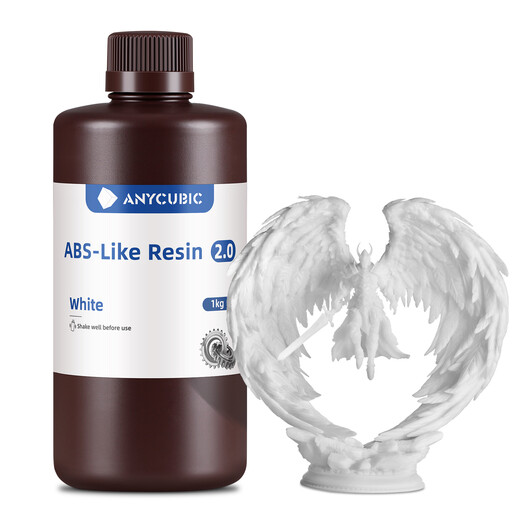
What sets it apart
The Anycubic resin ABS-Like 2.0 is designed to offer the best of both worlds: the ease of printing of a standard resin and the mechanical properties of ABS. The manufacturer claims improved toughness and impact resistance, making it far less brittle than many entry-level resins.
Key features
Who is it for? For resin printer users who want to produce durable, impact-resistant parts and go beyond simple display models.
See the ANYCUBIC ABS-Like 2.0 Resin
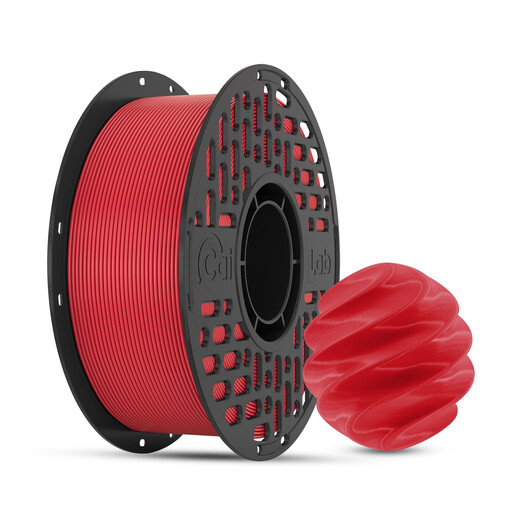
What sets it apart
This PLA+ Bio filament from CAILAB is an excellent option for everyday FDM printing. The "+" suffix usually indicates additives aimed at improving the mechanical properties of standard PLA, such as strength and flexibility. Its bio-based composition is a bonus for the environment.
Key features
1.75mm filament: Compatible with the vast majority of FDM 3D printers on the market.Who is it for? For beginners and experienced makers alike who are looking for a reliable, easy-to-use filament that's a bit tougher than basic PLA for their prototypes and everyday objects.
Discover the CAILAB PLA+ Bio Filament
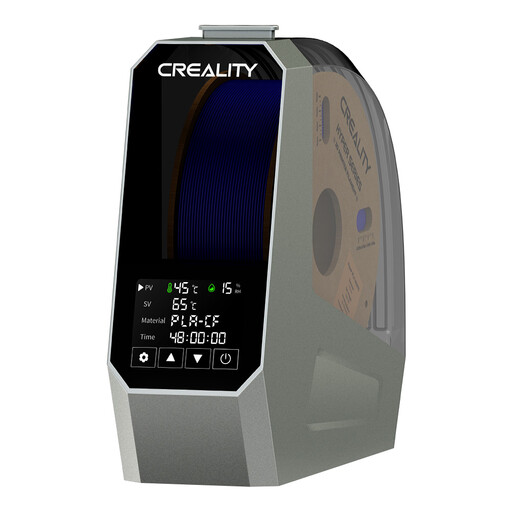
What sets it apart
The Creality Space PI is a 3d printer accessory that tackles the problem of filament moisture head-on. Unlike passive storage boxes with silica gel packets, it uses active 110W PTC heating and 360° hot air circulation to dry the spool evenly and quickly.
Key features
filament drying box to feed the printer directly during operation.Who is it for? For any FDM printer owner who wants to guarantee the quality and reliability of their prints. It's an investment that quickly pays for itself, especially for those using highly hygroscopic materials or living in a humid environment.
Explore the Creality Space PI Filament Dryer
This selection is just a taste of the possibilities for elevating your 3D prints. Every project has specific needs, and there is a multitude of other materials, colours, and accessories to explore.
To discover a wider range of filaments, resins, and equipment, browse our complete Printing & Print Supplies category.
Resin is a liquid that hardens under UV light, used in SLA/DLP printers to achieve objects with very fine details and a smooth surface. PLA filament is a solid plastic wire, melted and deposited layer by layer by an FDM printer. It is ideal for larger parts, rapid prototypes, and objects where fine detail is less critical.
Many filaments absorb moisture from the air. During printing, this moisture turns into steam in the hot nozzle, causing defects like bubbles, "stringing" (the infamous wispy threads between parts of the object), and poor layer adhesion. A filament dryer removes this moisture, restores the material's properties, and ensures cleaner, stronger prints.
Most consumer-grade resins, like Anycubic resin, are formulated for a 405 nm UV wavelength, which is the standard for the majority of LCD and DLP 3D printers. The best practice is to always check the specifications of both your printer and the resin. Resin manufacturers also provide charts of recommended exposure settings for different printer models, which greatly simplifies the setup process.