
Livraison le jour même ou le lendemain

Qualité garantie

Débloquez vos offres de bienvenue: Livraison GRATUITE | Jusqu'à -80 % | 30 jours d'essai gratuits à JoyPlus
Téléchargez l'application
Diving into the world of 3D printing is a fascinating adventure, but choosing the right 3D printer filament can quickly become a headache. Between technical acronyms, marketing promises, and price differences, it's easy to end up with a spool that's unsuitable for your project or, worse, one that clogs your printer's nozzle.
As the Head of Product Recommendations at Joybuy, my mission is to help you see things more clearly. Let's forget the technical jargon and get straight to the point?: here are the most common pitfalls to avoid and the criteria to check to get perfect prints every time.
Before you even think about colour or price, be aware of these two common problems that can turn a promising printing session into a total nightmare.
To avoid these setbacks, focus on three non-negotiable technical specs. More than any marketing claim, these are what will make all the difference.
The choice of material determines the properties of your final object.
Almost all consumer 3D printers use 1.75?mm diameter filament. The crucial factor here is dimensional accuracy. Aim for a tolerance of ±0.03?mm or, ideally, ±0.02?mm. A significant variation in diameter is a frequent cause of jamming in the extruder. A manufacturer that clearly displays this information is a sign of quality and reliability.
The 1?kg filament spool is the standard and most cost-effective format. Make sure the winding is neat and tangle-free to prevent knots during printing. The packaging is just as crucial?: the filament must arrive in a vacuum-sealed bag with a sachet of silica gel (desiccant) inside. This is your best insurance against the humidity trap.
To help you buy the right 3D filament for your needs, here is our targeted selection.
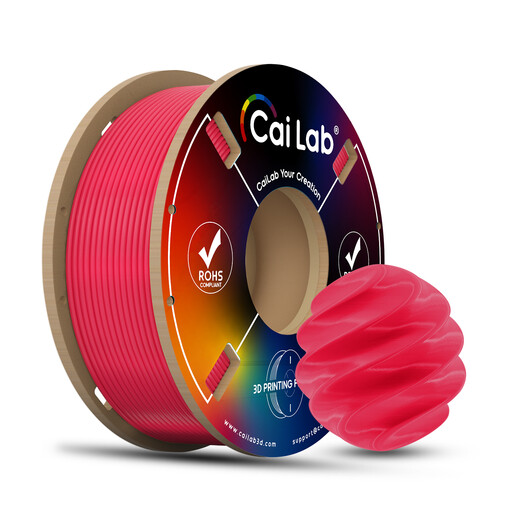
Why we recommend it : PLA is the easiest material to get started with. This PLA+ version offers better layer adhesion and reduced warping, which minimises failures—an essential point for beginners or for classroom projects.
It allows you to learn the ropes without getting lost in complex settings. Its standard printing parameters are compatible with the vast majority of machines.
Its ease of use and forgiveness for minor setting errors make it a reassuring option for getting started.
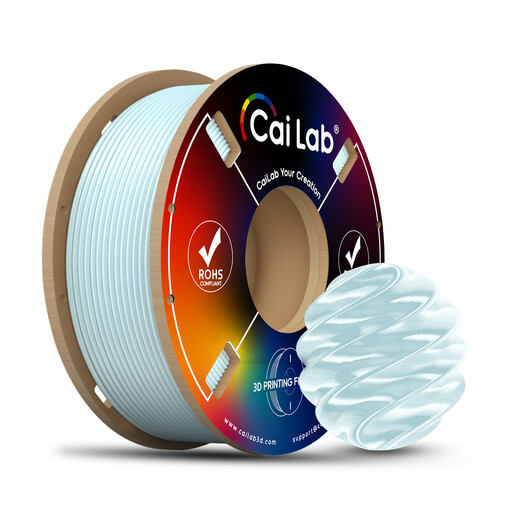
Why we recommend it : For those who print decorative objects, vases, or figurines, aesthetics are paramount. Silk PLA filament provides a shiny, smooth finish that effectively hides layer lines, giving the final piece a premium look without any post-processing.
It meets a purely aesthetic need that goes far beyond prototyping. It prints as easily as standard PLA, which helps avoid the trap of complex, exotic materials.
Its silky, shiny finish is spectacular. It highlights the finest details of the model and gives the print a professional appearance.
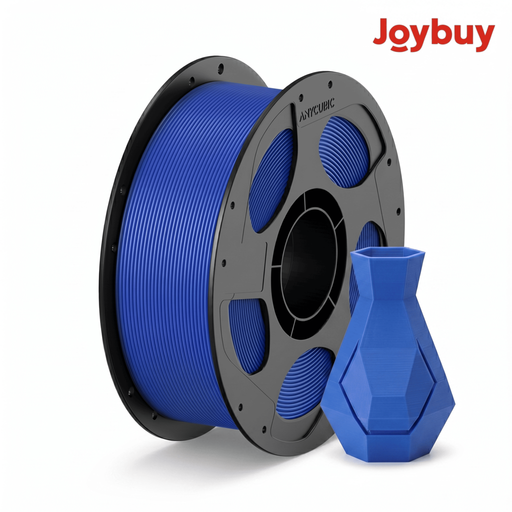
Why we recommend it : When you need parts that are more robust than PLA (brackets, enclosures, simple mechanical parts), PETG is the material of choice. It offers better impact and temperature resistance while remaining relatively easy to print. This filament is also available in grey.
This is the natural evolution after mastering PLA. It offers far superior mechanical properties without the complexity of ABS (e.g., no need for a closed enclosure).
An excellent balance between strength (mechanical/thermal) and ease of printing. Its low warping is a major advantage for a technical material.
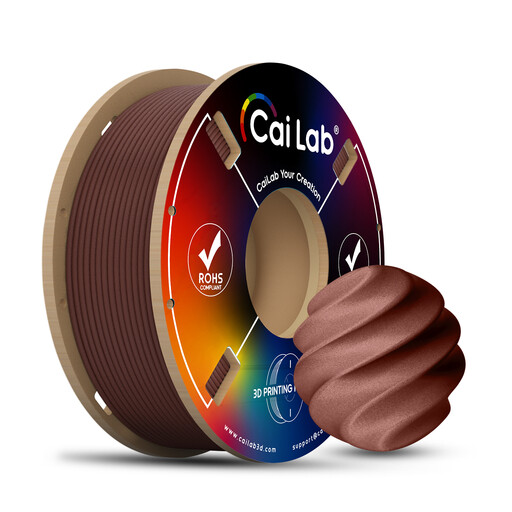
Why we recommend it : For makers, designers, or engineers creating structural parts under stress (drone frames, technical brackets), rigidity is the number one criterion. This carbon fibre-reinforced PETG offers far greater rigidity than standard PETG, for lightweight and highly stable parts.
This composite material offers a quantifiable performance boost. Be aware, its abrasive nature requires the use of a hardened steel nozzle to avoid damaging it within a few hours of printing.
Exceptional rigidity and dimensional stability, coupled with a very professional matte finish that hides imperfections.
We have curated a complete selection of filaments that meet our strictest quality and safety criteria.
For PLA filament, it's generally not necessary if it's new and comes out of a sealed package. For PETG filament, nylon, or other hygroscopic materials (which absorb moisture), it is highly recommended, especially if the spool has been open for several weeks. A few hours in a dedicated dryer or a home oven at a low temperature (around 65?°C for PETG) can dramatically improve print quality.
When stored correctly, away from moisture and UV light, a spool can last for several years. After each use, place it back in an airtight bag with its desiccant packet. If you live in a humid environment, investing in airtight storage boxes is an excellent long-term solution.
Not necessarily. The price can be influenced by the brand, colour, or specific additives. The true markers of quality are the purity of the material, the consistency of the colour, and, above all, the uniformity of the diameter (the famous dimensional accuracy). An affordable filament with a tolerance of ±0.02?mm will often yield much better results than a more expensive one with a tolerance of ±0.05?mm.