
Livraison le jour même ou le lendemain

Qualité garantie

Débloquez vos offres de bienvenue: Livraison GRATUITE | Jusqu'à -80 % | 30 jours d'essai gratuits à JoyPlus
Téléchargez l'application
Choosing a 3D printer filament seems simple on the surface, but it's a decision that directly impacts the quality of your prints. A poor-quality spool is a recipe for failed prints, hours of frustration, and wasted plastic. To avoid falling into this trap, it's crucial to see through the marketing ploys and focus on the features that truly make a difference.
As a section editor and product specialist at Joybuy, I'm breaking down fact from fiction for you. Follow this guide: here are the key things to watch out for and the objective criteria for making an informed decision that's perfectly suited to your projects and your machine.
The market is flooded with options, but they are far from being created equal. Here are three common traps that too often turn a good deal into a real headache.
Whether you're printing a simple figurine or a precision mechanical part, the success of your project rests on two technical pillars.
The vast majority of consumer 3D printers are designed for 1.75?mm diameter filament, whether it's PLA or PETG. Where a quality spool stands out is its dimensional tolerance. Aim for a tight tolerance, ideally ±0.02?mm. This high precision ensures a perfectly consistent flow of material, which prevents clogs and guarantees a flawless surface finish. A tolerance of ±0.05?mm is still acceptable for less demanding projects, but beyond that, reliability plummets.
The choice of 3D printing material will depend entirely on how you intend to use your object.
To turn your ideas into objects, here is our selection of filaments that check all the boxes for quality and reliability, each tailored to a specific need.
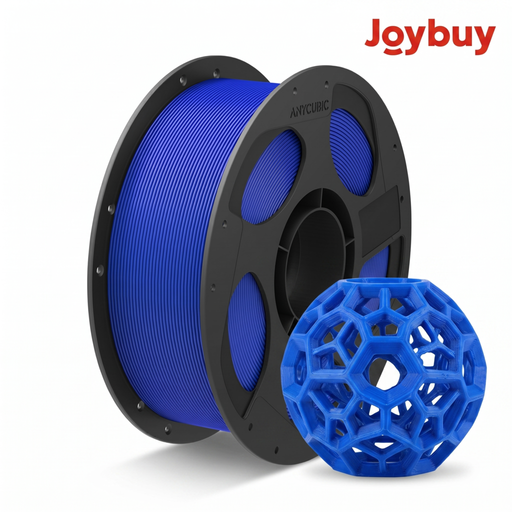
Why we chose it: Perfect for taking your first steps in 3D printing. PLA is easy to master, forgives minor setting errors, and delivers excellent results for decorative objects or quick prototypes.
Its ±0.02 mm tolerance ensures smooth and consistent extrusion, drastically reducing the risk of nozzle clogs—a beginner's worst nightmare.
Incredibly easy to print, with a very low risk of warping and excellent layer adhesion. The result: successful prints from the very first try.
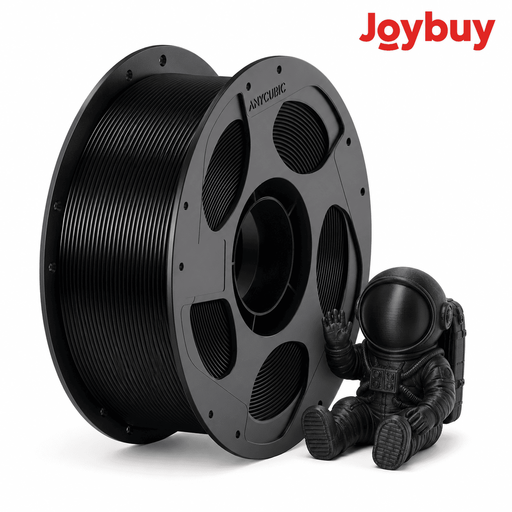
Why we chose it: For makers who need parts that are built to last. PETG is the perfect compromise between the simplicity of PLA and the toughness of ABS, without the latter's toxic fumes.
This PETG is non-abrasive. It won't prematurely wear out your brass nozzle, unlike fibre-filled filaments that require special hardware.
High impact and heat resistance, ideal for creating mechanical parts, brackets, or enclosures that need to endure.
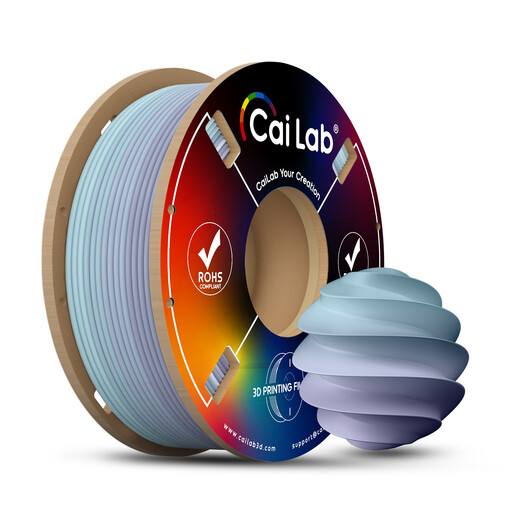
Why we chose it: For those who want creations that stand out from the crowd. This PLA filament changes colour as it prints, creating spectacular gradients without any post-processing.
Because it's PLA-based, it remains very easy to print and maintains excellent dimensional accuracy. This helps avoid the disappointments common with low-end "novelty" filaments.
A spectacular visual finish right off the printer. Each piece is unique, which is perfect for art objects, vases, or original figurines.
We've put together a complete selection of products that meet our quality criteria and current safety standards.
To put it simply: PLA is rigid and very easy to print, making it the champion for beginners and decorative objects. PETG, on the other hand, is more flexible and more resistant to impacts and heat. It's the material of choice for functional or mechanical parts designed to withstand stress.
Moisture is your filament's public enemy number one. It makes them brittle and can create steam bubbles in the nozzle, ruining the quality of your prints. The golden rule: always store your spools in an airtight container (a zip-top bag or a plastic box) with a few packets of silica gel to absorb any trace of moisture.
It all depends on what you're printing! A 1?kg spool of filament can be used to print dozens of small figurines or a single large object with dense infill. To give you an idea, 1?kg of 1.75?mm PLA is about 330 meters of material. Fortunately, all slicer software estimates the amount of filament needed before each print, allowing you to anticipate and manage your stock stress-free.