
Livraison le jour même ou le lendemain

Qualité garantie

Débloquez vos offres de bienvenue: Livraison GRATUITE | Jusqu'à -80 % | 30 jours d'essai gratuits à JoyPlus
Téléchargez l'application
3D adhesive wall panels let you refresh a kitchen, bathroom, living room or office without removing the existing wall covering. Their mortar-free installation appeals to tenants and DIY enthusiasts alike. But certain details can quickly push up the cost or shorten their lifespan.
Before you place an order, three pitfalls deserve particular attention:
High-density PVC and thickened vinyl are commonly used for 3D PVC wall panels and self-adhesive wall tiles. Lightweight and easy to cut, they can usually be cleaned with a soft cloth. However, their performance can vary depending on thickness, finish and adhesive quality.
In a kitchen, choose a non-porous, wipe-clean surface. For a bathroom, check that the product description clearly mentions moisture resistance. This doesn't necessarily mean the covering can be installed in a constantly submerged area or directly inside a shower. The joints, seams and edges must also be protected against water ingress.
Claims such as "recyclable", "odour-free" or "heat-resistant" should be assessed based on the manufacturer's information and instructions. They do not replace the need for proper installation precautions or compliance with applicable rules near a heat source.
Start by calculating the area you need to cover before comparing prices. One 30 × 30 cm panel covers 0.09 m². Allow extra for cuts and potential mistakes:
Decorative wall tiles can be used to create an accent wall. For a splashback or a large wall, it's better to opt for a larger pack size. Buying several identical packs also helps minimise differences in shade and texture.
A successful installation starts with a wall that is smooth, dry, clean and grease-free. Textured or crumbly surfaces, as well as flaking paint, can prevent the panels from sticking properly. Some preparation will then be essential.
For self-adhesive models, gradually peel off the protective film, then press firmly from the centre outwards to remove any air bubbles. A craft knife, a metal ruler and a pencil are usually all you need for cutting. Non-pre-glued 3D PVC panels may require an adhesive or silicone that is compatible with the surface.
Before covering the entire room, test on a small area. This precaution is particularly useful in a rental property: removing the adhesive can damage some paints or leave residue behind.
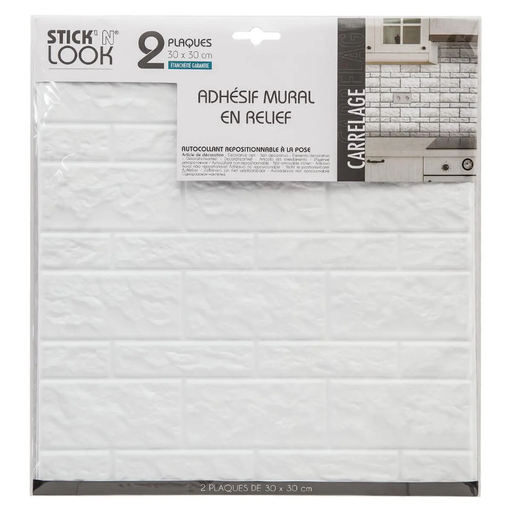
Why this choice suits this profile: This pack of two stickers is ideal for a small adhesive kitchen splashback, a touch-up or a limited decorative area. Each piece measures 30 × 30 cm, with a total stated coverage of 0.18 m².
The small number of pieces limits the risk of overbuying for a small area. However, you must prepare the wall carefully and check surface compatibility.
Lightweight PVC, white stone-effect finish, self-adhesive installation and a surface described as easy to clean.
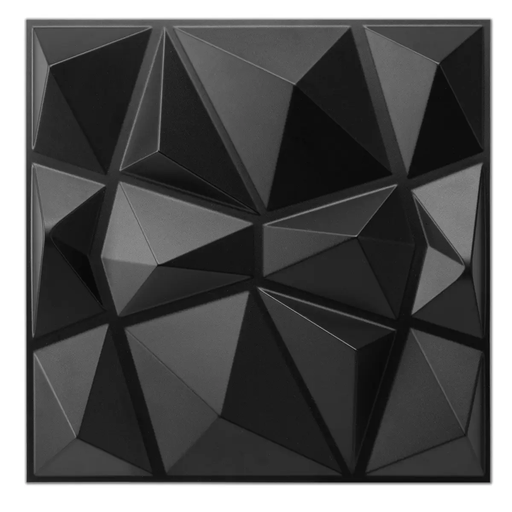
Why this choice suits this profile: This large pack is designed for those who want to create a modern wall decoration over a significant area, with a particularly striking black diamond pattern.
The 33 panels cover approximately 2.97 m², making calculations for an accent wall straightforward. However, installation requires adhesive or silicone, plus precise cutting.
Rigid PVC, raised geometric pattern, matt black colour, stated water and heat resistance.
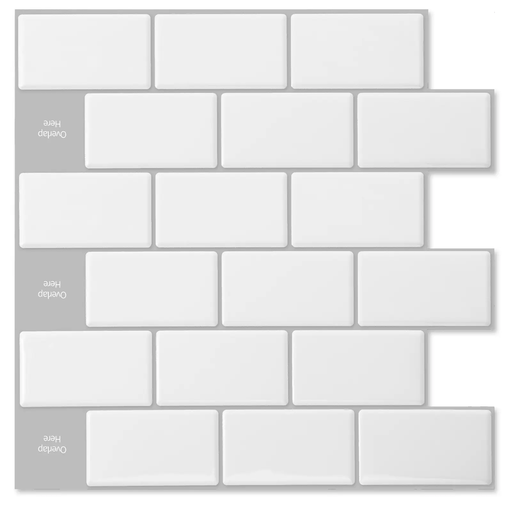
Why this choice suits this profile: This white model with grey grout lines fits easily into a busy kitchen or bathroom where daily cleaning and cutting around sockets are key considerations.
The surface, described as resistant to moisture, scratches and stains, is suited to the demands of regular cleaning. However, check the required distance from flames and follow the instructions.
10 pieces of 30 × 30 cm, stated coverage of 0.9 m², 3D texture, self-adhesive and cuttable with a craft knife.
We've put together a comprehensive, real-time updated list of products that meet these demanding selection criteria and European safety standards.
Yes, provided the tiles are smooth, clean, dry and thoroughly degreased. Very deep grout lines, a porous surface or dusty tiles can reduce adhesion. Test on a small area to check the hold before tackling the whole wall.
Some PVC or vinyl models are described as moisture-resistant. This generally refers to splashes and condensation, not permanent immersion. Avoid areas directly exposed to water jets unless the technical data sheet clearly allows it, and ensure the edges are well sealed.
The price depends on the material, the number of pieces, the actual area covered and the surface preparation required. Always compare the price per square metre, taking into account the extra needed for cuts and any products required to clean or stick the panels. This method is far more reliable than the price shown for a single pack.