
Livraison le jour même ou le lendemain

Qualité garantie

Débloquez vos offres de bienvenue: Livraison GRATUITE | Jusqu'à -80 % | 30 jours d'essai gratuits à JoyPlus
Téléchargez l'application
Building a high-end PC is the art of balancing raw performance with a polished aesthetic. At the heart of these exceptional builds, the 360mm AIO water cooler with a screen has become the centerpiece. It ensures optimal cooling for the most power-hungry processors while offering nearly infinite customization potential. But be warned: the market is flooded with models making tempting promises that sometimes hide real disappointments.
To avoid falling into these traps, here are the three most common pitfalls to watch out for:
To make an informed choice, you must look beyond appearances and focus on the technical specifications that truly make a difference for a 360mm CPU liquid cooler.
Deciphering a spec sheet can seem intimidating. Focus on these three non-negotiable checkpoints to ensure your future AIO meets your expectations for performance and durability.
This is the very first thing to validate. With the arrival of new platforms, checking compatibility is a crucial step. For recent builds, you must ensure support for LGA 1851 sockets for Intel processors and AM5 for AMD. A good cooling system must not only be compatible but also come with the appropriate mounting kit to guarantee perfect pressure on the processor. Some manufacturers even include offset brackets to better target the hotspots of modern chiplets.
An AIO with an LCD screen is an investment. Make sure the screen is more than just a gimmick. Key points to watch for:
The primary mission of a 360mm radiator is to dissipate a large amount of heat. Its performance depends on three key elements:
To illustrate these criteria in action, here is a selection of models that cater to very different needs.
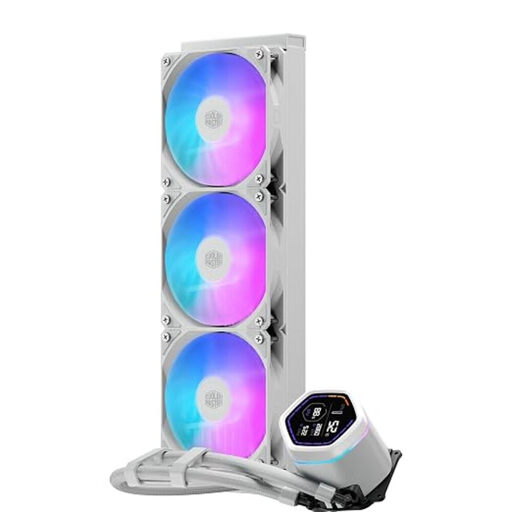
Why we chose it: Ideal for those building a clean, all-white setup. This white Cooler Master water cooler combines an immaculate aesthetic with modern features, without sacrificing ease of installation.
It sidesteps the trap of sacrificing performance for design thanks to its patented dual-chamber pump, which optimizes liquid flow, and its guaranteed compatibility with the latest sockets, including LGA 1851.
Installation is a breeze: pre-installed fans, simplified cabling, and pre-applied thermal paste allow for a build that is as fast as it is clean.
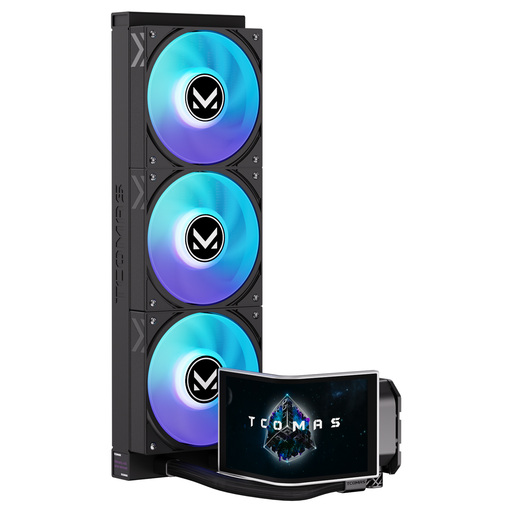
Why we chose it: For the user who sees their AIO's screen not as a mere accessory, but as a true digital canvas. This model makes the visual experience its absolute priority.
It shatters the "gimmick screen" notion by integrating a spectacular 6.67-inch curved AMOLED display, a technology worthy of high-end smartphones, for simply unparalleled display quality.
Its giant, curved screen opens the door to 3D visual effects and limitless customization, transforming the heart of the PC into a dynamic work of art.
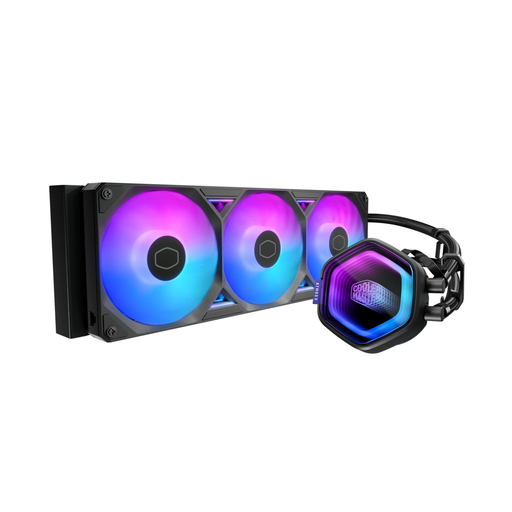
Why we chose it: For the pragmatic user seeking a proven, ultra-high-performance cooling solution for their Intel and AMD processor AIO. Here, the screen is a useful bonus, not the main event.
It bypasses the trap of "universal" but poorly optimized compatibility by providing offset mounting brackets specifically designed for the LGA 1851 socket. The result: perfectly targeted and incredibly effective thermal dissipation.
Pure performance is at the core of its design, with high-static-pressure SickleFlow Edge fans and an optimized pump, while leaving the door open for future upgrades.
We have curated a complete list of products that meet our strict requirements for performance, quality, and reliability.
1. What is the lifespan of a 360mm AIO water cooler? An AIO's lifespan primarily depends on the pump. Most manufacturers provide a Mean Time To Failure (MTTF) rating for the pump, often exceeding 40,000 hours. In practice, a quality model will operate reliably for 5 to 7 years under normal use. The manufacturer's warranty, often 5 years on mid-range and high-end models, is a good indicator of the brand's confidence in its product.
2. Is installing a 360mm AIO complicated for a beginner? Although installing a 360mm radiator might seem intimidating, manufacturers have made huge strides in simplifying the process. Many models, like the ones featured, come with pre-installed fans, pre-applied thermal paste, and simplified mounting systems. By following the manual carefully, even a beginner can complete the installation without a hitch.
3. Will an AIO purchased today be compatible with future processors? This is a valid concern. By choosing a model that already supports the latest sockets like LGA 1851, you ensure a degree of future-proofing. Also, be aware that reputable brands often offer mounting upgrade kits (sometimes for free or at a low cost) when new sockets are released, extending the useful life of your investment.