
Livraison le jour même ou le lendemain

Qualité garantie

Débloquez vos offres de bienvenue: Livraison GRATUITE | Jusqu'à -80 % | 30 jours d'essai gratuits à JoyPlus
Téléchargez l'application
Are you a content creator crafting immersive vlogs, an extreme sports enthusiast looking to capture every angle, or a traveller passionate about 360-degree panoramas? Choosing the right camera can quickly become overwhelming. The market is flooded with models boasting complex spec sheets, making it easy to get lost.
This guide is here to provide practical advice and help you find the 360 action camera that truly fits your needs and budget, based on concrete criteria.
Before diving into our top picks, let's review the key points to consider to make the right choice.
For a 360 camera, resolution is the name of the game. An 8K 360 camera offers a decisive advantage: it captures a far greater amount of detail across the entire sphere. When it's time to reframe (the process of extracting a flat shot from your 360 video), a high initial resolution guarantees a sharp and crisp final video. Don't forget about low-light performance, either. Larger sensors and more powerful image processors will make all the difference at dusk or indoors.
An action camera, by definition, is always on the move. High-performance image stabilisation, like FlowState Stabilisation technology, isn't an option—it's essential for getting smooth, usable footage, even during a mountain biking or ski session. Durability is just as crucial. Check if the model you're eyeing is a waterproof sports camera without any accessories, or if it requires a separate case. Also, consider its resistance to shocks and scratches, a real plus in the field.
The real magic of a 360 camera often happens in post-production. The software is therefore just as crucial as the hardware itself. Features like the Invisible Selfie Stick effect, which magically makes the stick disappear from the shot, allow you to create stunning third-person views. Likewise, AI-powered editing tools can analyse your footage to suggest the best angles and generate dynamic edits. This is a huge time-saver for vloggers and creators on a tight schedule.
With these criteria in mind, here are the models that currently stand out from the crowd.
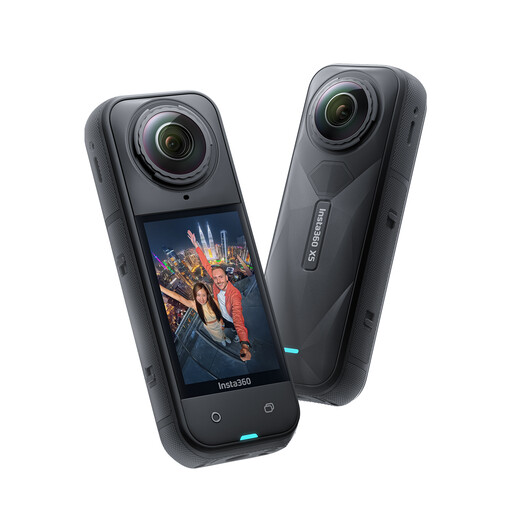
Why it stands out?: The Insta360 X5 establishes itself as the new market benchmark, capable of shooting 8K 360° video at 30?fps. Equipped with two 1/1.28-inch sensors and a triple AI chip, it promises detailed images and solid low-light performance. Its software arsenal, from AI reframing to the Invisible Selfie Stick effect, makes it a top choice for content creation.
Pros?:
Who is it for?? Content creators, vloggers, and action sports enthusiasts who want maximum flexibility in post-production and innovative tools to create truly immersive and original videos.
If 360° capture isn't your top priority or if you prefer the more classic format of a traditional action camera, here are two very interesting alternatives.
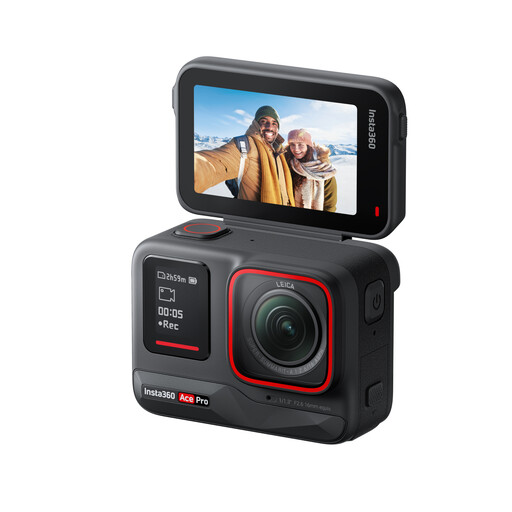
Why it stands out?: Designed in partnership with Leica, the Ace Pro goes all-in on image quality. It packs a large 1/1.3-inch sensor and a 5nm AI chip, a combination that allows it to shine in low light. Its 2.4-inch flip screen is a major asset for vlogging.
Pros?:
Who is it for?? Image purists looking for a classic yet high-performance action camera, especially for vlogging and shooting in challenging light conditions.
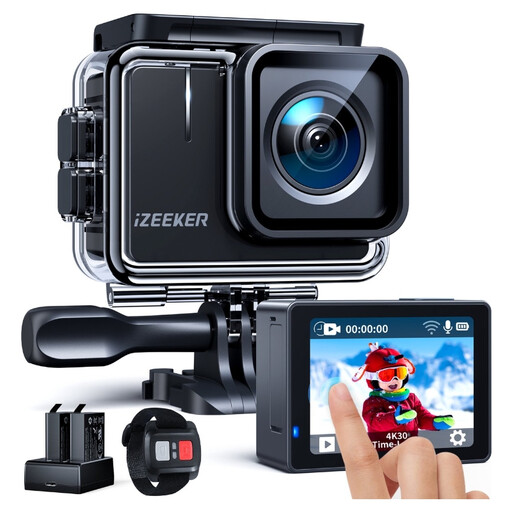
Why it stands out?: The iZEEKER iA100 is an excellent entry point into the world of action cameras without breaking the bank. For its price, it offers a solid spec sheet, with 4K video and waterproofing down to 40 metres (131 ft) with its case.
Pros?:
Who is it for?? Beginners or casual users who want a simple and effective camera to capture their holidays or sports outings, all at a budget-friendly price.
The world of action cameras is vast and moves quickly. If the models in our selection don't check all your boxes, or if you want to explore other formats and budgets, dozens of other options are waiting for you.
Discover our complete collection of action cameras and find the perfect model for your projects.
Is a 360 camera difficult to use?? Shooting with a 360 camera is child's play: you just press the button and that's it. It's often the editing that can seem intimidating. Fortunately, modern apps, like those from Insta360, include AI tools that do the heavy lifting by suggesting automatic reframes and creating near-instant edits.
What's the difference between a 360 camera and a traditional action camera?? A traditional action camera shoots in a single direction with a wide-angle lens. A 360 action camera, on the other hand, uses at least two lenses to film everything simultaneously, in 360 degrees. Its major advantage? You no longer have to worry about framing during the action. You can choose your camera angles leisurely during the edit, which offers nearly infinite creative freedom.
Do I really need 8K resolution for a 360 camera??8K resolution on a 360 camera really comes into its own when reframing. Imagine the captured image is a complete sphere. When you export it as a standard "flat" video (in a 16:9 format, for example), you're only selecting a small window from that massive image. Starting with an 8K resolution guarantees that this reframed "window" will retain maximum detail and optimal sharpness.