
Livraison le jour même ou le lendemain

Qualité garantie

Débloquez vos offres de bienvenue: Livraison GRATUITE | Jusqu'à -80 % | 30 jours d'essai gratuits à JoyPlus
Téléchargez l'application
Buying a new gaming monitor, especially a high-end one, is a serious investment. Faced with a barrage of technical terms like QD-OLED, 240?Hz, or HDMI 2.1, it's easy to feel overwhelmed. Don't panic! This guide is here to break down the key features of a 32-inch 4K QD-OLED gaming monitor and steer you towards the perfect model, whether you're a hardcore PC gamer or a next-gen console aficionado.
Before diving into our top picks, let's review the technical specifications that will make all the difference once you have a controller or mouse in hand.
In fast-paced games like FPS or racing titles, fluidity is non-negotiable. A 240?Hz 4K gaming monitor can display up to 240 frames per second, resulting in unparalleled motion clarity and responsiveness. Be warned, you'll need a graphics card that can keep up! Combined with a low response time gaming monitor (typically 0.03?ms on OLED panels), this powerful duo eliminates motion blur and the infamous "ghosting" effect, giving you a decisive competitive edge.
If you're the proud owner of a PS5 or Xbox Series X, the inclusion of at least one HDMI 2.1 port is simply non-negotiable. It's the key to enjoying your games in 4K at up to 120 frames per second. This standard also includes essential technologies like Variable Refresh Rate (VRR), which syncs the monitor and console to say goodbye to screen tearing, and Auto Low Latency Mode (ALLM), which switches the display to game mode without you having to lift a finger.
QD-OLED (Quantum Dot OLED) technology is the best of both worlds: it combines the deep, inky blacks and infinite contrast of OLED with the vibrant brightness and rich colours of Quantum Dots. The result? A breathtakingly realistic and vivid image. Another crucial point is the panel's surface treatment. An anti-glare monitor is essential if your gaming space is brightly lit, as it neutralises distracting reflections that can ruin the immersion.
From theory to practice. Here are the models that have particularly caught our eye, each with its own unique strengths.
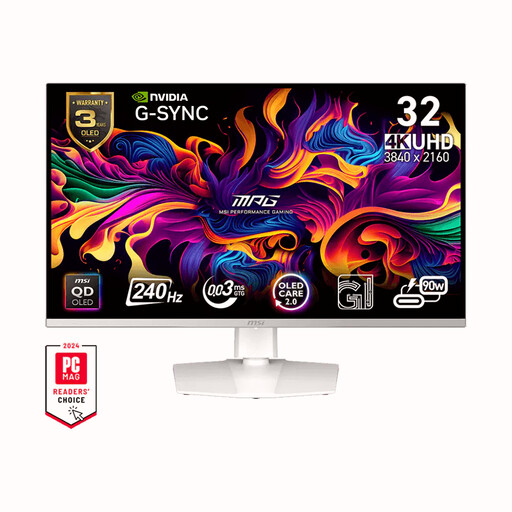
Why it stands out: This model is aimed at PC competitors seeking raw performance. Its 240?Hz refresh rate in 4K, combined with a 0.03?ms response time, makes it a monster of responsiveness for absolute fluidity.
Highlights:
Who is it for? The hardcore PC gamer who makes no compromises on responsiveness and fluidity, especially in competitive titles. It's also an excellent choice for console gamers looking for a future-proof display.
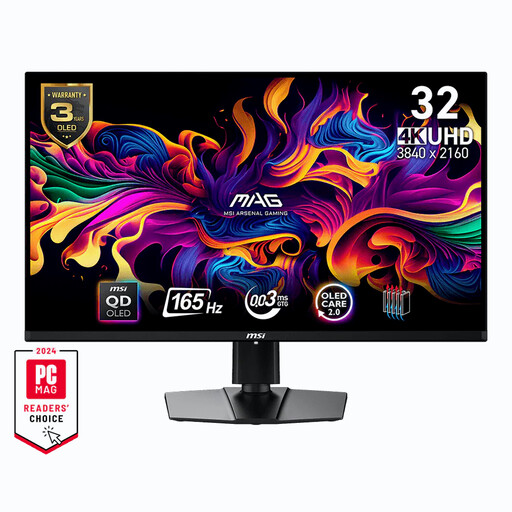
Why it stands out: The MAG 321UP represents the ideal compromise between high-end performance and a more accessible price point. At 165?Hz, it ensures exemplary fluidity for almost all games and gamers, while still offering the magic of a 4K QD-OLED panel.
Highlights:
Who is it for? The versatile gamer who switches between PC and console, and who prioritises an immersive and ultra-responsive visual experience without necessarily chasing the absolute peak of 240?Hz.
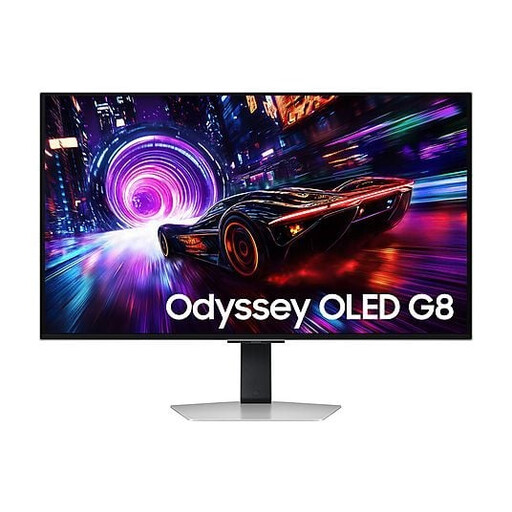
Why it stands out: The Samsung Odyssey G8 doesn't just offer stratospheric gaming performance; it also excels in design and visual comfort. Its secret weapon? A matte "Glare Free" panel, a decisive advantage for anyone who plays in a well-lit room.
Highlights:
Who is it for? The demanding gamer who wants top-tier performance (4K 240?Hz), but for whom setup aesthetics and a reflection-free image are just as important.
Our selection focuses on the cream of the crop of 32-inch 4K monitors. Of course, the world of gaming monitors doesn't end there. If you're curious to discover other sizes, different technologies, or more budget-friendly models, feel free to browse our complete catalogue.
Explore our collection of 4K OLED Monitors.
To put it simply, classic OLED technology relies on pixels that produce their own light, guaranteeing absolute blacks. QD-OLED goes a step further by adding a Quantum Dot filter. This filter converts the blue light emitted by the OLED diodes into exceptionally pure red and green colours. The key benefits: higher peak brightness and a wider colour gamut, resulting in an even more vibrant and accurate image.
Absolutely not. A 240?Hz monitor makes a real difference in ultra-fast competitive games, but you need a beast of a graphics card to take full advantage of it in 4K. For the majority of gamers, including those on console, a 120?Hz or 165?Hz refresh rate already provides an incredibly smooth and responsive gaming experience. It all comes down to your standards, your hardware... and your budget!
Yes, but with a few precautions. The 4K resolution on a 32-inch PC gaming monitor offers exceptional comfort for productivity, with vast screen real estate and perfect sharpness for text and images. The colour accuracy of QD-OLED panels also makes them formidable tools for photo editing or video production. However, be aware: the specific sub-pixel layout on some QD-OLED panels can sometimes create minor colour fringing around text, a detail that might bother office work purists. Finally, as with any OLED screen, it's crucial to adopt good habits (using a screensaver, rotating content) to prevent the long-term risk of burn-in.