
Livraison le jour même ou le lendemain

Qualité garantie

Débloquez vos offres de bienvenue: Livraison GRATUITE | Jusqu'à -80 % | 30 jours d'essai gratuits à JoyPlus
Téléchargez l'application
A saucepan that food sticks to, a base that warps or a lid that is awkward to handle can quickly turn meal preparation into a chore. 304 stainless steel cookware appeals to many French households thanks to its non-stick-free design, versatility and relatively simple care requirements. However, not all products are created equal, and some are better suited to your cooking habits than others.
Before buying a 304 stainless steel saucepan, a stainless steel stockpot or a stainless steel cookware set, there are three common pitfalls to bear in mind.
The term ‘304 stainless steel’ may refer only to the cooking vessel. The lid, handles, base or basket may be made from other materials. This is not necessarily a problem, provided the composition is clearly stated.
In particular, check:
A utensil advertised as compatible with all hob types must have a magnetic base suitable for induction. A simple stainless steel vessel is not always enough. Look for specific terms such as encapsulated base, multi-layer base or composite magnetic base.
This check is especially important if your kitchen has several heat sources: gas, electric hobs, ceramic hobs or induction. A pot compatible with induction can generally be used on gas, but the reverse is not always true.
A 2 litre pot may be suitable for one person or small portions, but quickly prove too limited for a family. Conversely, a 6 litre stockpot takes up more space and becomes heavy when full.
To help you choose:
304 stainless steel is commonly used for cookware intended to come into contact with food. It is known for its corrosion resistance and suitability for preparing a wide range of recipes. However, this grade alone says nothing about the thickness of the vessel, the quality of the construction or the distribution of heat.
Choose a product listing that clearly specifies:
Uncoated cookware also requires a little practice: preheat it gradually, add enough fat when the recipe calls for it and avoid leaving an empty saucepan on the heat.
A saucepan with a glass lid allows you to monitor a sauce, milk or soup without repeatedly lifting the lid. Tempered glass is nevertheless sensitive to thermal shock. Avoid placing a hot lid on a cold surface and use oven gloves if the handles have become hot.
Stainless steel handles conduct more heat. Models with a silicone sleeve may offer a more comfortable grip, but this material must not come into direct contact with the flame.
The claim ‘dishwasher-safe’ should be checked for each product, particularly when it includes glass, silicone or a special exterior finish. To preserve the appearance of stainless steel:
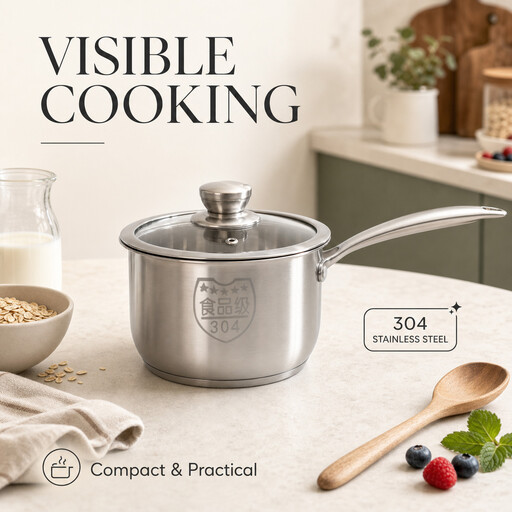
Why this choice suits this profile : its 18 cm size is suitable for small quantities, milk, pasta, soups and preparing baby food.
The product listing specifies a 304 stainless steel vessel, a composite magnetic base and compatibility with induction, gas and ceramic hobs.
A deep design, a tempered glass lid and an integrated stainless steel handle. Hand washing is recommended, even though dishwasher compatibility is stated.
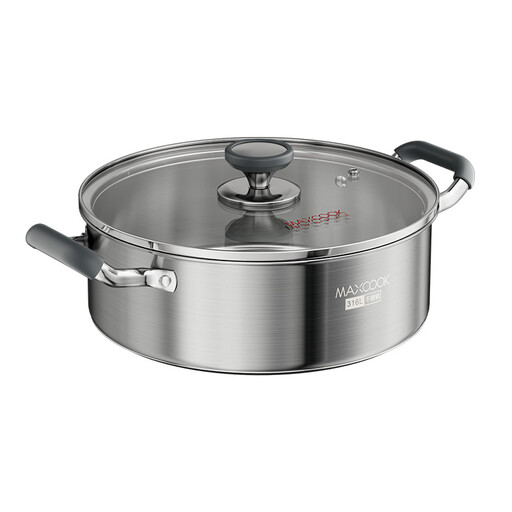
Why this choice suits this profile : its 6.5 litre capacity is designed for larger families, generous portions and meals to share.
The listing specifies 316L material, a composite base and compatibility with gas, induction, electric hobs, ceramic hobs and halogen hobs.
A body specified as 316L stainless steel, a transparent lid and silicone-protected handles. Hand washing is recommended.
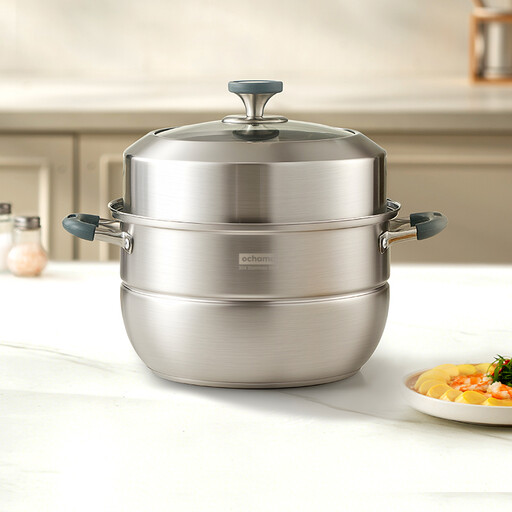
Why this choice suits this profile : its stackable baskets allow you to cook several foods at once, such as vegetables, dumplings or fish.
Its two-tier design meets a specific need and avoids having to buy several separate accessories for steaming.
A 304 stainless steel steamer, stackable baskets and stated compatibility with induction hobs and gas.
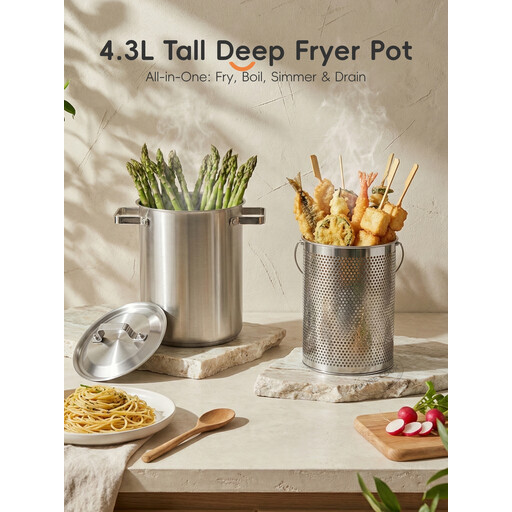
Why this choice suits this profile : its deep vessel and removable basket are suitable for occasional frying, pasta, soups and blanched vegetables.
The basket makes draining easier and the vessel’s height helps reduce splashes. However, observe the maximum oil level and never leave the utensil heating unattended.
A 4.3 litre vessel, a 304 stainless steel basket, a composite magnetic base and compatibility with gas, induction and ceramic hobs.
We have selected a complete, real-time updated list of products that meet these demanding criteria and European safety standards.
Yes, provided the product has a compatible magnetic base. Look for the induction symbol or an explicit ‘induction’ statement. A 304 stainless steel vessel without a suitable base may not be detected by the hob.
Heat the utensil gradually, avoid excessively high temperatures and dry food before placing it in the vessel. For delicate preparations, a little oil or fat can make cooking easier. Wait until the utensil has cooled before cleaning it.
It depends on the thickness of the vessel, the quality of the base, how intensively it is used and how well it is maintained. A utensil that does not warp, is used over moderate heat and cleaned with non-abrasive accessories can remain functional for many years. Before buying, also check the warranty terms and the manufacturer’s recommendations.