
Livraison le jour même ou le lendemain

Qualité garantie

Débloquez vos offres de bienvenue: Livraison GRATUITE | Jusqu'à -80 % | 30 jours d'essai gratuits à JoyPlus
Téléchargez l'application
A pan that sticks, a wok that warps, or an oil bottle that’s impossible to clean can quickly turn a promising purchase into a wasted expense. 304 stainless steel kitchen utensils have a well-earned reputation for durability and versatility, but not all models are created equal, and not every one suits the same purpose.
Before you start comparing prices, check the actual composition, the base structure, and compatibility with your hob. Here are the key criteria to consider when choosing a 304 stainless steel saucepan, a multi-layer stainless steel frying pan, or accessories suited to everyday use in the UK.
The term ‘stainless steel’ doesn’t always specify the grade used. 304 steel is commonly used for food-contact products, but the product listing should clearly state the material and, where available, the relevant compliance information.
Also be wary of items where only the handle or a thin layer is made from 304 stainless steel. For a saucepan or frying pan, check the composition of the body, the base, and any coatings.
A utensil that works on gas or an electric hob won’t necessarily work on an induction hob. Look for an explicit mention such as magnetic base, ‘induction’, or all-hob compatible cookware.
Multi-layer models can combine several metals. This construction often improves heat distribution, but it doesn’t mean the entire utensil is made solely from 304 stainless steel.
Stainless steel stands up well to regular use, but white marks, coloured reflections, or residue can appear from the very first use. These marks are usually caused by mineral deposits, starch, or overheating.
A handle that gets too hot, a lid that’s difficult to grip, or an item that isn’t dishwasher-safe can also make daily life harder. So check the manufacturer’s recommendations before you order.
For a product described as 304 stainless steel, look for the precise wording ‘304 stainless steel’ or ‘acier inoxydable 304’. Handles, lids, and decorative elements may be made from other materials, such as wood, silicone, glass, or 201 steel.
An oil bottle in stainless steel might, for example, combine a 304 body, a 201 steel handle, and a wooden element. This isn’t necessarily a problem, but it does require different care – particularly avoiding soaking the handle.
A multi-layer stainless steel frying pan or a three-layer wok often has an aluminium core sandwiched between two layers of steel. The aim is to distribute heat more evenly than a single sheet of stainless steel.
For an induction-compatible stainless steel wok, check the base diameter, stability on the hob, and whether a lid is included if you cook stewed dishes. A large frying pan of 28 to 32 cm is better for family meals, while a more compact size is easier to handle day to day.
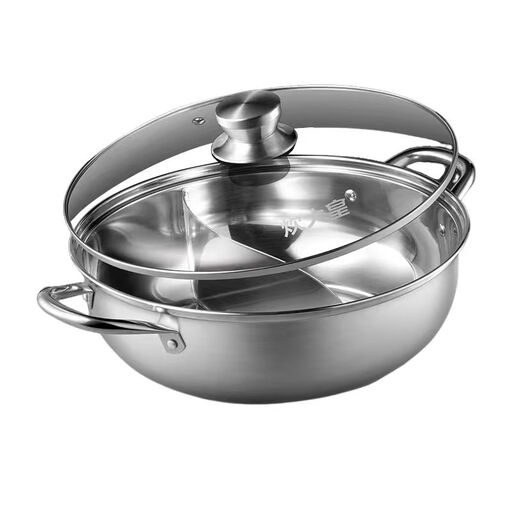
Why this choice suits this profile: its 30 cm diameter and two compartments are ideal for family meals, large gatherings, and anyone who wants to vary their broths without using multiple pans.
The listing states compatibility with gas, electric, and induction hobs, and features an integrated divider rather than a removable accessory.
304 stainless steel, 30 cm size, and double compartment. Hand washing is recommended to preserve the finish.
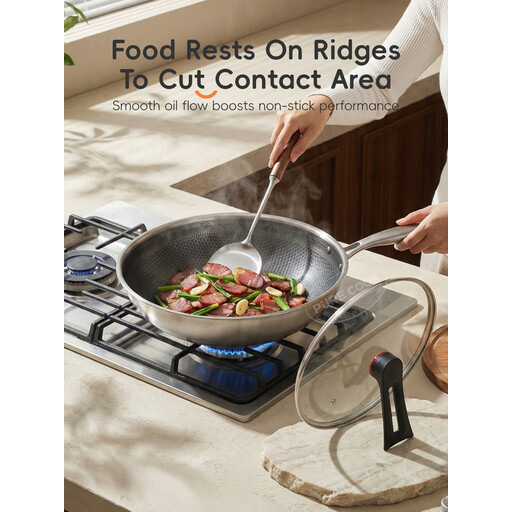
Why this choice suits this profile: its generous size and three-layer construction are aimed at cooks who switch between stir-fries, stewed dishes, and high-heat cooking.
The listing specifies compatibility with gas, induction, and ceramic electric hobs, rather than just a general mention.
Multi-layer structure, glass lid, and 32 cm diameter. Hand washing is advised and thermal shocks should be avoided.
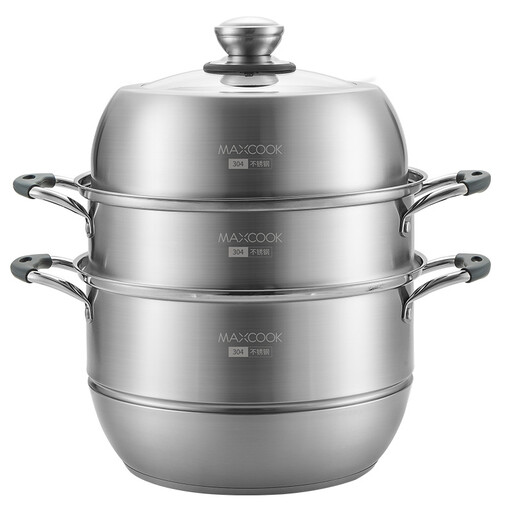
Why this choice suits this profile: its three tiers allow you to prepare several foods at the same time – a particularly handy setup for families and regular meal prep.
The listing details compatibility with induction, gas, electric, and ceramic hobs, while recommending hand washing.
Three cooking tiers, 304 stainless steel, and handles with heat-resistant silicone grips.
We’ve put together a comprehensive, real-time updated selection of products that meet these demanding criteria as well as European safety standards.
To keep your 304 stainless steel kitchen utensils in good condition:
Accessories such as reusable barbecue skewers, unbreakable stainless steel tableware, or a mixing bowl with colander also benefit from being dried before storage. For packed meals, preheat an insulated stainless steel lunch box with hot water before adding your food.
It is commonly used for food-contact items. However, always check the product listing, the associated materials, and the care instructions. A 304 stainless steel frying pan without a coating may take some getting used to, particularly when it comes to temperature control and how much fat to use.
Gradually preheat the pan, add the fat when the surface is hot, then reduce the heat if needed. A temperature that is too high can encourage marks and food to stick. The recommendations for your specific model should always take priority.
The lifespan depends on the thickness, construction, frequency of use, and care. A well-maintained multi-layer product can remain functional for many years, while a handle, seal, or coating may need replacing before the steel body does.