
Livraison le jour même ou le lendemain

Qualité garantie

Débloquez vos offres de bienvenue: Livraison GRATUITE | Jusqu'à -80 % | 30 jours d'essai gratuits à JoyPlus
Téléchargez l'application
Handling your own vehicle maintenance, whether for a seasonal tyre change or a simple oil change, is truly satisfying. However, this self-sufficiency relies on one essential tool: a good car jack. Choosing a 3-ton hydraulic floor jack is the obvious choice for its versatility, but the market is flooded with models making tempting promises that can quickly turn into costly, or even dangerous, disappointments.
Before you decide, you need to know how to avoid the most common pitfalls. Too many users end up with an unsuitable tool for three main reasons:
This guide will help you decode the technical specifications that truly matter so you can make an informed choice and a smart investment.
To lift your car with complete peace of mind, don't be fooled by the advertised capacity alone. Three technical criteria must be scrutinized to guarantee the performance and safety of your professional hydraulic jack.
A capacity of 3 tons (3000 kg) does not mean you can lift an entire vehicle of that weight. It indicates the maximum load the jack can support at a single point. In practice, for a 2-ton vehicle, you are only lifting a portion of that weight (usually a little more than half when lifting the entire front or rear).
Why opt for 3 tons? This capacity offers a very comfortable safety margin for most passenger vehicles, including heavy sedans, station wagons, and the majority of SUVs. It's a versatile choice that ensures the jack operates without strain, which extends its lifespan and guarantees your safety.
This is undoubtedly the most overlooked criterion, and yet it is crucial.
A jack with a wide lifting range, for example from 135 mm to 460 mm, will suit nearly every car in your household.
A good workshop jack must be stable and easy to maneuver.
Rather than a generic product list, we have matched equipment to specific user profiles to help you visualize their practical use in your garage.
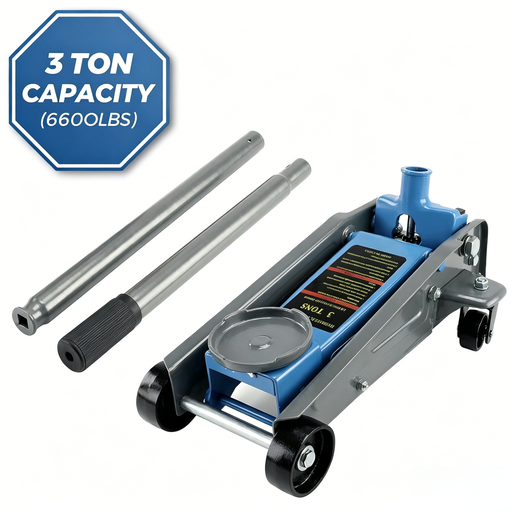
Why this profile? Ideal for someone who manages the maintenance of multiple vehicles (sedan and SUV) and needs a reliable tool for regular jobs like wheel changes or oil changes.
Its robust steel construction prevents warping, and its wide lifting range (135-460 mm) makes it compatible with most vehicles, avoiding the classic trap of height incompatibility.
3-ton capacity for a large safety margin. Maneuverability is ensured by 2 360° swivel casters for easy positioning.
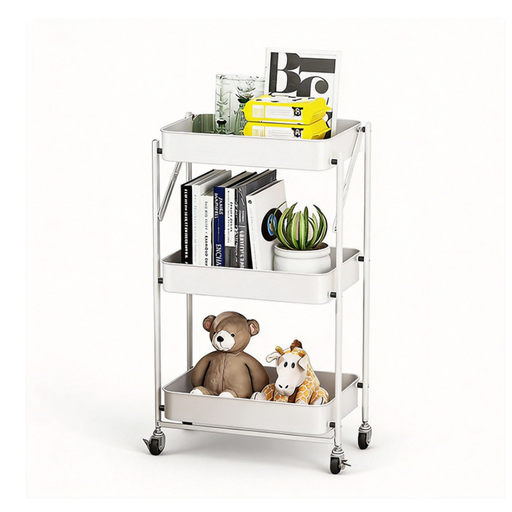
Why this profile? For those who believe that efficiency in mechanics starts with an orderly workspace. This cart is the perfect companion to the jack for clean **automotive maintenance** without losing a single screw.
It solves the problem of a disorganized workspace. No more nuts rolling under the car or tools left on the ground. Everything stays within reach, safely.
Mobile and foldable, it stores easily in the garage. Its three tiers allow you to separate tools, new parts, and removed parts.
We have selected a full range of products that meet our strict quality criteria and safety standards.
1. Is a floor jack enough to work safely under a car? No, absolutely not. A jack, whether hydraulic or mechanical, is a lifting device, not a support device. Once the vehicle is raised to the desired height, it is imperative to secure it with jack stands rated for its weight before working underneath. Never rely solely on the jack to support the load.
2. What is the difference between a 2-ton and a 3-ton jack? The main difference is the safety margin. A 2-ton jack may be sufficient for a city car or a light compact. However, a 3-ton model is strongly recommended for heavier vehicles like family sedans, station wagons, and SUVs. It will work with less effort, which reduces wear on its hydraulic mechanism and provides greater peace of mind.
3. How do I maintain a hydraulic floor jack to ensure its longevity? Maintenance is simple but essential. After each use, clean it to remove dust and grease. Regularly check the hydraulic oil level and top it up if necessary with oil specifically for jacks. Store it in the lowered position (piston retracted) in a dry place to protect the seals and prevent corrosion.