
Livraison le jour même ou le lendemain

Qualité garantie

Débloquez vos offres de bienvenue: Livraison GRATUITE | Jusqu'à -80 % | 30 jours d'essai gratuits à JoyPlus
Téléchargez l'application
The appeal of a tent that pitches in an instant is undeniable, especially for spontaneous weekends or first-time camping experiences. However, the market for 3-4 person pop-up tents is flooded with marketing claims that can quickly turn an outdoor getaway into a total hassle. To avoid regretting your purchase at the first downpour, it's crucial to know how to spot the most common pitfalls.
As product experts, our job is to help you see things more clearly. Here are the essential points to watch out for to make the right choice.
To make an informed choice, focus on a few non-negotiable technical specifications. These are the true guarantees of your tent's quality and durability.
A tent fabric's waterproofness is measured in Schmerber (mm). This rating measures the height of a water column (in mm) that the fabric can withstand before water penetrates it.
Also, check that the seams are sealed with heat-taped strips to block any leaks.
These two terms are often used interchangeably, but they describe very different systems.
For a 4-person family tent, don't just rely on the advertised number. Check the floor dimensions (length and width) and the peak height. For a group of 3 or 4 people, a model with a small vestibule (awning) for storing shoes and bags is a real bonus. If you're a group of three on a backpacking trip, a more compact 3-person backpacking tent will be more suitable. But for a fixed-base camping trip, always aim for a slightly larger size for better comfort.
We've sifted through the spec sheets to identify models that combine practicality with reliability. Here is an option that stands out for a specific type of camper.
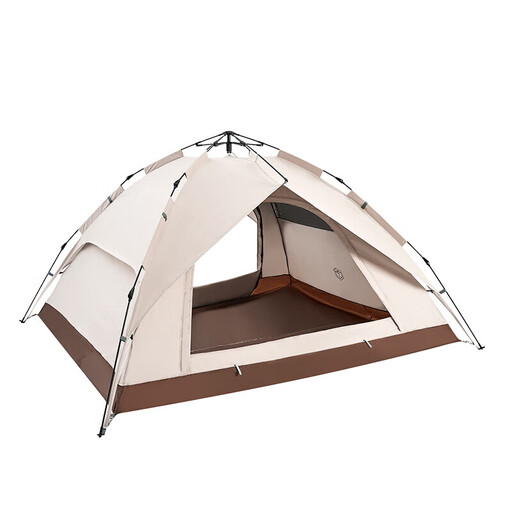
Why it stands out: Perfect for families or small groups heading out for a weekend or to a festival who want a hassle-free setup. Its dual-layer design and automatic pitching system tick all the boxes for comfort and speed, without sacrificing protection from the elements.
Its flysheet has a waterproof rating of 3000 mm, a solid value that guarantees reliable protection. Its automatic pitching system is much easier to fold down than a classic pop-up model, preventing a meltdown when it's time to pack up.
Its dual-layer design (inner tent + flysheet) drastically reduces condensation and improves thermal insulation. The result: much more comfortable nights.
If this model doesn't quite fit your needs, discover other tents selected by our experts.
Your tent's lifespan depends primarily on its maintenance. After each use, make sure it is completely dry before packing it away to prevent mould and mildew. Clean any stains with a sponge and lukewarm water, but avoid harsh detergents. Finally, store it in a dry place, away from direct sunlight.
Yes, absolutely. For the vast majority of uses (camping from spring to autumn, festivals, weekend trips into nature), a 3000 mm rating is perfectly adequate. It will effectively protect you from the typical downpours encountered across most of Europe. Only extreme high-mountain conditions or severe storms would justify a higher rating.
A single-wall tent is made of a single layer of fabric. While lighter, it is highly prone to internal condensation. A dual-wall tent, like our selected model, consists of an inner tent (made of breathable fabric) and a waterproof outer flysheet. The air gap between these two layers creates airflow that wicks away moisture and provides far superior comfort.