
Livraison le jour même ou le lendemain

Qualité garantie

Débloquez vos offres de bienvenue: Livraison GRATUITE | Jusqu'à -80 % | 30 jours d'essai gratuits à JoyPlus
Téléchargez l'application
A 2K dashcam with 24-hour parking mode can record your journeys, save footage after an impact and continue monitoring your car once it is parked. However, choosing the right setup is essential. Between models that promise “24-hour” monitoring without a permanent power supply, memory cards that are too slow and underwhelming night modes, disappointment can come quickly.
Here are the criteria to consider before buying a dashcam, along with a selection designed for different uses in France.
The term 24-hour parking monitoring does not necessarily mean that the dashcam can run all day using only its built-in battery. In most cases, parking mode requires a dashcam hardwire kit connected to the vehicle’s electrical system.
This connection allows the camera to remain powered when the engine is switched off. However, it must be compatible with the exact dashcam model and installed according to the manufacturer’s recommendations. Also check that it includes a device capable of cutting off the power supply before the car battery becomes too low.
2K resolution provides more detail than a Full HD image, but on its own it does not guarantee perfectly clear number plates or good night-time performance. Other factors matter too:
A dashcam with night vision can make a real difference on poorly lit streets, but the result also depends on its position, how clean the windscreen is and the weather conditions.
A dashcam that records continuously puts a microSD card under considerable strain. A model that is too slow or designed for occasional use can lead to corrupted files or even recording interruptions.
For the DDPAI MINI Pro 2K, the product information states that it supports a 256 GB microSD card, with a minimum speed rating of U3 or UHS-3. The brands listed include Lexar, Kingston, Samsung and Toshiba. Always check the maximum capacity supported by your dashcam before placing your order.
A well-designed dashcam mobile app makes it easier to view and download videos and adjust settings. However, bear in mind that Wi-Fi does not necessarily mean that the camera can access the internet. It is often simply used to establish a direct connection between your smartphone and the dashcam.
To run the camera for an extended period while the vehicle is stationary, three points deserve careful consideration:
Time-lapse mode helps save storage space, while the G-sensor will generally trigger and lock a recording when it detects an impact. These features are not a substitute for human supervision, and their behaviour may vary depending on the selected sensitivity, vibrations and the car’s position.
Loop recording gradually overwrites older videos when the card is full, apart from footage locked after a detected event. For regular use, choose a card that meets the manufacturer’s speed requirements and format it using the camera or its app whenever recommended.
A high-capacity card lets you keep more footage, but you should still back up important videos promptly after an accident or dispute.
Install the camera behind the interior rear-view mirror without reducing the driver’s field of vision. The cable should remain discreet, not interfere with the controls and withstand temperature changes without coming loose. In France, also remember to comply with the rules concerning visibility, personal data protection and the distribution of images showing people or number plates.
Voice control can help you avoid handling the camera while driving. Nevertheless, check which languages are available: depending on the model, some voice commands may only work in English.
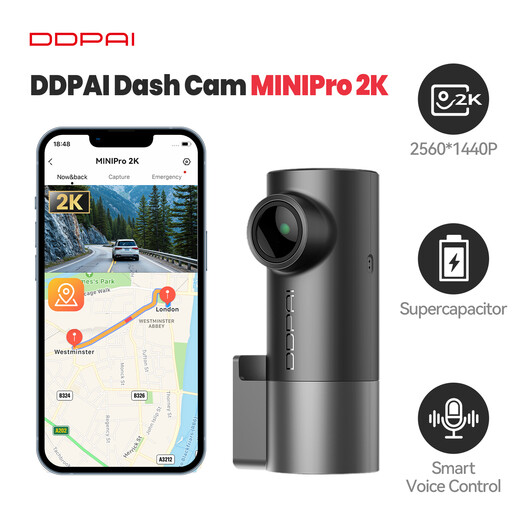
Why it suits this profile : Its compact design, 2K resolution and Wi-Fi connectivity combine the essential features in a discreet housing, making it suitable for urban journeys and everyday travel.
The product information specifies that parking mode requires a separate hardwire kit. This means it cannot be mistaken for built-in battery life.
2560 × 1440 recording, F2.0 aperture, 2.4 GHz Wi-Fi and support for a microSD card of up to 256 GB in U3 format.
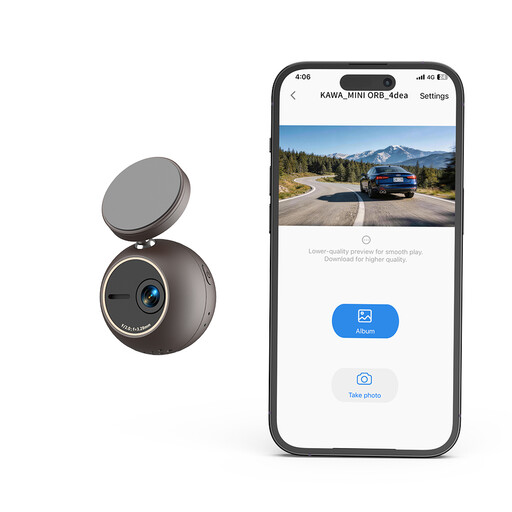
Why it suits this profile : Its spherical design, 360° adjustable mount and connected features are ideal for drivers who want to fine-tune the camera angle.
Wi-Fi, the app and voice control are mentioned separately. It is therefore essential to check the language of the commands and the exact contents of the kit.
2K resolution, G-sensor, NightEagle night vision, built-in Wi-Fi and advertised 24-hour parking monitoring.
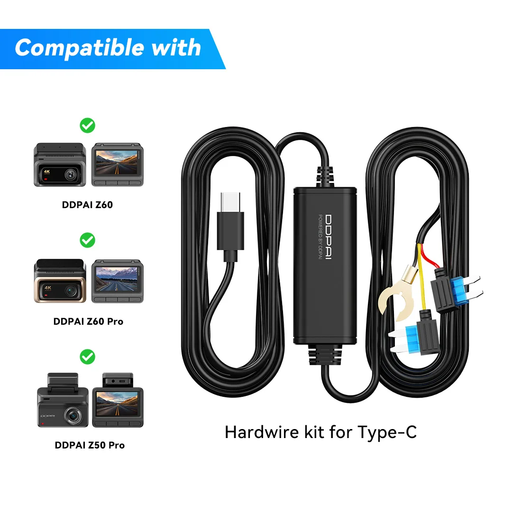
Why it suits this profile : This kit is designed for drivers who want to use a compatible camera’s parking mode over extended periods, particularly when the vehicle is parked for a long time.
The product information asks you to select your dashcam model and lists the Z90, Z60, Z60 Pro, MINI2X, Z50 Pro and N2 series. This check is essential before placing your order.
Dedicated power supply for parking mode and advertised compatibility with several camera models, provided you select the correct one.
We have brought together a complete, up-to-date selection of products that meet these demanding criteria, while taking European safety regulations into account.
It may draw on the battery if it remains powered when the engine is switched off. A compatible hardwire kit with a safety cut-off when the voltage becomes too low helps reduce this risk. The installation must be suitable for both the vehicle and the camera model.
Follow the maximum capacity and speed class stated in the technical specifications. For the DDPAI MINI Pro 2K, the stated compatibility is up to 256 GB, with a U3 or UHS-3 card. Avoid models whose specifications fall below the manufacturer’s requirements.
A dashcam’s Wi-Fi is generally used to connect a phone directly to the camera so that you can view or download videos. It does not automatically provide remote access via the internet. Before buying, check the description of the dashcam mobile app and the features actually available.