
Livraison le jour même ou le lendemain

Qualité garantie

Débloquez vos offres de bienvenue: Livraison GRATUITE | Jusqu'à -80 % | 30 jours d'essai gratuits à JoyPlus
Téléchargez l'application
A 2-in-1 steam cleaner can serve as a steam mop for floors and a handheld steam cleaner for elevated surfaces. That makes it a genuine asset in an apartment, particularly for tackling the kitchen, bathroom, windows, walls and hard-to-reach corners. However, not all product specifications translate into the same experience in everyday use.
Before comparing prices, it is worth keeping three common pitfalls in mind.
A power rating of 1,200 W primarily indicates the appliance’s electricity consumption and heating capacity. It is not enough to assess the strength of the steam jet. Measured in bar, pressure provides an additional indication of the steam produced, but it must be considered alongside the flow rate and nozzle design.
A model marketed as “high pressure” will not necessarily be more effective or more convenient on floors and windows. Be sure to check the detailed specifications: pressure, flow rate, temperature and operating time.
For small everyday cleaning tasks, a steam mop that is ready to use quickly is noticeably more convenient. The trade-off is that very short heat-up times often go hand in hand with a small tank. The ROUNY STEAMO X, for example, features a 250 ml tank and offers a stated runtime of around 10 to 14 minutes, depending on the selected steam level.
In a larger home, a more generous tank means fewer refills, but it also makes the appliance heavier. The right balance therefore depends on the area to be cleaned and how frequently you plan to use it.
A long list of accessories is only useful if the attachments genuinely match your needs. A nylon brush, a metal brush, a window squeegee and a wall brush are designed for different tasks.
It is also worth checking the availability of replacement pads, how easy the appliance is to store and whether the accessories are compatible with handheld mode. A product that looks highly versatile on paper can quickly become frustrating if changing attachments is unnecessarily difficult or the cable gets in the way.
For standard household use, look for a product specification sheet with sufficient detail. A 1,200 W steam cleaner is a common category among corded models. A stated pressure of between 2.5 and 3 bar may be suitable for cleaning hard floors, worktops and grout. Some handheld appliances list a higher pressure, but that does not necessarily make them suitable for cleaning floors.
Flow rate matters too. The ROUNY STEAMO X specifies 18 ml/min on the low setting and 24 ml/min on the high setting, with two levels to adjust the amount of steam for light dirt and more stubborn deposits. These figures come from the product specifications and, on their own, do not guarantee identical results on every surface.
A genuine two-in-one appliance should switch from mop mode to handheld mode without requiring a lengthy setup. The handle is designed for floor cleaning, while the handheld unit makes it easier to reach sinks, hobs, windows, walls and corners.
In an apartment with several rooms, a cable measuring at least 4.8 to 6 metres will save you from changing sockets every two minutes. However, it should never run near the steam outlet or trail through a wet area.
Steam is primarily suitable for sealed or properly finished hard floors, subject to the manufacturer’s recommendations. For parquet, painted surfaces, plastics and heat-sensitive materials, always test the appliance first on an inconspicuous area.
Steam cleaning can reduce the need for detergents, but it will not make every type of dirt disappear by magic. When dealing with cooking grease or old residue, allow the steam to work for a few seconds before using the appropriate attachment. Unless the manual states otherwise, use clean water only.
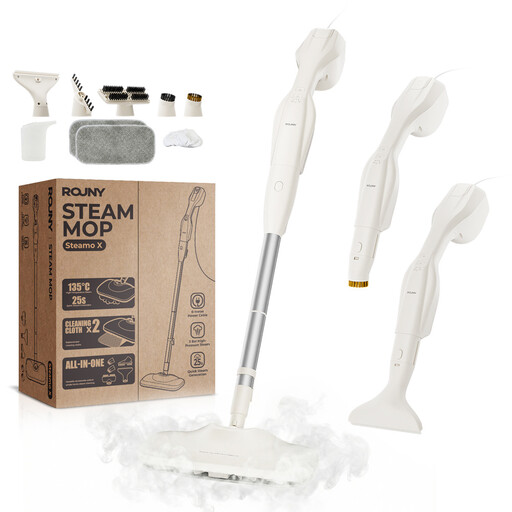
Why it suits this profile: It is designed for people who want to clean floors along with selected kitchen surfaces or windows using a single corded appliance.
The specifications state a heat-up time of around 25 seconds, two steam levels and the limitations associated with its 250 ml tank.
6 m cable, stated pressure of 2.5 to 3 bar, and accessories for floors, walls, windows and hard-to-reach areas.
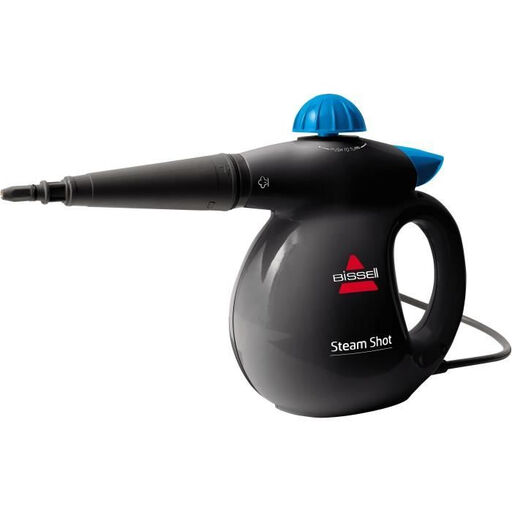
Why it suits this profile: Its compact format is intended for quick jobs in the kitchen, bathroom and around sinks.
This is clearly a handheld model: it does not claim to replace a steam mop for large floor areas.
0.36 l tank, 1,050 W power, stated pressure of 4.5 bar and several attachments, including a window squeegee.
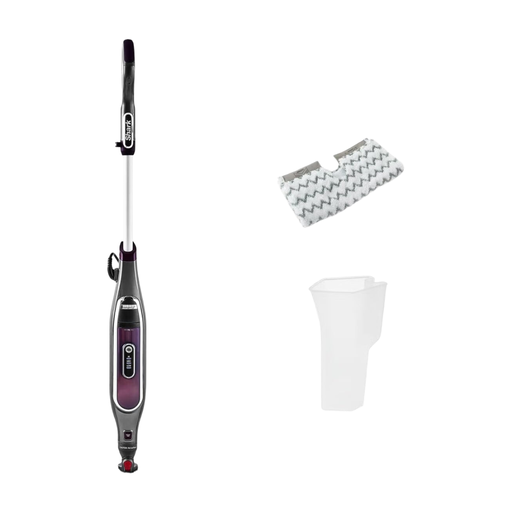
Why it suits this profile: This steam mop is primarily designed for the regular maintenance of sealed hard floors rather than cleaning windows or hard-to-reach areas.
The steam settings, washable pads and flip function are designed primarily for floor cleaning.
1,200 W power, a stated 30-second heat-up time, 6 m cable and 380 ml tank.
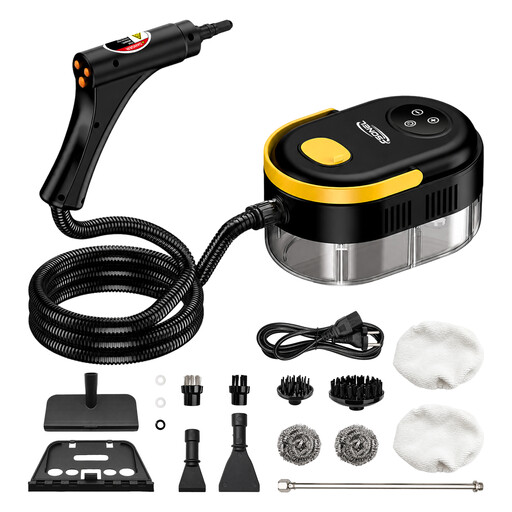
Why it suits this profile: It is aimed at households looking for a handheld appliance with several settings for the kitchen, windows, barbecue or hard-to-reach areas.
Its design clearly indicates handheld use: do not buy it expecting to clean large rooms like you would with a steam mop.
The product specifications list numerous accessories and a steam setting suited to different household tasks.
We have put together an updated selection of appliances that meet practical buying criteria and the safety requirements applicable in Europe.
Before using the appliance for the first time, fill the tank with clean water and make sure it is securely closed. Wait until the appliance has finished heating, then select the setting suited to the surface. Always unplug the appliance before filling the tank, changing an attachment or removing a pad.
The steam outlet, cleaning head and attachments remain hot after use. Never direct the steam jet at a person, animal, electrical socket or electronic device. For unsealed floors, sensitive varnished wood, delicate textiles and painted surfaces, consult the manual and test the appliance on a discreet area first.
It can reduce the use of certain detergents for routine cleaning, particularly on compatible hard floors and selected kitchen surfaces. However, it does not replace every cleaning product or method. Follow the manufacturer’s recommendations and never add vinegar, fragrance or any unauthorised liquid to the tank.
Consumption depends on the appliance’s power rating and how long it runs. A 1,200 W model would theoretically consume 1.2 kWh if it operated continuously for one hour — a rare scenario during a typical cleaning session. The actual cost varies according to your electricity tariff and usage time.
It depends on how frequently you use it, storage conditions, whether you observe cooling times and how well the appliance is maintained. Empty the tank after every use, allow the accessories to dry and regularly inspect the cable, pads and seals. Clear technical specifications, an easily accessible warranty and the availability of replacement parts can matter just as much as the stated power rating.