
Livraison le jour même ou le lendemain

Qualité garantie

Débloquez vos offres de bienvenue: Livraison GRATUITE | Jusqu'à -80 % | 30 jours d'essai gratuits à JoyPlus
Téléchargez l'application
A 28 cm frying pan is an easy fit for everyday cooking. It is suitable for family-sized portions and a wide range of recipes, from eggs and stir-fried vegetables to meat, fish and sauces. But diameter is not everything. A 28 cm frying pan may be too lightweight for induction, difficult to maintain or unsuitable for high-heat cooking.
Before placing your order, here are the pitfalls to avoid and the criteria to consider based on the way you cook.
The stated diameter often refers to the pan’s total width, including the rim. The usable cooking surface may therefore be considerably smaller. Check the internal diameter, as well as the diameter of the base that sits on the hob.
A base of around 19 to 20 cm will generally suit a medium-sized cooking zone. On an induction hob, this measurement is particularly important: a base that is too narrow may reduce heating efficiency or even prevent the hob from detecting the pan properly.
A 28 cm non-stick frying pan makes cooking and cleaning easier, but its coating is not indestructible. Heating the pan while empty, using metal utensils and cleaning with abrasive sponges can damage it. As for the ‘dishwasher-safe’ label, this does not protect the surface from wear caused by repeated washing.
To keep it in good condition, use low to medium heat, wooden or silicone utensils and a soft sponge. If the coating is peeling significantly or shows visible signs of damage, it is time to replace the pan.
A pan described as ‘suitable for all hobs’ is generally designed for gas, electric, ceramic and induction hobs, but it is best to check the specifications for each model. Some products require specific confirmation for halogen or infrared hobs. For a 28 cm induction frying pan, look for a clear statement that it is ‘induction compatible’ and check that the base is completely flat.
For stainless steel, the composition and compliance information should be clearly stated. Some PURECOOK frying pans specify a structure made from 304 stainless steel and aluminium, along with the GB 4806.9 and US FDA references in their product specifications. These details reflect the manufacturer’s declarations and are not, by themselves, a general guarantee for every possible use.
A thick, flat base helps reduce the risk of warping when temperatures change. On an induction hob, the base must be ferromagnetic and wide enough to cover the cooking zone properly. If you plan to use the pan on several types of appliance, check the information relating to gas, electric, ceramic and induction hobs.
The description induction-compatible frying pan should ideally be accompanied by specific information about the maximum temperature, oven use and cleaning requirements. A removable handle or metal handle can also affect how the pan may be used in the oven.
A shallow 28 cm frying pan is ideal for searing food or turning it easily. A deeper model is more like a sauté pan and is better suited to saucy dishes, large quantities of vegetables or slow-cooked recipes. A lid helps reduce splashes and retain moisture, but always check whether it is included or sold separately.
Weight also deserves your attention. A 28 cm carbon-steel frying pan can weigh more than 2 kg, while an aluminium model will generally be easier to handle. For people with reduced mobility or in kitchens where the pan is moved frequently, this criterion matters just as much as the material.
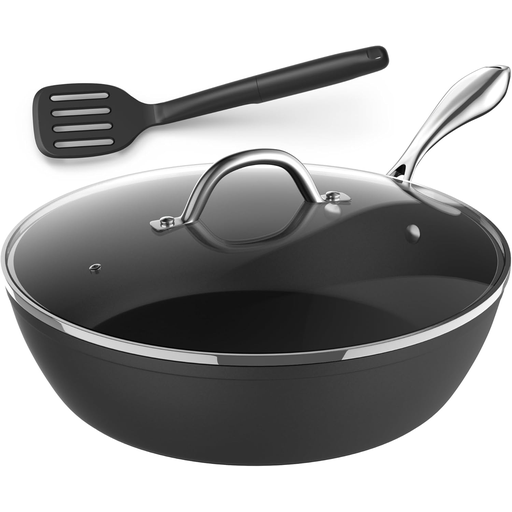
Why this choice suits this profile : Its deep shape and included spatula make it an appealing, affordable option for equipping your kitchen, particularly for frying, stir-frying or preparing family-sized portions.
The depth helps limit splashes compared with a very shallow frying pan. Even so, check the product specifications to confirm compatibility with your hob and the recommended care instructions.
28 cm format, deep design and accessory included according to the product presentation.
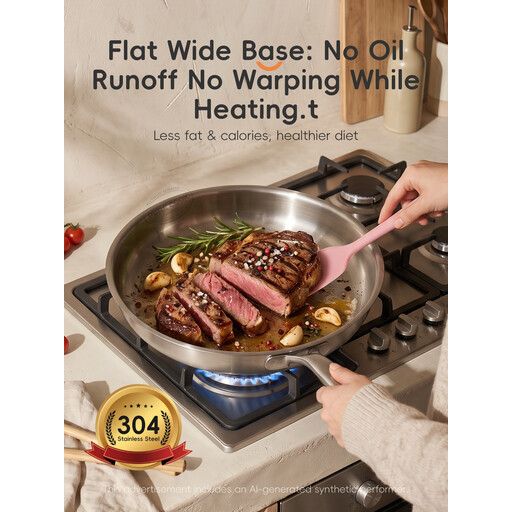
Why this choice suits this profile : Its 304 stainless-steel construction with an aluminium core is designed for people looking for a 28 cm stainless-steel frying pan without a stated non-stick coating on the cooking surface.
The specifications confirm compatibility with all hob types and state that it is dishwasher-safe. However, you need to master preheating stainless steel to help prevent food from sticking.
Multi-layer construction, pouring rim and stated compatibility with gas, induction, electric and ceramic hobs.
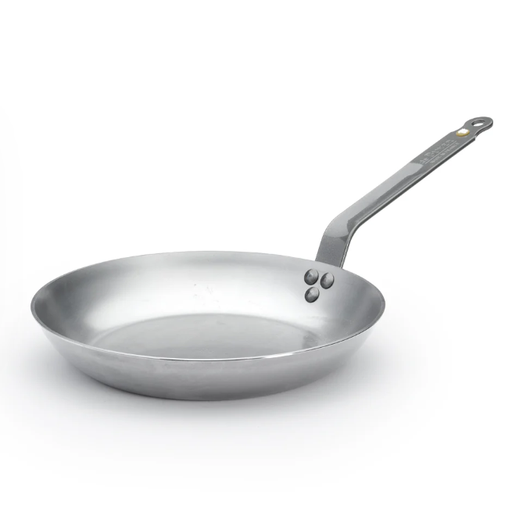
Why this choice suits this profile : This carbon-steel frying pan is made for searing and for users who are prepared to season it and dry it after every use.
The specifications state that it is made from 99 % iron and 1 % carbon, with no artificial coating. In return, dishwasher use, soaking and storage in a damp environment should be avoided.
Carbon steel, stated induction compatibility and a surface that develops a patina with regular care.
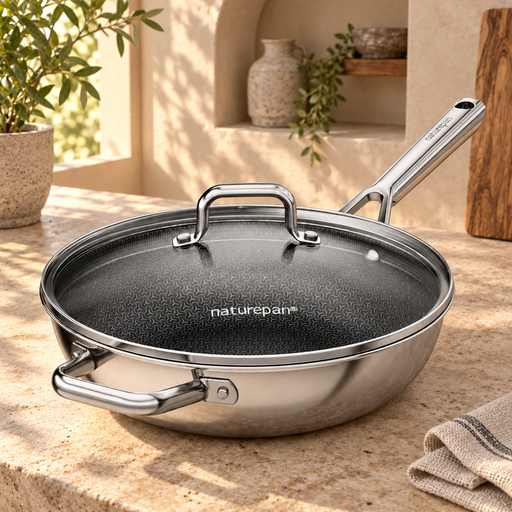
Why this choice suits this profile : With its 7.8 cm height and included lid, it is suitable for families who alternate between stir-frying, saucy dishes and slow cooking.
The specifications clearly distinguish between compatible hob types and state that the lid must be removed when using the pan in the oven. Hand washing is recommended to help preserve the coating.
Hybrid steel surface with coated zones, matching lid, stated induction compatibility and oven use up to 230 °C without the lid.
We have put together a complete, real-time selection of products that meet these demanding criteria and European safety standards.
A frying pan’s lifespan depends on its material, how often it is used and your everyday habits. With a non-stick model, avoid heating it empty for long periods, using metal utensils and exposing it to thermal shock. With stainless steel, allow the pan to cool before washing it and use a mild detergent if necessary.
Carbon steel requires more consistent care. Wipe away any moisture immediately, never leave the pan to soak and apply a thin film of oil before storing it. The dark patina that develops over time is associated with seasoning, but it does not replace thorough cleaning.
Before putting cookware in the oven, check the maximum permitted temperature, whether a lid is included and the handle’s heat resistance. The handle and body of the pan remain very hot after cooking: use an oven glove and wait for it to cool before washing it.
Yes, this size will generally suit two to four portions, depending on the pan’s height and shape and the quantity of food. To cook larger dishes, a 28 cm sauté pan or wok with high sides will offer greater capacity.
Choose a model whose specifications explicitly state that it is induction compatible and check the base diameter. Multi-layer stainless-steel pans, cast-aluminium pans with a suitable base and carbon-steel pans may be suitable for induction, but only the specifications for the individual model can confirm compatibility.
There is no universal lifespan. Excessive heat, scratches, repeated dishwasher cycles and metal utensils all accelerate wear. A non-stick frying pan will last longer if you follow the manufacturer’s recommendations and protect the integrity of its surface.