
Livraison le jour même ou le lendemain

Qualité garantie

Débloquez vos offres de bienvenue: Livraison GRATUITE | Jusqu'à -80 % | 30 jours d'essai gratuits à JoyPlus
Téléchargez l'application
The monitor is the centerpiece of a high-performance gaming setup. But faced with a jungle of spec sheets (resolution, refresh rate, response time…), it can be overwhelming to navigate. The 27-inch QHD gaming monitor format has become the sweet spot: it offers superior immersion and image detail compared to Full HD, without demanding the firepower of a graphics card built for 4K.
This guide is here to give you the keys and practical advice to find the perfect monitor for your needs, whether you're an esports pro, an open-world explorer, or a content creator.
By Joybuy, your product recommendation expert.
Before diving into our selection, let's break down the technical criteria you need to master to make the right choice.
Quad HD resolution, or QHD (2560 x 1440 pixels), delivers a much higher pixel density on a 27-inch panel than Full HD (1080p). The result? A sharper image, richer textures, and a more comfortable workspace. It's the perfect compromise to enjoy superb visual quality without needing the massive processing power that 4K demands. An excellent choice for a 2K 1440p gaming monitor.
These two characteristics are crucial in video games.
The type of panel has a direct impact on color rendering, contrast, and responsiveness.
Technologies like NVIDIA G-Sync and AMD FreeSync synchronize the monitor's refresh rate with the frame rate delivered by the graphics card. A G-Sync compatible or FreeSync monitor puts an end to screen tearing and micro-stutter, delivering a seamlessly smooth gaming experience.
Here are three models that stand out from the crowd, each with its own strengths.
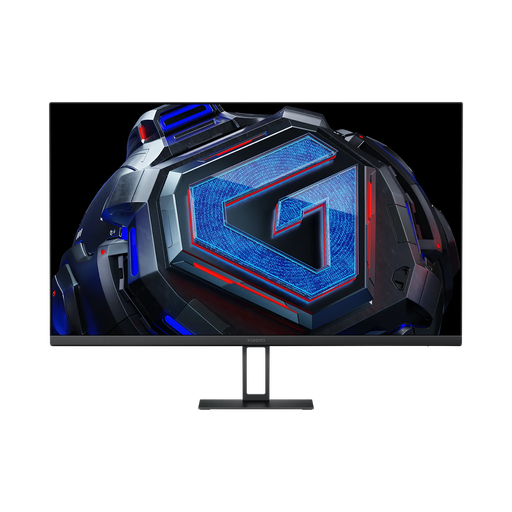
Why it stands out: The perfect balance of performance, price, and image quality, with a highly responsive Fast IPS panel.
The Xiaomi G27Qi is an excellent entry point into the world of QHD for gamers who don't want to compromise on smoothness. Its 27-inch Fast IPS panel offers a 2560x1440 resolution with a high 180Hz refresh rate and a 1ms response time. It's also perfectly suited for hybrid use (gaming and creation) thanks to its good color gamut coverage (95% DCI-P3, 100% sRGB) and brand-certified color accuracy (ΔE<2).
Key Features:
Who is it for? For gamers and content creators looking for a versatile, high-performance, and above all, affordable monitor.
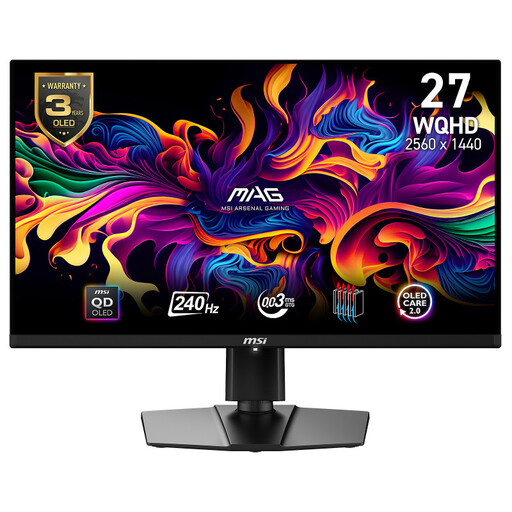
Why it stands out: The visual knockout of QD-OLED, for absolute contrast and lightning-fast responsiveness.
This MSI monitor targets image enthusiasts who demand the pinnacle of contrast and responsiveness. The new-generation QD-OLED panel delivers perfect blacks and striking colors, certified DisplayHDR True Black 400. With a 240Hz refresh rate and a response time of just 0.03ms (GTG), motion blur is virtually non-existent. It also caters to console gamers with its HDMI 2.1 ports, perfect for the PS5 and Xbox Series X.
Key Features:
Who is it for? For PC and console gamers, as well as cinephiles, who prioritize immersive image quality and responsiveness above all else.
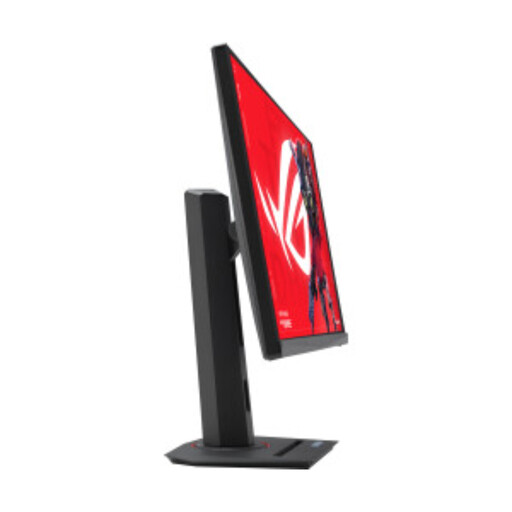
Why it stands out: A stratospheric refresh rate, built for esports competition.
The ASUS ROG Strix XG27ACMS was forged for competitive players for whom every frame is an opportunity. It pushes the boundaries of smoothness with a refresh rate that climbs up to 320Hz. Its 27-inch Fast IPS panel in QHD resolution ensures both accurate colors (94% DCI-P3) and a minimal response time of 0.3ms. NVIDIA G-Sync Compatibility and ELMB Sync (Extreme Low Motion Blur) technology can be enabled simultaneously for optimal motion clarity.
Key Features:
Who is it for? For esports athletes and hardcore competitors seeking absolute fluidity to gain the advantage.
The monitor market is vast and evolving at lightning speed. If our selection doesn't check all your boxes, whether in terms of budget or features, dozens of other models are waiting for you.
? Explore our complete collection of 2K monitors to discover other sizes, technologies, and price ranges.
Although the two terms are often used interchangeably on product sheets, they technically refer to slightly different resolutions. QHD corresponds to 2560 x 1440 pixels. The cinema standard 2K is 2048 x 1080 pixels. However, in the world of PC monitors, "2K" almost always refers to the QHD 1440p resolution.
Absolutely. A 180Hz rate already offers a very noticeable improvement in smoothness and responsiveness compared to 144Hz, which was the standard not long ago. It's an excellent choice for the vast majority of gamers, including for competitive games. Higher refresh rates (240Hz and beyond) are mainly aimed at professional or semi-pro players for whom every millisecond counts.
It's not essential, but it's highly recommended if your PC has an NVIDIA graphics card. G-Sync (and its "Compatible" version that works on certified FreeSync monitors) eliminates the screen tearing that can occur when the graphics card and monitor are out of sync. Today, most gaming monitors include at least AMD FreeSync technology. This serves the same purpose for AMD graphics cards and also very often works with recent NVIDIA cards.