
Livraison le jour même ou le lendemain

Qualité garantie

Débloquez vos offres de bienvenue: Livraison GRATUITE | Jusqu'à -80 % | 30 jours d'essai gratuits à JoyPlus
Téléchargez l'application
Choosing a new mountain bike can quickly become a headache. Faced with a jungle of models and technical jargon, it's easy to feel overwhelmed and make a purchase you'll regret. The goal of this guide is simple: to help you find the perfect MTB for your riding style, whether for leisurely trail rides, more demanding treks, or daily commutes.
Before you dive in, let's navigate the two classic pitfalls that lead to a bad investment:
To make an informed decision, three key components deserve your full attention: they define the performance, comfort, and safety of your future ride.
Brakes are your life insurance on two wheels. Two technologies compete in the market:
The suspension absorbs shocks to protect your back and improve the wheel's grip on the ground. The choice will depend on your preferred riding environments.
The frame is the soul of the bike. In this price segment, two materials dominate the market:
To help you get a clearer picture, here's how these criteria translate into specific models, tailored for different types of cyclists.

Who is it for? Perfect for weekend rides on gravel paths or in the forest, as well as for some city commuting. Its simple and robust design makes it a reliable and budget-friendly first MTB.
This MTB focuses on the essentials: disc brakes for safety and an 18-speed drivetrain that's more than enough for recreational riding. No unnecessary frills that drive up the price.
Its Hi-Ten (high-tensile) steel frame ensures excellent durability and welcome comfort by filtering out small bumps in the terrain.

Who is it for? Ideal for those seeking a more responsive bike for spirited trail rides without sacrificing everyday versatility. Lightweight and nimble, it delivers everywhere.
It offers an excellent performance-to-price ratio. The suspension fork and disc brakes aren't just gimmicks; they are real assets on varied terrain.
Its lightweight aluminium frame makes acceleration easier and the bike more agile in winding sections. The suspension fork effectively absorbs bumps for greater control.
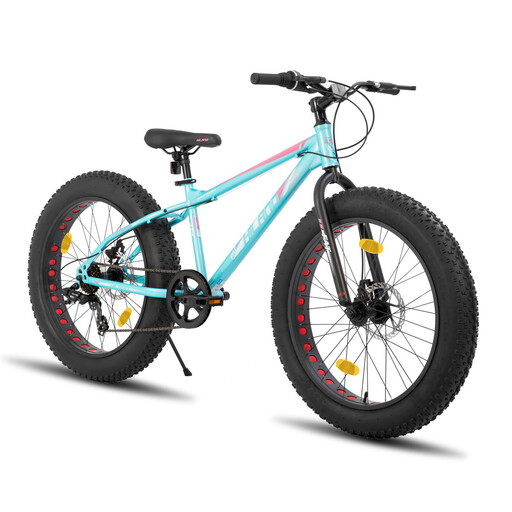
Who is it for? This 26-inch fat bike is built for adventure. It excels where others falter: sand, snow, mud... Its specialty is extreme-condition grip.
This isn't a do-it-all MTB, but a specialist that meets a specific need: unbeatable grip. It wins you over not with gadgets, but with its unique go-anywhere capability.
Its oversized 4-inch tyres offer impressive traction and stability, allowing you to ride with confidence where others would have to dismount.
Proper maintenance is the key to longevity and performance. Discover our selection of parts and components to upgrade and care for your MTB.
The 26-inch wheel is the classic MTB standard. It generally suits riders between 1.60 m and 1.75 m (approx. 5'3" to 5'9"). But be aware, the most important criterion is the frame size (S, M, L, etc.). To be sure, always refer to the manufacturer's size guide: it's what guarantees a comfortable and efficient pedalling position.
Regular maintenance is the secret to keeping a bike performing well and safely for as long as possible. Three simple steps are all it takes:
For a beginner MTB or all-around use, mechanical disc brakes are an excellent choice. They represent a huge leap in safety compared to V-Brakes, especially in wet conditions. Their biggest advantage? They are remarkably simple to maintain and adjust, requiring no special tools. Hydraulic brakes, while more powerful and progressive, are also more complex to bleed and service.