
Livraison le jour même ou le lendemain

Qualité garantie

Débloquez vos offres de bienvenue: Livraison GRATUITE | Jusqu'à -80 % | 30 jours d'essai gratuits à JoyPlus
Téléchargez l'application
Choosing a 256GB SD card can be a daunting task. With cryptic acronyms like UHS-I, UHS-II, V30, or V90, it's hard to make sense of it all. Yet, the right memory card is the cornerstone of your gear, ensuring the performance and security of your photos and videos. Whether you're a passionate photographer, a 4K videographer, or an imaging professional, the wrong card is a perfect recipe for slowdowns, corrupted files, or even being unable to record at your desired quality.
Our mission? To demystify this technical jargon and guide you to the perfect 256GB model for your needs and budget. Follow our guide to make the right choice with complete confidence.
Before diving into our top picks, let's review the key criteria for finding the camera SD card that will never let you down.
The Video Speed Class, marked with a "V" (V30, V60, V90), is the number one criterion for video. It guarantees a minimum sustained write speed, which is essential for filming without the recording stopping abruptly.
The bus interface defines the maximum theoretical transfer speed between the card and your device.
All cards 64GB and larger, including our 256GB models, use the SDXC (Secure Digital eXtended Capacity) format. Make sure your camera, camcorder, or reader is compatible. Older devices limited to the SDHC format (up to 32GB) simply cannot read a 256GB SDXC card.
Here are three cards that stand out for their performance and value, catering to everyone from the discerning enthusiast to the uncompromising professional.
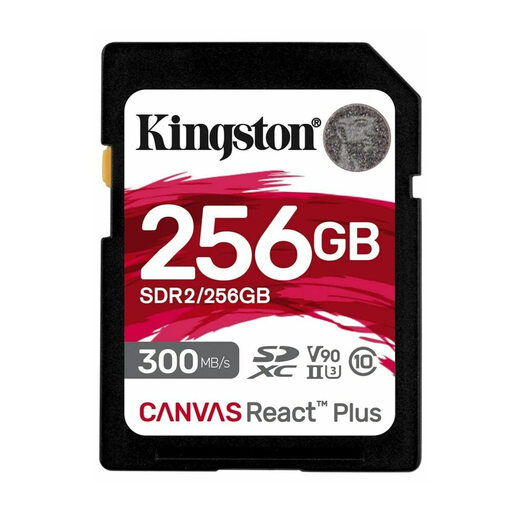
Why It Stands Out
This 256GB Kingston card is the ultimate tool for content creators who accept no compromises. With its UHS-II interface and V90 class, it delivers stratospheric speeds: up to 300 MB/s read and 260 MB/s write. It's built to handle the most demanding workflows, like 8K video or endless RAW bursts, without ever causing your camera to stutter.
Key Strengths
Who Is It For?
Professional videographers and photographers using high-end, UHS-II compatible cameras (mirrorless or cinema cameras). This is the essential high-speed SD card for ultra-high-definition production (8K, 4K 120p) or for sports and action photography.
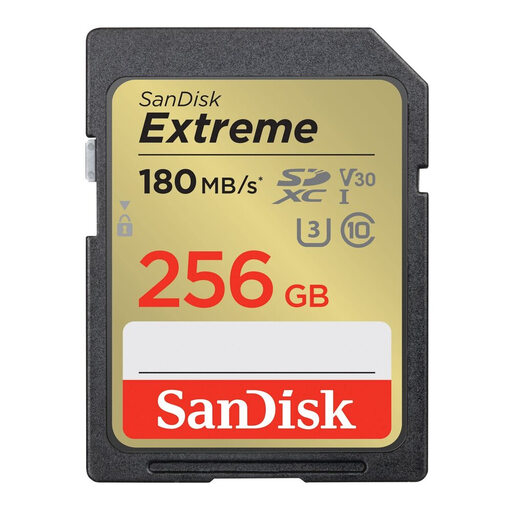
Why It Stands Out
The SanDisk Extreme is the go-to choice for enthusiast photographers and videographers. It offers the perfect balance of performance and price. Its V30 class makes it an ultra-reliable 4K SD card. With advertised speeds of up to 190 MB/s read and 130 MB/s write, it's comfortable in most situations, including RAW burst shooting on DSLR or mirrorless cameras.
Key Strengths
Who Is It For?
Amateur or semi-pro photographers and videographers looking for a versatile, high-performance card for their mirrorless or DSLR cameras. Ideal for 4K video and RAW photography, it covers 90% of use cases without breaking the bank.

Why It Stands Out
The SanDisk Ultra 256GB card is the simple, effective solution for everyday use. While it doesn't aim for peak performance, its Class 10 (U1) speed rating is perfectly suited for recording Full HD (1080p) video without a hitch. Its main advantage is its large 256GB capacity, giving you peace of mind to store thousands of photos and hours of video during holidays or family events.
Key Strengths
Who Is It For?
Users of compact, bridge, or older-generation DSLR cameras who primarily shoot in Full HD and JPEG. It's also an excellent backup card or for anyone who needs a lot of space without requiring extreme write speeds.
If these three models don't check all your boxes or if you're looking for a different capacity, our full catalogue is here for you. There you'll find a much wider selection of memory cards for all devices and budgets.
? Explore our complete collection of 4K SD cards to find the perfect match.
It's all about the guaranteed minimum sustained write speed. A V30 card ensures a constant speed of 30 MB/s, ideal for standard 4K video. A V90 card ramps that up to a minimum of 90 MB/s, a speed that's essential for the most demanding video formats (8K, 4K 120p) and intensive RAW burst shooting.
Yes, absolutely. UHS-II cards are backward compatible. However, the card's speed will be limited by your device's UHS-I interface (typically around 95 MB/s). You won't get its full performance, but it will work perfectly.
More than enough! A 256GB memory card offers very generous capacity for 4K video. The exact recording time depends on your camera's bitrate, but as an example, with a common bitrate of 100 Mbps, a 256GB card can store over 5 hours of 4K footage. That's plenty to work with for most projects.