
Livraison le jour même ou le lendemain

Qualité garantie

Débloquez vos offres de bienvenue: Livraison GRATUITE | Jusqu'à -80 % | 30 jours d'essai gratuits à JoyPlus
Téléchargez l'application
The rush for school supplies is a late-summer ritual that often turns into a headache. On every back-to-school list, one item is the undisputed star: the 24x32 notebook. But beware, this simple line item hides huge differences in quality that can turn a smart purchase into a source of frustration for your child. To help you make the right choice, we'll explain how to sidestep the most common traps.
To navigate the jungle of store aisles, here are the key points to check before you head to the checkout. These are the details that make all the difference.
The large-format 24x32 cm notebook isn't just a teacher's whim. Its dimensions are specifically adapted to the French school system: they allow A4 handouts (21x29.7 cm) to be glued in without sticking out. This detail makes all the difference in keeping a notebook neat and organised day-to-day.
As for the Seyès ruling, the famous "grands carreaux" grid, it is simply the standard in France for learning to write. Its lines and interlines guide the student's hand to form letters correctly and structure their notes. It's an essential, from primary school all the way to graduation.
The paper weight, expressed in g/m?, is the weight of the paper. It determines its thickness and opacity. While 70g or 80g/m? might be fine for printing, it's a different story for handwriting, where it quickly shows its limits.
90g/m? paper is the absolute gold standard for optimal writing comfort. It's thick enough to prevent ink from fountain pens, rollerballs, and markers from smudging or bleeding through the page, which changes everything. Brands like Clairefontaine have made it their signature, with a velvety smooth 90g paper that offers an unparalleled glide.
A notebook's sturdiness depends above all on its cover. A basic soft card cover almost always requires buying a separate notebook protector. To save yourself this expense and chore, the smartest solution is a notebook with an integrated protector. Its polypropylene (plastic) cover is waterproof, tear-proof, and can be cleaned with a simple wipe.
On a 96-page notebook, saddle-stitching (the classic staples) is the most common binding. It's simple, economical, and ensures the notebook opens flat.
To guide you, here are three models that check all the boxes. Each has its own strengths, but none of them ever sacrifice quality.
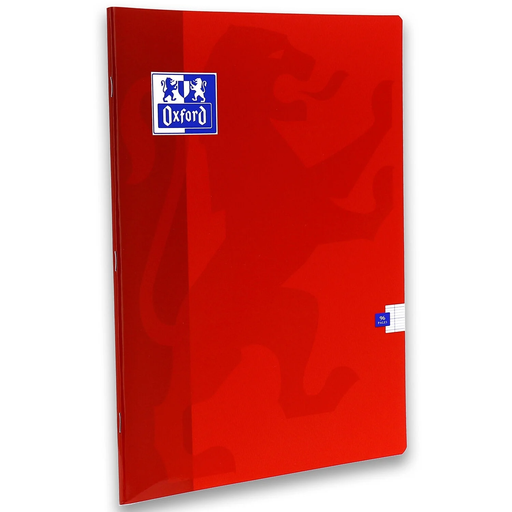
Why we chose it: This is the great classic, the reliable, no-frills option that checks every box on the school list. Perfect for parents who want to get straight to the point with a renowned brand like OXFORD.
Its secret? A laminated card cover, which is much more resistant than basic cardboard. Most importantly, its famous Optik Paper is specially designed so that ink never bleeds through, sidestepping the poor-quality paper trap.
The Optik Paper and its two-tone ruling, developed to reduce visual fatigue for students and improve readability.
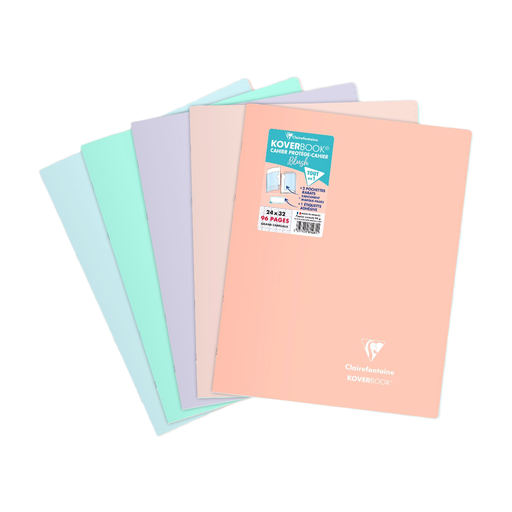
Why we chose it: The ideal solution for peace of mind all year long. Its 2-in-1 design is ready to stand up to the most chaotic school bags without breaking a sweat.
Its opaque polypropylene cover acts as an integrated notebook protector. Say goodbye to the risk of the cover tearing or getting damaged during the school year!
The all-in-one design with practical flaps for marking your page or storing loose sheets, all with the quality of Clairefontaine 90g/m? paper.
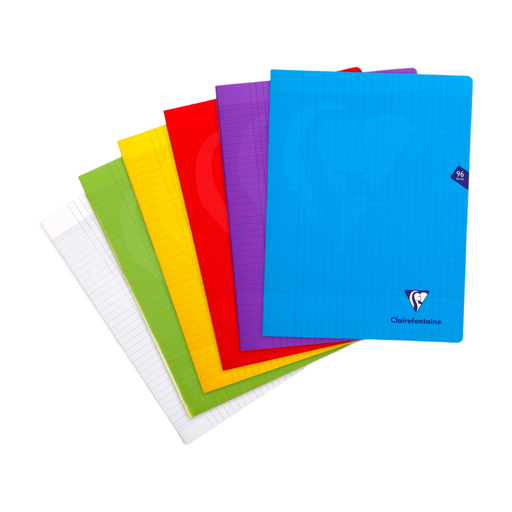
Why we chose it: For those who want a notebook that is both sturdy and smart. Its transparent cover lets you identify the subject at a glance, while guaranteeing heavy-duty protection.
It combines the best of both worlds: premium Clairefontaine 90g/m? paper to put an end to ink bleed-through, and a flexible yet ultra-durable polypropylene cover to survive the school year.
Its protective, waterproof cover and its three-colour Seyès ruling, designed to improve comfort and clarity when taking notes.
We've put together a complete selection of notebooks that meet our quality criteria and the requirements of the French school system.
The 24x32 cm format is slightly larger than A4 (21x29.7 cm). This difference, which may seem minor, is actually crucial in the French school context: it allows you to glue A4 sheets inside without them sticking out or getting damaged. This is why the large-format 24x32 notebook is a staple on school supply lists.
A 90g/m? paper (90 grams per square meter) is significantly thicker and more opaque than standard paper (70 or 80g/m?). This higher weight guarantees unparalleled writing comfort, especially with fountain pens or markers, because it prevents ink from bleeding through the page. It's a true guarantee of neat and tidy work.
At first glance, a notebook with a polypropylene protector may seem more expensive. However, it saves you from buying a separate protector for each subject. Its exceptional durability also reduces the risk of having to replace it during the school year. In the end, it often represents a real saving in both time and money.