
Livraison le jour même ou le lendemain

Qualité garantie

Débloquez vos offres de bienvenue: Livraison GRATUITE | Jusqu'à -80 % | 30 jours d'essai gratuits à JoyPlus
Téléchargez l'application
The back-to-school supply rush for middle or high school has begun. At the heart of the famous school supply list, one standout item always appears: the 24x32 notebook. But be warned, this seemingly simple line item hides some real pitfalls. A notebook that falls apart before the first holiday break, pages that tear at the slightest touch, or ink that bleeds through the paper... sound familiar? To avoid disappointment, here are the key details that separate a low-quality notebook from a trusted companion for the entire school year.
Faced with entire aisles of notebooks, it's easy to feel overwhelmed. Flashy packaging and tempting deals often conceal flaws that only become apparent once the backpack is packed. Here are the three most common traps:
You don't need to be an expert to make the right choice. Simply check three key points that are the true hallmarks of a notebook's quality and durability.
It's no coincidence that teachers insist on the 24x32 cm format. Slightly larger than A4 (21x29.7 cm), it allows students to glue in handouts and other documents distributed in class without them sticking out. It's a game-changing detail for daily organisation.
Paper weight, expressed in grams per square metre (g/m?), determines the paper's thickness and opacity. This is the key to peace of mind.
In France, the most popular ruling is the large-squared "Séyès" ruling, with its grid that perfectly guides handwriting. As for page count, the 96-page notebook often represents the ideal compromise: neither too thin nor too heavy, it's suitable for most subjects in middle and high school.
To put theory into practice, here is our selection of notebooks that tick all the boxes, designed for different needs and budgets.
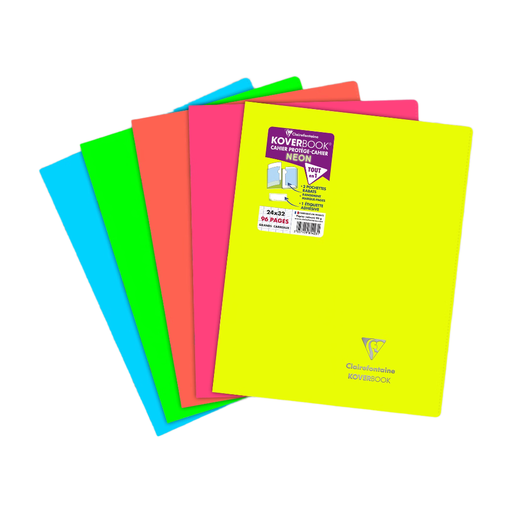
Why we love it: It's the ultimate all-in-one solution. With its integrated protective cover, it's built to withstand a full year of abuse at the bottom of a backpack.
Its polypropylene cover is flexible, waterproof, and virtually tear-proof. A world away from cardboard covers that disintegrate before the first holiday break.
The renowned Velvety Vellum 90 g/m? paper for a perfect glide, and two clever flaps that double as bookmarks or pockets for loose papers.
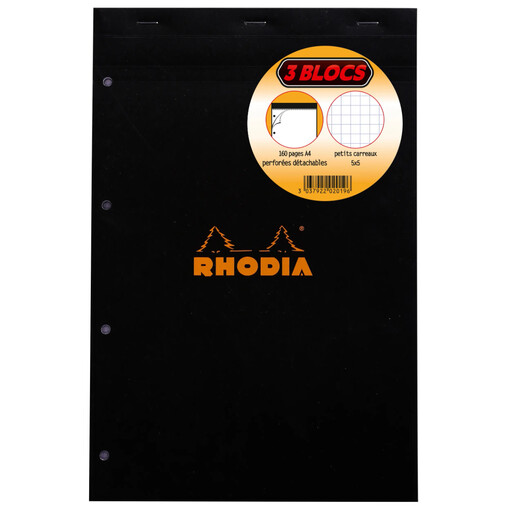
Why we love it: Perfect for those looking for the best value for money. This pack allows you to stock up for multiple subjects or a large part of the year, without ever compromising on paper quality.
Even at 80 g/m?, the Clairefontaine superfine vellum paper outperforms the standard. Ink barely ghosts through, keeping the reverse side clean.
The multi-pack format (often 2+1 free) which is great for budgets; the micro-perforated pages tear out cleanly for filing without any mess.
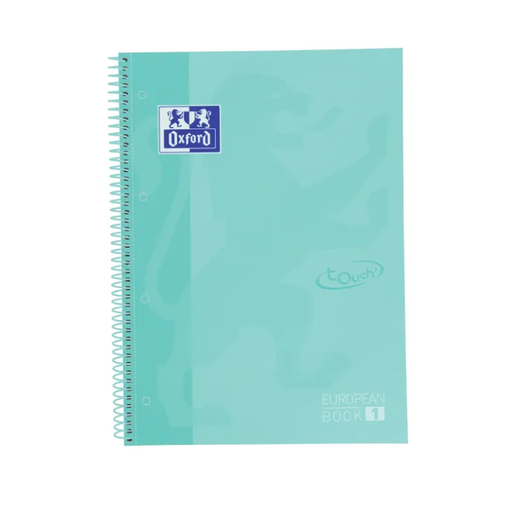
Why we love it: For the student who wants the best of both worlds: the pleasure of handwriting and the power of digital. This notebook is designed to work in tandem with a scanning app.
The rigid cardboard cover and sturdy spiral binding make it a heavyweight in durability. Its Optik Paper ensures perfect opacity: ink never bleeds through.
Compatibility with the free SCRIBZEE app to scan, organise, and share notes in a flash; the integrated erasable whiteboard on the cover for drafts and memos.
Discover our full selection of notebooks and notepads that meet all our quality criteria.
A 24x32 cm notebook is intentionally larger than the A4 format (21x29.7 cm). This extra space is designed so you can glue in A4 sheets (handouts, etc.) without them sticking out. It's a detail that greatly simplifies organisation and prevents documents from getting damaged.
A 96-page notebook is often the sweet spot for most subjects in both middle and high school. It's thick enough to last for a good part of the school year without unnecessarily weighing down a backpack. For subjects that require a lot of writing, a 120 or 180-page model can be a good option.
Teachers champion 90 g/m? paper for very good reasons. First, the writing experience is much better. Second, it stands up to erasing much more effectively. Finally, and critically, its perfect opacity prevents ink from bleeding through the page. This means you can use both the front and back of each sheet without issue, keeping notebooks clean and legible all year long.