
Livraison le jour même ou le lendemain

Qualité garantie

Débloquez vos offres de bienvenue: Livraison GRATUITE | Jusqu'à -80 % | 30 jours d'essai gratuits à JoyPlus
Téléchargez l'application
The new school year is just around the corner, and with it comes the inevitable marathon of the school supply list. At the top of that list, especially for middle school, sits the famous 24x32 notebook. But be warned: not all large-format notebooks are created equal. The wrong choice can lead to disaster, with pages tearing, ink bleeding through, or a cover that gives up the ghost before the first school holiday. As the head of product selection at Joybuy, my mission is to guide you through this jungle to make a smart, durable choice that's perfectly suited to teachers' requirements.
Before you fill your basket, let's review the classic mistakes that turn a bargain into a purchase you'll regret.
To ensure you get it right, here are the three technical points to check. This is your guarantee of a notebook that will last until June.
The 24 x 32 cm format is THE standard large size for schools. Its dimensions are specifically designed so that an A4 sheet (21 x 29.7 cm) can be glued inside without overlapping the edges or needing to be folded. This is an almost universal requirement on middle school supply lists so that students can neatly file documents handed out in class.
The Seyès ruling, or "grands carreaux" (large squares), is a true French institution. Its grid consists of a main line every 8 mm and three finer interlacing lines spaced 2 mm apart. This unique ruling is designed to guide handwriting by perfectly calibrating the height of lowercase and uppercase letters. To further improve visual comfort, brands like Oxford have developed a two-tone ruling that distinguishes the main lines from the interlines—an innovation designed to reduce eye strain.
Paper weight, expressed in grams per square metre (g/m?), is the number one indicator of paper quality.
96-page school notebook truly offers 96 fully usable pages.To put theory into practice and tick off the items on your back-to-school list, here are our recommendations, designed for every type of student.
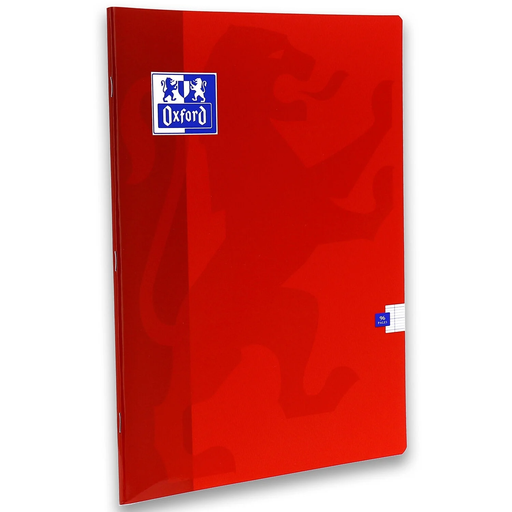
Why we chose it: This is the quintessential school notebook. It ticks all the boxes on a typical list: 24x32 cm size, 96 pages, Seyès ruling. A trusted choice, renowned for its impeccable quality.
Its laminated card cover withstands the rigours of a school bag, and its 90g/m? Optik Paper stops ink from bleeding through, ensuring both sides of every page are flawless.
The two-tone ruling, developed by Oxford with ophthalmologists, improves readability and helps reduce visual fatigue.
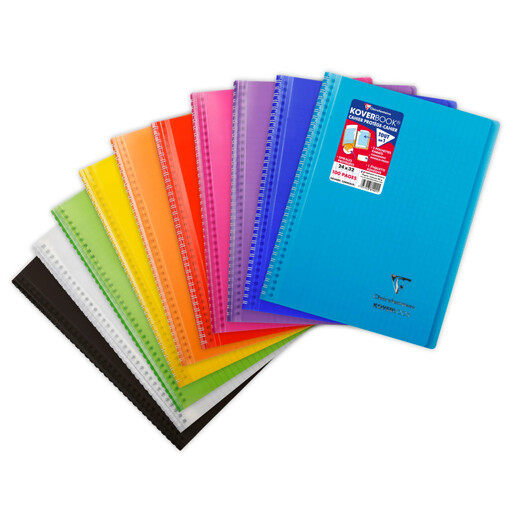
Why we chose it: The perfect solution for students who are a bit rough on their supplies. Its polypropylene cover doubles as a protective jacket, creating an ultra-durable 2-in-1 solution.
Its wraparound plastic cover is virtually indestructible and waterproof. Say goodbye to torn covers and dog-eared corners—this problem is solved for the entire year.
Its two large flaps serve as both a bookmark and a pocket for loose sheets. The Clairefontaine 90g/m? paper ensures exceptional glide and writing comfort.
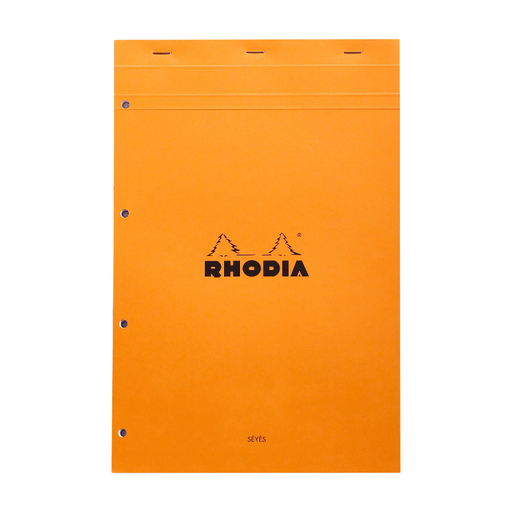
Why we chose it: The perfect ally for high school and university students who organise their notes in binders. The micro-perforated sheets detach cleanly and are already hole-punched, ready for filing.
No more need for a hole punch or risking torn pages. The micro-perforations guarantee a clean, tear-free removal every time.
Its 4-hole punch is compatible with most binders. The ultra-rigid cardboard back allows for note-taking anywhere, even without a hard surface.
Discover our complete selection of notebooks and notepads that meet all our quality criteria and the requirements of the French school system.
An A4 notebook measures 21 x 29.7 cm. The 24x32 cm format is therefore slightly wider and taller. This extra space is essential in the French school system: it allows an A4 sheet (a handout, for example) to be glued inside the notebook without it sticking out. This is a very common instruction from teachers to ensure notebooks are kept tidy.
Created in the 19th century by bookseller Jean-Alexandre Seyès, this ruling has a purely pedagogical purpose. It helps children calibrate their handwriting by providing clear visual cues for the height of lowercase letters (which fit between two interlines), uppercase letters, and ascenders/descenders (the parts of letters that go up or down). It is a cornerstone of learning cursive writing in France.
A staple-bound notebook is lighter and often cheaper than a spiral-bound one. For middle school, a well-made model with a laminated cover and 90 g/m? paper is more than sufficient to last the whole year under normal conditions. While spiral binding is more robust, it tends to snag in bags and takes up more space. The choice will therefore depend on the subject and the intensity of use (main course notebook vs. rough-work book).