
Livraison le jour même ou le lendemain

Qualité garantie

Débloquez vos offres de bienvenue: Livraison GRATUITE | Jusqu'à -80 % | 30 jours d'essai gratuits à JoyPlus
Téléchargez l'application
A 24 x 32 cm squared exercise book offers more writing space than a standard A4 exercise book, which generally measures 21 x 29.7 cm. This larger format is particularly common for homework, lessons, practical work and note-taking where a little extra room is useful.
The key is choosing the right product. A cover that warps, paper that is too thin or a pack that does not suit your needs can quickly turn a seemingly good deal into an item you need to replace. Here are the criteria to consider before ordering, followed by a selection designed for different uses.
Simply seeing “large format” is not always enough. Make sure the exercise book really measures 24 x 32 cm and has Seyès ruling, also known as “squared ruling”. Some large-format exercise books are lined, have small squares or are intended for practical work, so they may not be suitable for standard school use.
With its interlines and margin, Seyès ruling helps structure handwriting. In primary school and secondary school, it may even be required by the teacher.
Two 96-page Seyès exercise books can offer a very different experience. The paper weight, finish, ruling print quality, as well as the cover and binding, all play an important role in everyday comfort.
For regular use, take the time to check the paper specifications. The Clairefontaine models featured here use Vélin Velouté paper weighing 90 g/m², while some Oxford exercise books use Optik Paper. This type of information is much more useful than a vague promise of “comfort”.
A laminated cardboard cover provides good protection in a school bag. However, it is less practical than a polypropylene-covered exercise book when you need to keep documents with your notes. Models with flaps allow you to store sheets, marked assignments and revision notes without adding a separate folder.
Also consider the binding. A stitched exercise book is made up of stapled sheets: it generally opens easily and remains lightweight. It is perfectly suitable for lessons and homework, but its pages are not designed to be removed regularly.
For primary school, secondary school or sixth form, choose a clearly stated Seyès ruling. With 96 pages, you get a good balance between capacity and weight. If you need exercise books for several subjects or for professional use, a pack of 24 x 32 cm exercise books can reduce the need for repeat orders, provided you have enough storage space.
Paper weighing 90 g/m² is more substantial than lighter paper. It is suitable for ballpoint pens, rollerballs and mechanical pencils. However, if you use a felt-tip pen or liquid-ink pen, check the manufacturer’s recommendations: no paper weight alone can guarantee complete opacity with every writing instrument.
Oxford’s information about Optik Paper should be taken for what it is: specifications provided by the brand, not a universal guarantee for every type of ink or handwriting.
Flexible and easy to clean with a slightly damp cloth, polypropylene stands up well to everyday wear and tear. A transparent or opaque cover protects the page edges from rubbing against other items in a school bag. Exercise books with flaps and pockets offer convenient storage, but they are generally a little more bulky.
Finally, compare the price per item in packs of 3 or 5. A multipack is useful for the start of the school year or a shared office. Conversely, a single exercise book may be preferable if the colour or type of cover matters more than the price per item.
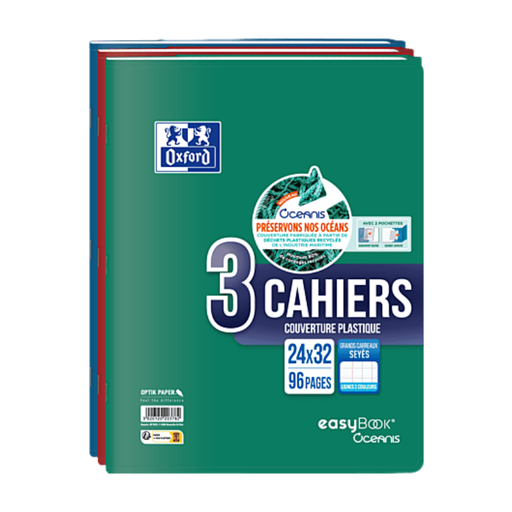
Why this choice suits this profile : This pack of three 24 x 32 cm exercise books covers several subjects or provides a useful reserve, without having to buy the books individually. Each one contains 96 Seyès-ruled pages and has a stitched binding.
The format, ruling and quantity are clearly stated. There is no risk of confusing a pack of small exercise books with an offer that is genuinely suitable for the large school format.
Three 24 x 32 cm exercise books, 96 pages per book and Seyès ruling suitable for lessons and homework.
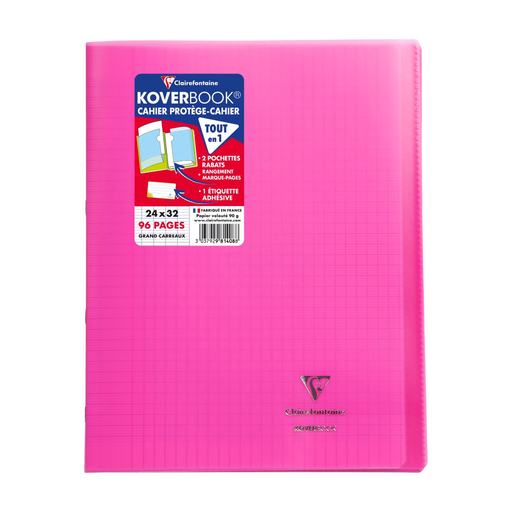
Why this choice suits this profile : Its integrated cover protects the exercise book, while its two large flaps keep sheets and bookmarks close at hand. The product description specifies 90 g/m² Vélin Velouté paper and states that it is made in France.
The flaps help prevent loose sheets, while the polypropylene cover means you do not need to buy a separate exercise-book cover.
90 g/m² paper, 96 pages, two storage flaps, self-adhesive label and integrated protective cover.
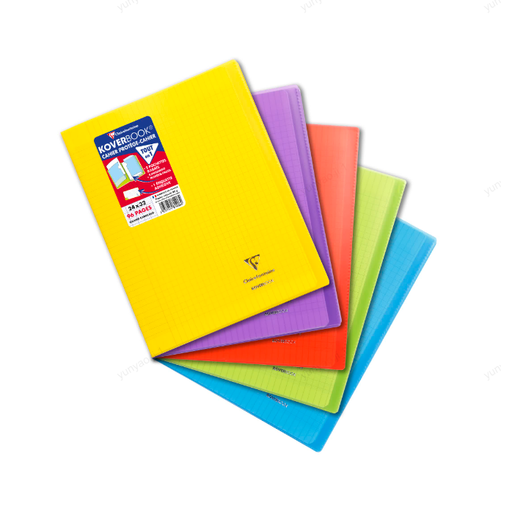
Why this choice suits this profile : This pack is aimed at families, teachers, offices and students who regularly use several exercise books. Each one has a polypropylene cover, two flaps and a customisable label.
The pack reduces the risk of running out of exercise books during the school year. The integrated protection also helps limit wear caused by frequent transport.
Five 96-page exercise books, Clairefontaine 90 g/m² paper, integrated flaps and made in France, as stated in the product description.
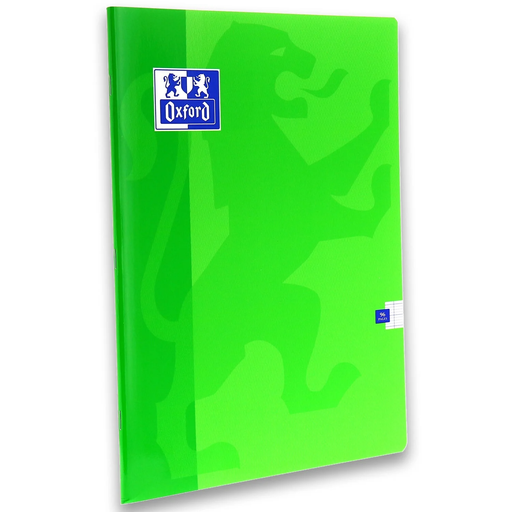
Why this choice suits this profile : Its laminated cardboard cover is ideal for pupils who prefer a classic exercise book without flaps for lessons and homework. The product description states that it has 96 pages, Seyès ruling and a stitched binding.
The product description specifies the format, ruling, number of pages and type of cover, so all the essential information is available before purchase.
Laminated cardboard cover, 96 pages, two-colour Seyès ruling and 24 x 32 cm school format.
We have put together a complete selection, updated in real time, of products that meet these exacting criteria as well as European safety regulations.
Yes, this format is widely used for lesson notes, French, maths and science. It provides more writing space than A4, but also takes up more room in a school bag. Remember to check the school’s requirements before placing your order.
It depends on the subject, the number of lessons per week and the amount of written work. For a subject taught several times a week, a 96-page exercise book may be filled in a few weeks or last for several months. A pack of 3 or 5 exercise books is particularly practical when several subjects use the same format.
Polypropylene offers better resistance to moisture and is easy to clean. It is ideal for school bags that are carried around frequently and for anyone who appreciates storage flaps. Simpler and often less bulky, a laminated cardboard cover remains perfectly suitable for everyday school use.