
Livraison le jour même ou le lendemain

Qualité garantie

Débloquez vos offres de bienvenue: Livraison GRATUITE | Jusqu'à -80 % | 30 jours d'essai gratuits à JoyPlus
Téléchargez l'application
The arrival of the 240W USB-C charging standard is a real boon for owners of power-hungry devices, like gaming laptops and mobile workstations. The problem? The market is already flooded with products that often fail to deliver on their promises. Choosing the wrong cable can not only throttle your hardware's performance but also result in wasted money and, in the worst cases, a risk to your devices.
As the Head of Product Recommendations at Joybuy, I'm here to help you separate fact from fiction. Let's review the pitfalls to avoid and the criteria that truly matter when choosing a cable that's built to last.
Before falling for packaging that promises 240W of power, keep an eye out for these three deal-breakers that too often turn a good deal into a disappointment after just a few months.
To avoid making a mistake, focus on two non-negotiable features. They are the true guarantees of performance and longevity.
To reach 240W, a cable must be compatible with the USB Power Delivery 3.1 (USB PD 3.1) standard. It's the only one that handles such power (48V/5A). But be warned, the mention alone isn't enough: the cable must include an E-Marker (Electronic Marker) chip. This chip acts as its ID card, communicating its specs (maximum power, transfer speed) to the charger and device. Without it, the system will throttle the charge to a much lower power level as a safety measure. Look for the explicit mention of "USB PD 3.1" and "E-Marker" on the product's spec sheet.
A braided sheath is a good indicator, but the devil is in the design details.
Rather than aiming for the "one-size-fits-all" cable that doesn't really exist, it's better to choose one that is tailored to your hardware and your habits.
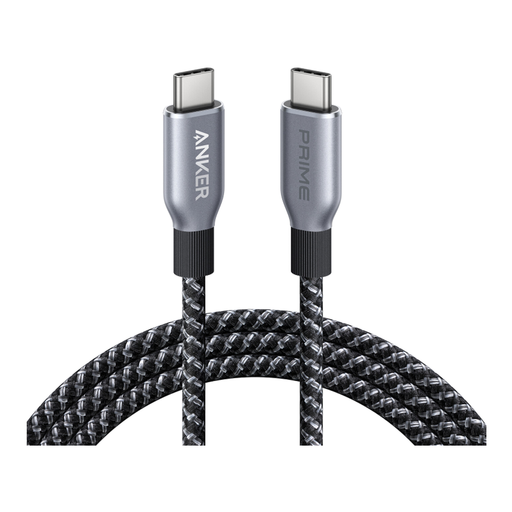
Why this one? Ideal for owners of recent MacBook Pros, gaming laptops, or anyone who wants a future-proof cable. This model is built for raw performance and durability.
It's certified for USB PD 3.1 and includes the crucial E-Marker chip, guaranteeing the promised 240W with compatible devices and chargers. Its design is tested to withstand tens of thousands of twists.
Its 240W power makes it future-proof for years to come. The comfortable 1.8 m length and the storage strap are welcome bonuses.
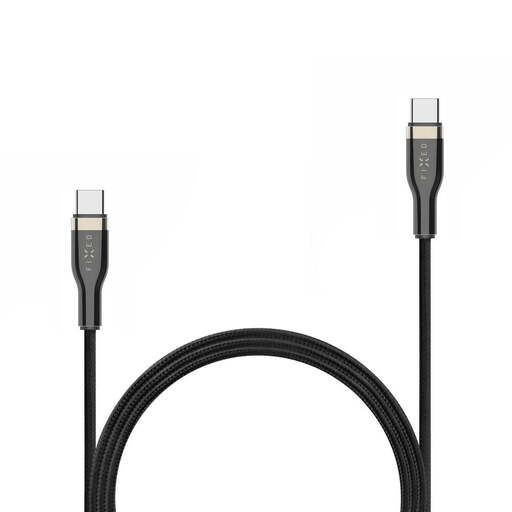
Why this one? The smart choice for powering a MacBook Pro (models up to 100W), a tablet, or a smartphone with a Samsung fast charger. It strikes the perfect balance between durability, performance, and convenience for the office or home.
This cable plays it straight: it's designed for the Power Delivery 100W standard, which is more than enough for most laptops on the market. Its braided sheath and galvanised metal connectors are a guarantee of longevity against daily wear and tear.
Its thoughtful accessories: a carrying strap and an adhesive cable organiser to keep your desk tidy.
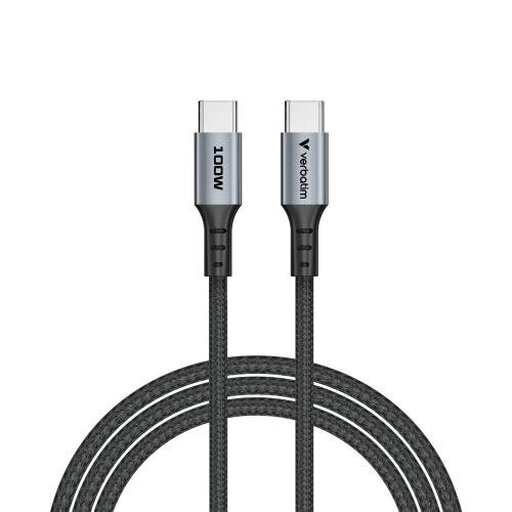
Why this one? The ideal companion for mobile professionals and students. This cable is built like a tank to withstand the abuse of intensive mobile use (coiling, on-the-fly plugging, etc.).
It tackles the deceptive durability pitfall head-on. The addition of aramid fibres to its structure gives it far superior resistance to pulling and bending than a standard braided cable.
Its rock-solid durability, thanks to aramid fibres and alloy connectors. The peace-of-mind choice for those tired of cables failing on the go.
Discover our full selection of products that meet our demanding specifications for performance and safety.
Absolutely no risk. Thanks to the Power Delivery protocol and the E-Marker chip, the charger, cable, and your device communicate constantly. Your phone will only "request" the power it needs (in this case, 25W), and the system will adapt accordingly. Using an overpowered cable is therefore perfectly safe.
It's all a matter of priority. A 240W USB-C cable is a charging specialist: it's optimised to deliver maximum power, but its data transfer speed is often limited to USB 2.0 (480 Mbit/s). Conversely, a Thunderbolt (3 or 4) cable is a sprinter: its purpose is to deliver ultra-fast data transfers (up to 40 Gbit/s) and handle video. It can also charge, but its power rarely exceeds 100W. Your choice, therefore, depends on your primary use case: the most powerful charging or the fastest transfers.
With well-made, certified cables of standard length (1 or 2 metres), the power loss is so minimal it's unnoticeable in practice. The risk of a performance drop mainly appears with very long cables (over 3 metres) of questionable quality. By sticking with reputable brands and standard lengths, you have nothing to worry about.