
Livraison le jour même ou le lendemain

Qualité garantie

Débloquez vos offres de bienvenue: Livraison GRATUITE | Jusqu'à -80 % | 30 jours d'essai gratuits à JoyPlus
Téléchargez l'application
Installing a home charging station is a game-changer for any electric car owner. The 22?kW model is particularly appealing: it represents power and a long-term vision. But be warned, navigating the jungle of technical specs and marketing claims can quickly become a headache. To avoid disappointment, a few crucial points need to be clarified before you pull out your credit card.
I'm a Product Recommendation Manager at Joybuy, and my goal is to guide you. Let's break down the pitfalls to avoid and the criteria that truly matter for a successful installation.
The desire for ultra-fast charging can make you overlook certain details—details that, in daily use, make all the difference. Here are the most common mistakes.
To ensure you make the right choice, here are the three points to confirm before you buy.
This is the absolute starting point. A 22?kW EV charger will only operate at full power with a three-phase supply.
Pro Tip: Take a look at your electrical panel or your electricity bill. This is the very first thing you should do, even before you start browsing for charger models.
In Europe, the standard for AC charging is the Type 2 connector. The real choice is between a charger with a tethered cable and one with just a socket.
A good home EV charger must be smart. Connected features via Wi-Fi or Bluetooth are no longer a luxury, but a necessity. They allow you to:
Rather than an endless list, we've selected solutions that meet specific needs, applying the criteria we've just discussed.
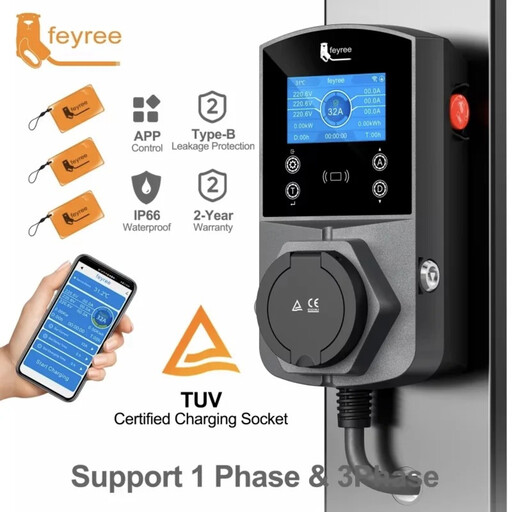
Why this choice? For those who already have a three-phase connection and want a powerful, future-proof solution ready for tomorrow's vehicles. This wallbox is designed to leverage maximum charging speed while maintaining full control via the app.
It includes Wi-Fi connectivity and a comprehensive app to schedule charging during off-peak hours. Its Type 2 socket version (T2S compatible) ensures maximum versatility and enhanced safety.
Adjustable power up to 22 kW. Smart control via the app (scheduling, intensity adjustment). Complete integrated electrical protections (Type B differential).
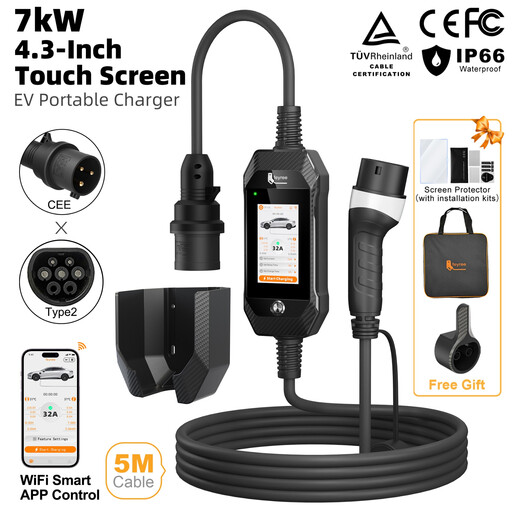
Why this choice? The perfect solution for those who can't or don't want a fixed wall-mounted installation. Ideal for a second home, on holiday, or simply for "plug-and-play" use with a heavy-duty socket.
This portable charger includes all the smart features (scheduling, amperage adjustment) on its touchscreen and via the app. It thus avoids the trap of a "dumb" charger with no control options.
Completely portable. Touchscreen for immediate control. Smart functions (scheduling, history) and over-the-air (OTA) updates.
While your car is powering up, why not optimise your entire home's energy consumption? Discover our selection of smart plugs to keep control over all your devices.
1. Can a 22?kW charger charge my car more slowly if needed? Yes, absolutely. The charging speed is always determined by the weakest link in the chain: the charger, your electrical installation, or the vehicle's onboard charger. A 22?kW station will therefore automatically adjust to the maximum power your car can accept (e.g., 7.4?kW or 11?kW). Furthermore, smart chargers allow you to manually limit the current's intensity from the app.
2. Does installing a 22?kW charger qualify for government grants? Yes, incentives such as tax credits for the purchase and installation of a charging station are often available. However, be aware that a key condition to benefit from them is that the installation must be carried out by a qualified and certified electrician (e.g., certified for EV Supply Equipment). Be sure to check the exact conditions and amounts on official government websites when you start your project, as they change regularly.
3. What is the lifespan of a home charging station? A quality charger, installed professionally, is an investment designed to last, often for more than 10 years. Its longevity depends on the quality of its components, its weatherproofing (the well-known IP rating) if installed outdoors, and the presence of integrated electrical protections. These are essential not only for preserving the charger but, most importantly, your vehicle's battery.