
Livraison le jour même ou le lendemain

Qualité garantie

Débloquez vos offres de bienvenue: Livraison GRATUITE | Jusqu'à -80 % | 30 jours d'essai gratuits à JoyPlus
Téléchargez l'application
When you drive an electric car, having a high-performance home charging solution is practically a necessity. The 22?kW EV charger with dynamic load balancing emerges as a powerful and intelligent option, especially if your home has a three-phase electrical system. However, navigating the technical jargon and marketing claims can be overwhelming.
My role as a Product Manager at Joybuy is to help you navigate this market. Let's go over the common pitfalls to avoid and the key criteria for making a smart purchase—one that will protect your electrical system while optimising your vehicle's charge.
Before you pull out your credit card, it's wise to be aware of the common mistakes that can cost you both time and money.
To avoid these pitfalls, here are three technical specifications where you should make no compromises.
Dynamic load balancing, also known as load balancing, isn't a gimmick?: it's THE essential safety feature for such a high-power charger.
In practice, a sensor measures your home's total electricity consumption in real time. If you turn on multiple appliances and your power usage approaches your electrical panel's limit, the charging station with load balancing automatically reduces the power delivered to your car. As soon as your home's overall consumption decreases, the charger ramps the power back up. The result?? You always charge at the fastest possible speed without ever risking a power outage.
Instead of an exhaustive list, we've matched specific solutions to distinct user profiles.
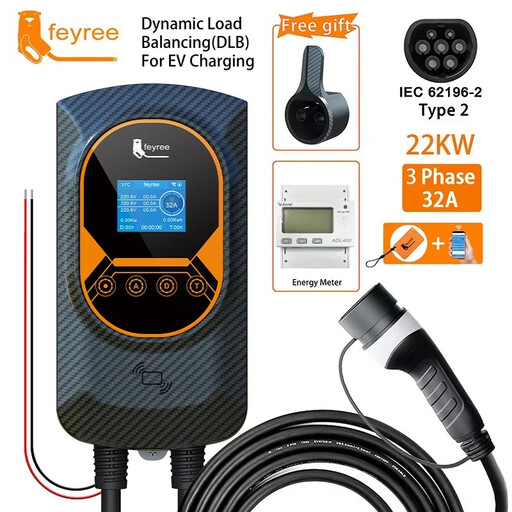
Why we chose it ? For the user who wants absolute peace of mind. They want to charge their vehicle at the maximum 22 kW speed, even when other high-draw appliances are running, without ever worrying if their electrical system can handle the load.
Its built-in Dynamic Load Balancing (DLB) feature neutralises the "raw power" pitfall by intelligently modulating the charge to ensure maximum safety.
It combines a maximum 22 kW output with fully automated load management and total control via the Tuya app.
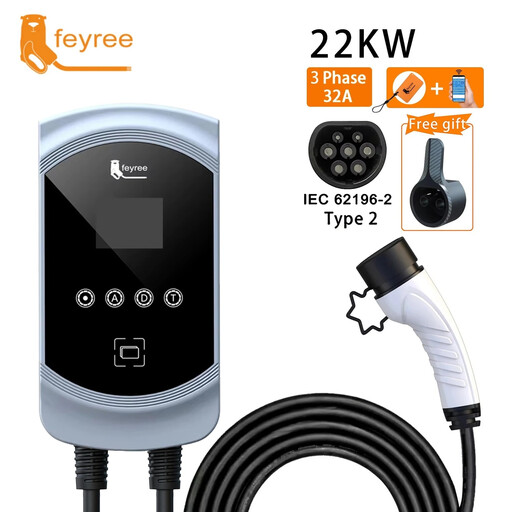
Why we chose it ? For the user who already has a robust three-phase installation and wants the speed of 22 kW combined with smart features, but doesn't require dynamic load balancing.
It sidesteps the "dumb charger" pitfall with its Wi-Fi connectivity and app, enabling fine-tuned charge management and cost optimisation.
Delivers the full 22 kW power with all the essential smart features, at a more accessible price point than a model with DLB.
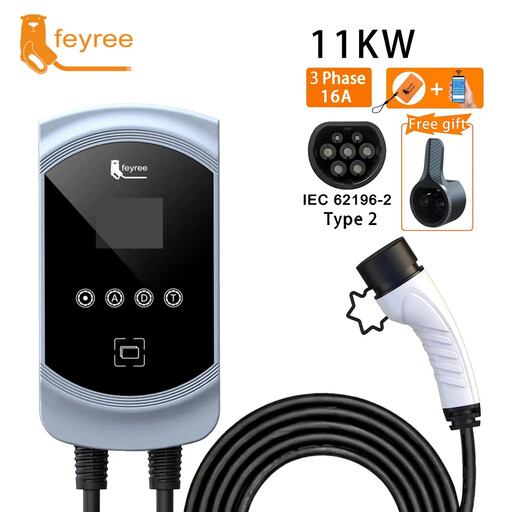
Why we chose it ? For the user with a three-phase system who finds 22 kW to be overkill or outside their budget. An 11 kW output is more than enough for a full overnight charge and is a massive upgrade from a standard power outlet.
This is the ultimate smart compromise: you don't pay for power you don't need, while still securing a connected, three-phase solution that's built to last.
An excellent balance of charging speed, smart features, and affordability for a three-phase setup.
We have curated a complete range of products that meet these stringent selection criteria and the highest safety standards.
Not necessarily. Compatibility depends on your vehicle's onboard charger. Many models are limited to 11?kW or even 7.4?kW for AC charging. However, investing in a 22?kW charger is a smart, future-proof choice: it will charge your current car at its maximum possible speed and will be ready for your next vehicle, which may support the full 22?kW.
It absolutely must be performed by a professional. The installation should be handled by a qualified electrician, ideally one with experience in EV charger installations. They will verify the compliance of your electrical panel, confirm you have a three-phase power supply, and install a dedicated circuit with the necessary protections (such as an RCD and a circuit breaker) in accordance with all local electrical codes and safety standards.
Yes, absolutely. The charger's dynamic load balancing feature operates completely independently of your utility's smart meter. It uses its own dedicated current sensor (typically a CT clamp) that an electrician installs on the main power line coming into your electrical panel. This sensor measures your home's total power consumption and communicates directly with the charger, which then adjusts the charging speed accordingly.