
Livraison le jour même ou le lendemain

Qualité garantie

Débloquez vos offres de bienvenue: Livraison GRATUITE | Jusqu'à -80 % | 30 jours d'essai gratuits à JoyPlus
Téléchargez l'application
Switching to an electric car is a major step, but choosing the right home charging solution is just as crucial. For homeowners with a three-phase electrical supply, a 22?kW charging station with dynamic load balancing stands out as the top-performing solution. However, the market is flooded with confusing technical claims. Before you invest, it's essential to understand the most common pitfalls to ensure your future charger truly meets your expectations for speed, safety, and smart functionality.
Identifying the right charger will save you a lot of frustration. Here are the pitfalls to watch out for:
To make an informed decision, here are the technical specifications that truly matter for daily use.
A three-phase 22?kW charging station operates on a 32?A current per phase. In practical terms, this allows you to add up to 120 km of range per hour of charging, depending on the vehicle. It's a solution tailor-made for fast home charging, which absolutely requires a compatible three-phase electrical plan and panel. Note that if your home has a single-phase supply, the power will be limited anyway (typically to 7.4?kW), even with a 22?kW charger.
Dynamic Load Balancing (DLB) is the game-changing feature that justifies the investment in a high-end wallbox. A sensor, installed in your electrical panel, measures the entire home's power consumption in real-time.
A smart charger with a companion app has now become the standard. A high-quality, free mobile app should, at a minimum, allow you to:
Finally, ensure the charger is equipped with a cable featuring a Type 2 connector. This is the standard adopted by nearly all manufacturers in Europe, guaranteeing maximum compatibility.
Every household and driver has different needs. Here is our selection for three typical scenarios.
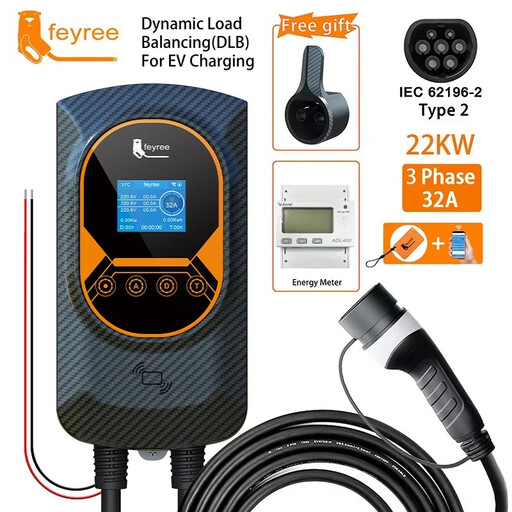
Why it's the right choice: Ideal for homeowners with a three-phase supply who want maximum charging speed (22 kW) without compromising their home's electrical stability. A must-have for electric vehicles with large batteries.
This charger includes a true dynamic load balancing (DLB) feature. The measurement module is included by default, preventing nasty surprises and hidden costs. Management is handled via a free app with no subscription required.
It combines maximum 22 kW power with smart energy management for worry-free and seamless charging. You get full control via the Tuya app (compatible with Android and iOS).
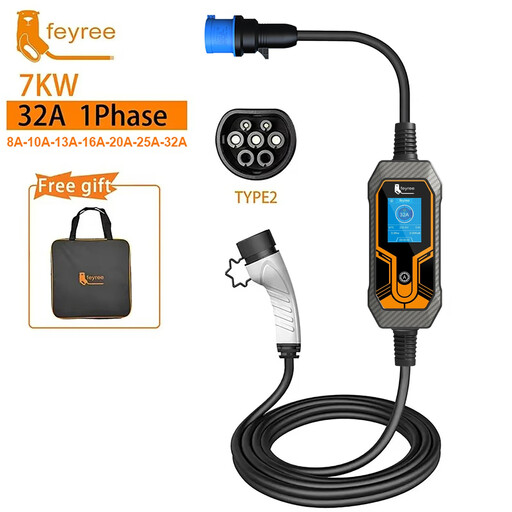
Why it's the right choice: For those with a single-phase installation who want to charge faster than with a standard domestic socket (up to 7 kW). Its portability is a real bonus for travel.
This charger offers manual power control (from 8 A to 32 A). This is a form of "manual load management" that lets you adjust the charge to avoid tripping the breaker, without the complexity of an automated system.
Flexibility is its strong suit: adjustable charging power and a portable design for use at home (with a CEE socket) or on the go. The LCD screen displays all essential charging information.
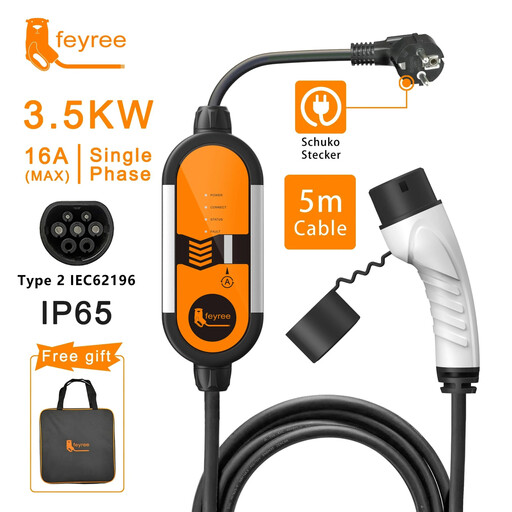
Why it's the right choice: Perfect for drivers of plug-in hybrids (PHEVs) or those who make short daily trips in a fully electric vehicle. It plugs into a standard domestic socket (Schuko) with zero installation required.
Here, simplicity is its strength. This charger gets straight to the point: charging safely from a standard outlet. No complex features, no hidden fees—it's a reliable and portable solution, period.
The ultimate "Plug & Play" solution. The current is adjustable (from 8 A to 16 A) to match the capacity of your wiring. Its OLED screen clearly displays charging information.
Explore our full selection of products that meet our strict criteria and current safety standards.
For a 50?kWh battery, a full charge (from 0 to 100%) would theoretically take just over 7 hours with a 7?kW charger. With a 22?kW wallbox, that time drops to about 2 hours and 15 minutes. In practice, the difference is huge for large top-ups but less noticeable for small, daily charges. The choice therefore depends on your battery size and driving habits.
Yes, and this is non-negotiable. The installation of a 22?kW charger, especially one with a load balancing module, must be performed by a qualified electrician. Professional certification is not only a guarantee for the safety of your installation and your home, but it is also often an absolute requirement to qualify for government incentives and to maintain the product's warranty.
Dynamic load balancing systems are designed to be compatible with most modern electrical installations, including those with smart meters. The measurement module (usually a current clamp or CT clamp) clips onto the main power line in the electrical panel to measure overall consumption. However, it is always wise to verify the specific charger model's compatibility with your setup before purchasing.