
Livraison le jour même ou le lendemain

Qualité garantie

Débloquez vos offres de bienvenue: Livraison GRATUITE | Jusqu'à -80 % | 30 jours d'essai gratuits à JoyPlus
Téléchargez l'application
Changing your duvet cover set should be a simple pleasure to refresh a bedroom. Yet, the experience often turns into a headache. Between materials with baffling names, promises of miraculous care, and a jungle of sizes, a misstep is never far away. As the Head of Product Recommendations at Joybuy, my role is to demystify the topic for you.
Before you start, here are the most common pitfalls to avoid:
polyester duvet cover set is often presented as the ultimate weapon against the chore of ironing. While its convenience is undeniable, the quality of the fabric is crucial. A low-quality polyester can quickly become scratchy, noisy with the slightest movement, and not very breathable, potentially ruining your nights.To avoid regretting your purchase, focus on a few essential points. They will help you make a smart choice that truly fits your expectations and your budget.
This is the first thing to check. A 220x240 cm duvet cover set is the standard size for a 2-person duvet cover on a classic double bed (140x190 cm or 140x200 cm). It ensures a nice overhang of about 40 cm on each side of the bed.
If you have a Queen Size bed (160x200 cm) or if you like to be generously wrapped up, a 240x260 cm duvet cover will be more suitable. The rule of thumb: always measure your duvet before buying the cover to ensure a perfect fit.
The choice of material directly impacts the comfort, care, and durability of your bed linen.
Cotton: The Gold Standard for Comfort A duvet cover set in 57 threads/cm? cotton is the quality benchmark for daily use. It's a natural fibre renowned for its breathability (it absorbs and wicks away moisture) and its softness. Hypoallergenic, it is ideal for sensitive skin. Its only downside: it wrinkles easily and requires ironing for a flawless finish.
Polyester: The Champion of ConvenienceNon-iron bedding is, by definition, made of polyester. This synthetic fibre dries in record time, hardly wrinkles, and its colours hold up very well in the wash. It's the smart choice for a guest room, a student flat, or for anyone short on time. Today's polyesters offer an increasingly soft feel, even if they remain less breathable than cotton.
Polycotton: The Smart Compromise This blend of polyester and cotton combines the best of both worlds: the softness and breathability of cotton, combined with the easy care and durability of polyester.
The Oeko-Tex Standard 100 label is the essential seal of approval. It guarantees that the textile has been tested and certified to be free of any chemical substances harmful to health. For a product in direct and prolonged contact with the skin, it is an indispensable guarantee of safety.
To illustrate these criteria in practice, here are models that each meet a specific need.
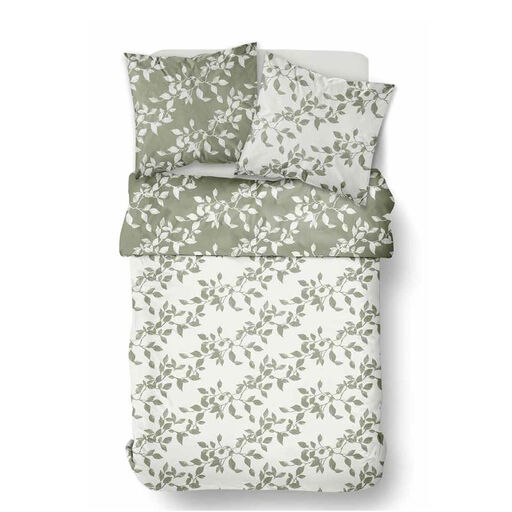
Why we recommend it: Ideal for those who prioritise ease of care above all else. Perfect for a guest room, a teenager's room, or for busy families. Its modern and colourful pattern effortlessly energises the room.
This model is all about transparency: it's proudly 100% polyester with clear benefits: a smooth fabric that doesn't wrinkle and dries quickly. No false promises, just pure convenience.
Ultra-simple care: wash at 40°C, dries in a flash, and ironing is unnecessary. The colours and shape are designed for excellent durability over time.
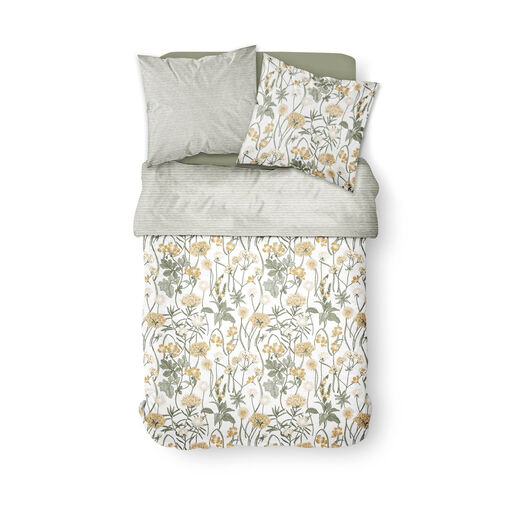
Why we recommend it: For those who swear by the softness and breathability of a natural fibre, especially in the master bedroom. The feel against the skin is a real pleasure, in summer and winter alike.
It checks two essential boxes: quality, with a dense 57 threads/cm? cotton weave, and safety, with the Oeko-Tex Standard 100 certification.
The breathable and hypoallergenic comfort of 100% cotton, with the assurance of a healthy textile, free from any undesirable substances for the skin.
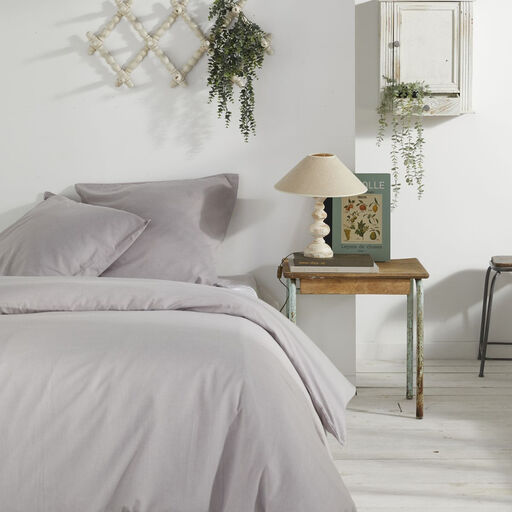
Why we recommend it: For the undecided who want to have their cake and eat it too. This polycotton model (52% polyester, 48% cotton) is the perfect middle ground. It combines some of the softness of cotton with the easy-care properties of synthetics.
The composition is displayed with full transparency, so there's no confusion. The Oeko-Tex certification also provides reassurance about the fabric's safety, even as a blend.
The perfect balance between comfort and convenience. Fewer wrinkles than 100% cotton, but a much more natural feel than 100% polyester.
We have put together a complete selection of products that all meet our quality and safety criteria.
For a standard double bed (140x190 cm or 140x200 cm), a 220x240 cm duvet cover is the ideal size. It guarantees a generous overhang of about 40 cm on each side, for a look that is as aesthetic as it is comfortable.
Yes, a 57 threads/cm? weave is an excellent quality baseline for everyday bed linen. It's the perfect balance between softness, durability, and price. Denser weaves (80, 120 threads/cm? and up) offer a silkier feel and better longevity, but 57 threads/cm? remains a reliable benchmark.
Nothing could be simpler. A machine wash at 40°C is sufficient to preserve the fibres and the brightness of the colours. It can be tumble-dried on a low setting, but it also air-dries very quickly. Just avoid excessively high temperatures, which could damage the fibre over time. As for ironing, it is completely unnecessary.