
Livraison le jour même ou le lendemain

Qualité garantie

Débloquez vos offres de bienvenue: Livraison GRATUITE | Jusqu'à -80 % | 30 jours d'essai gratuits à JoyPlus
Téléchargez l'application
Finding the perfect duvet is the promise of truly restful nights. By opting for a 220x240 duck feather duvet, you're choosing comfort, warmth, and a natural material. This generous size is ideal for standard double beds (140x200?cm), providing a beautiful drape on each side, or for Queen Size beds (160x200?cm) for maximum comfort.
Our guide is here to help you decode the labels, make an informed choice, and avoid marketing pitfalls. We'll review the key points to check before you buy and present our selection of the best models currently available.
Before making a purchase, several technical criteria should be examined closely. The comfort, durability, and versatility of your duvet throughout the seasons will depend on them.
The filling is the heart of your duvet. A natural duvet is almost always composed of a blend of feathers and down.
The higher the percentage of down, the lighter and more insulating the duvet will be. For an all-seasons 220x240 duvet, a carefully balanced blend of the two remains the most versatile option.
The casing (the outer fabric) plays an equally crucial role. A quality cotton casing, like tightly woven percale or cotton sateen, is essential to prevent the filling from escaping. It also ensures the entire duvet is highly breathable.
The stitching (the seams that create compartments in the duvet) is also fundamental. Box stitching or baffle-box construction keeps the filling in place, prevents cold spots, and ensures even warmth across your entire body.
To buy with confidence, rely on labels and certifications.
Here are a few models that caught our eye for their performance and their ability to meet the expectations of sleepers seeking comfort.
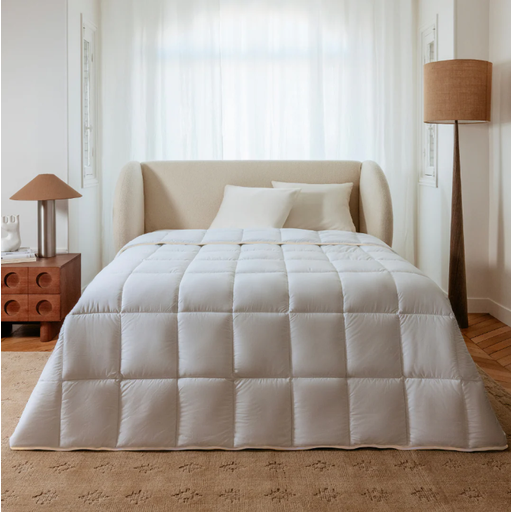
Why It Stands Out
This model offers an excellent compromise for year-round use. Its filling combines 90% duck feathers for structure with 10% duck down for warmth and lightness. Its organic cotton sateen casing (129 threads/cm?) and box stitching guarantee perfect fill distribution and a remarkably soft touch.
Benefits
Who Is It For? For couples or individuals looking for a versatile natural duvet that combines premium comfort with health and safety guarantees for peaceful nights.
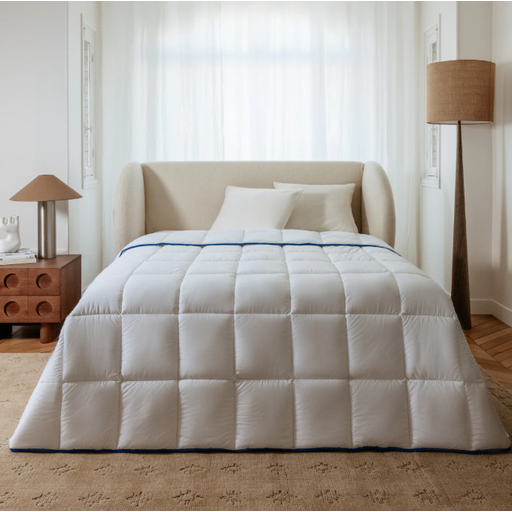
Why It Stands Out
For those who prefer synthetic fillings or are looking for a solution specifically for summer nights, this model is an excellent alternative. Its siliconised hollowfibre polyester filling (250g/m?) promotes excellent air circulation, while its 100% cotton percale casing provides softness and breathability.
Benefits
Who Is It For? For people who often get warm at night, want a specific duvet for the summer, or prefer synthetic materials for their ease of care and hypoallergenic properties.
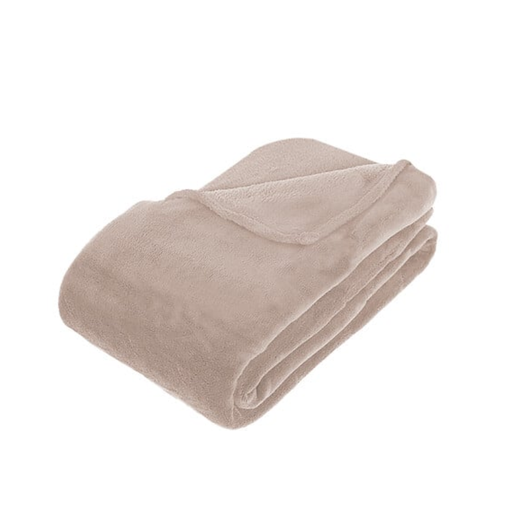
Why It Stands Out
While not a duvet in the strictest sense, this throw is a perfect comfort accessory. Its microfibre polyester material offers a welcome layer of warmth on cool evenings, whether on the sofa or at the foot of the bed. Its timeless look easily complements any decor style.
Benefits
Who Is It For? For anyone looking to add a touch of comfort and style to their home. A practical and cosy accessory, perfect for any season.
Choosing the ideal bedding is highly personal and depends on your sensitivity to heat and your preferences for lightness. If you're looking for a solution specifically for warmer weather, take a look at our selection of soft and thin summer blankets.
1. How do I care for a duck feather duvet? Ideally, a feather duvet should be washed once or twice a year. Use a large-capacity washing machine on a delicate cycle at a maximum of 40°C. For drying, use a tumble dryer on low heat, adding a few dryer balls (or tennis balls) to restore the filling's loft. When in doubt, professional dry cleaning is the safest option to preserve your duvet.
2. What is the difference between duck feathers and down? The feather, which is larger, has a central quill (the rachis); it provides structure and volume. Down, on the other hand, is a light, quill-less cluster from the bird's chest. Its insulating power is far superior to that of a feather. As a result, the more down a duvet contains, the warmer, lighter, and fluffier it will be.
3. Is a feather duvet suitable for people with allergies? Contrary to popular belief, feather allergies are rare; dust mites are usually the culprits. A high-quality hypoallergenic feather duvet, with a very tightly woven casing and an anti-dust mite treatment (like Sanitized), forms a highly effective barrier. Furthermore, the Oeko-Tex certification ensures that no irritating chemicals have been used.